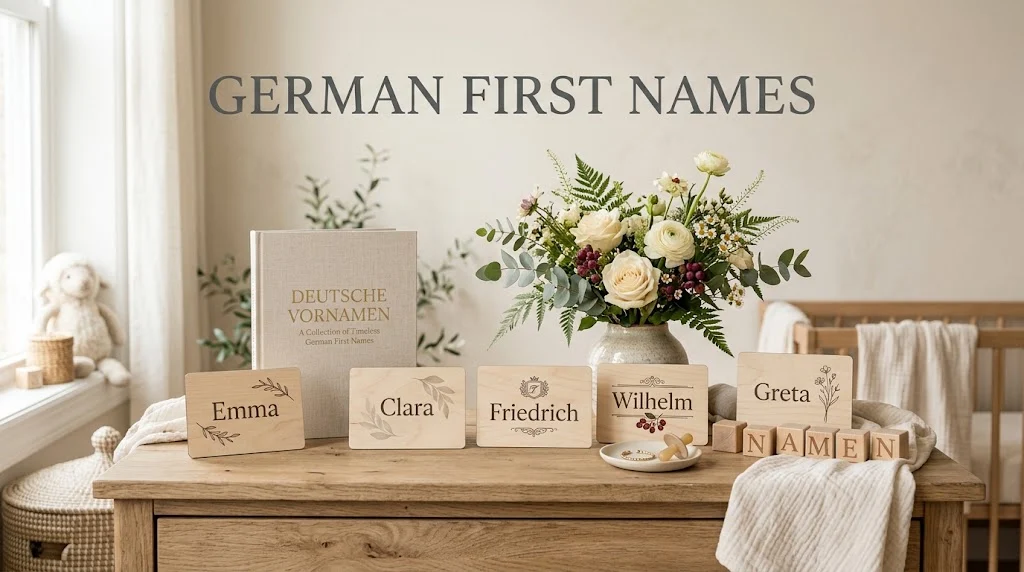
German first names include classic, modern, and Germanic choices such as Emma, Anna, Clara, Friedrich, Wilhelm, and Heinrich. Many have meanings connected to strength, protection, peace, beauty, wisdom, or family heritage.
A great name can feel both personal and timeless. It may remind you of family history, a favorite place, a meaningful tradition, or simply a quality you hope a child will carry through life. That is what makes German first names so appealing to parents and name lovers around the world.
German naming traditions include names that developed from Old High German and other Germanic languages, as well as names adopted through Christian, European, and international traditions. Some choices feel wonderfully old-fashioned, while others sound fresh and modern.
Names such as Emma and Clara have a soft, elegant quality. Friedrich and Heinrich feel strong and traditional. Others offer easy nicknames that make a formal name more playful in everyday life.
In this guide, we explore ten beautiful German first names, looking at their meanings, origins, personalities, styles, popularity, and nickname possibilities.
Emma
Meaning: Often connected with the Germanic element ermen, meaning “whole,” “universal,” or “great.”
Origin: Germanic, with historical use across German-speaking Europe.
Personality: Emma feels warm, intelligent, graceful, and approachable. It has a gentle sound but still carries a confident personality. The name can suit someone who is thoughtful, friendly, and quietly determined.
Style: Classic, elegant, feminine, timeless, modern.
Best For: Baby girl, daughter, sister, best friend, social media nickname.
Popularity: Emma has become one of the most internationally popular feminine names. Although its roots are Germanic, it is now familiar across many countries.
Emotional Appeal: Emma is easy to love because it feels both simple and polished. It does not need a complicated nickname to sound affectionate.
Pop Culture Reference: Emma is widely used in literature and entertainment, including as the title character of Jane Austen’s novel Emma.
Similar Nicknames: Em, Emmy, Emmie, Ems, Em-Em.
Why It Still Works Today: Emma bridges generations beautifully. It can feel vintage on a grandmother, adorable on a baby, and sophisticated on an adult. Its short spelling and international recognition also make it highly practical.
Clara
Meaning: Bright, clear, or famous.
Origin: Latin in ultimate origin, but long established in German-speaking Europe and wider European naming traditions.
Personality: Clara feels intelligent, graceful, calm, and refined. It has a bright personality without sounding overly dramatic. The name suits someone who feels gentle but self-assured.
Style: Elegant, vintage, classic, soft, sophisticated.
Best For: Baby girl, daughter, sister, friend, formal name with a sweet nickname.
Popularity: Clara has remained recognizable for generations. Its vintage quality has helped it stay appealing to families who like traditional names with a modern feel.
Emotional Appeal: Clara has a light and cheerful sound. The meaning associated with brightness also gives the name an optimistic quality.
Pop Culture Reference: Clara appears in numerous works of literature and entertainment, including the character Clara in Heidi and the famous ballet The Nutcracker tradition.
Similar Nicknames: Clare, Clari, Cici, Cara, Clary.
Why It Still Works Today: Clara is a strong example of a classic name that does not feel dated. Its clean pronunciation and elegant spelling make it suitable for both traditional and contemporary families.
Anna
Meaning: Grace or favor.
Origin: Hebrew in origin, but deeply established throughout German-speaking Europe and many other European cultures.
Personality: Anna feels kind, composed, dependable, and warm. It has a familiar quality that makes it easy to connect with, while its long history gives it a timeless character.
Style: Classic, simple, elegant, traditional, international.
Best For: Baby girl, daughter, sister, friend, family nickname.
Popularity: Anna has remained consistently familiar across Europe and beyond. It is one of those names that rarely feels completely out of fashion.
Emotional Appeal: Its simplicity is part of its charm. Anna feels gentle and familiar without being overly trendy.
Pop Culture Reference: Anna appears in literature, history, film, and television across many cultures. The name is also familiar to younger audiences through Disney’s Frozen.
Similar Nicknames: Annie, Anni, Ann, Anya, Nana.
Why It Still Works Today: Anna is easy to spell, pronounce, and remember. It also works naturally in multilingual families, making it a practical choice for parents who want a classic European name.
Greta
Meaning: Pearl, as a short form of Margareta or Margaret.
Origin: German and Scandinavian usage as a short form of Margaret-related names; ultimately from Greek.
Personality: Greta feels confident, artistic, independent, and stylish. It has a vintage character but also a crisp modern sound.
Style: Vintage, chic, strong, feminine, artistic.
Best For: Baby girl, daughter, sister, creative nickname, social media name.
Popularity: Greta has experienced renewed interest as parents rediscover short vintage names.
Emotional Appeal: The pearl association gives Greta a subtle sense of beauty and rarity. Its compact sound also makes it memorable.
Pop Culture Reference: Greta Garbo is one of the most famous historical bearers of the name, while filmmaker Greta Gerwig has given the name a modern cultural association.
Similar Nicknames: Gret, Gretta, Gigi, Retta, G.
Why It Still Works Today: Greta combines old-world charm with modern confidence. It feels distinctive without being difficult to pronounce, making it attractive to families searching for a stylish vintage name.
Friedrich
Meaning: Peaceful ruler.
Origin: Old High German, from elements traditionally interpreted as “peace” and “ruler.”
Personality: Friedrich feels dignified, thoughtful, disciplined, and strong. It has a formal personality that works especially well for families who appreciate historic names.
Style: Traditional, regal, vintage, formal, strong.
Best For: Baby boy, son, family name, heritage-inspired name.
Popularity: Friedrich has a strong historical presence in German-speaking countries. Its long form feels traditional, while shorter forms can make it more approachable.
Emotional Appeal: The combination of leadership and peace creates a balanced meaning. It suggests strength without focusing only on power.
Pop Culture Reference: Friedrich has been borne by numerous historical German-speaking figures, including composers, philosophers, rulers, and scholars.
Similar Nicknames: Fritz, Fried, Fred, Freddy, Fritzi.
Why It Still Works Today: Friedrich offers heritage and character. Parents who love traditional European names can use the full version formally and Fritz or Fred in casual settings.
Heinrich
Meaning: Home ruler or ruler of the household.
Origin: Old High German, from elements traditionally interpreted as “home” and “ruler.”
Personality: Heinrich feels serious, dependable, traditional, and thoughtful. It has a strong historical personality and can appeal to parents who prefer names with a clear connection to German heritage.
Style: Old-fashioned, classic, strong, formal, traditional.
Best For: Baby boy, son, family heritage name, historical name lover.
Popularity: Heinrich has a long history in German-speaking regions. It may feel more traditional than many contemporary choices, which can make it appealing to families seeking something distinctive.
Emotional Appeal: Its connection with home and leadership gives Heinrich a grounded quality. It feels like a name connected to family and responsibility.
Pop Culture Reference: Heinrich has been used by many historical German-speaking figures, including rulers, writers, scientists, and composers.
Similar Nicknames: Heinz, Heini, Henry, Hein, Rik.
Why It Still Works Today: Heinrich provides a strong vintage alternative to more common international names. Its nickname possibilities also make it flexible for different personalities and settings.
Wilhelm
Meaning: Traditionally associated with will, desire, and protection or helmet.
Origin: Old High German, formed from Germanic elements associated with will and protection.
Personality: Wilhelm feels noble, confident, thoughtful, and traditional. It has a strong historical character but can also sound charming when shortened.
Style: Vintage, regal, traditional, strong, formal.
Best For: Baby boy, son, family heritage name, historical name enthusiasts.
Popularity: Wilhelm has a long history in German-speaking Europe and remains recognizable because of its historical use.
Emotional Appeal: The name combines determination with protection, giving it a reassuring and strong personality.
Pop Culture Reference: Wilhelm has been used by German rulers and many historical figures. The name is also internationally recognized through the Wilhelm/William family of names.
Similar Nicknames: Will, Willy, Wim, Wil, Helm.
Why It Still Works Today: Wilhelm gives parents a formal, heritage-rich name with several friendly alternatives. Will and Willy can make the name feel much more casual in everyday life.
Ludwig
Meaning: Famous warrior or renowned fighter.
Origin: Old High German, from Germanic elements traditionally associated with fame and battle.
Personality: Ludwig feels artistic, intellectual, confident, and historic. It has a distinctive sound that can suit someone with a creative or independent personality.
Style: Vintage, artistic, strong, traditional, sophisticated.
Best For: Baby boy, son, family name, music-loving family, heritage name.
Popularity: Ludwig has remained recognizable in German-speaking Europe and has a particularly strong historical and cultural association.
Emotional Appeal: Ludwig has a memorable sound and a rich historical atmosphere. It feels substantial without needing an elaborate middle name.
Pop Culture Reference: The name is famously associated with composer Ludwig van Beethoven, one of the most influential composers in Western classical music.
Similar Nicknames: Lud, Ludi, Lou, Wiggy, Louis.
Why It Still Works Today: Ludwig is a good choice for families who want something traditional but less common in English-speaking settings. Its nickname Lou can also give it a softer contemporary feel.
Frieda
Meaning: Peace, protection, or beloved peace, depending on the historical form and interpretation.
Origin: Germanic, traditionally used as a short form or related form of names containing frid, associated with peace.
Personality: Frieda feels gentle, independent, artistic, and quietly confident. It has an old-fashioned sweetness without sounding overly delicate.
Style: Vintage, soft, feminine, charming, classic.
Best For: Baby girl, daughter, sister, vintage-name lover, family nickname.
Popularity: Frieda belongs to the group of vintage Germanic names that have received renewed attention in modern naming circles.
Emotional Appeal: The association with peace gives Frieda a calm and comforting quality. It sounds affectionate while still feeling like a complete name.
Pop Culture Reference: Frieda is found in German-language literature and culture, although individual references vary by country and period.
Similar Nicknames: Frie, Frida, Fifi, Friedi, Ria.
Why It Still Works Today: Frieda offers vintage charm without feeling overly formal. It is especially appealing for parents who like names with a soft sound and strong historical roots.
Anneliese
Meaning: A combination of Anna and Liese/Lies, ultimately connected with meanings such as grace and pledged to God.
Origin: German compound form of Anna and Elisabeth-related naming traditions.
Personality: Anneliese feels elegant, romantic, warm, and traditional. It has a graceful rhythm that gives it a distinctly old-world personality.
Style: Vintage, elegant, feminine, romantic, traditional.
Best For: Baby girl, daughter, family heritage name, vintage-name lover.
Popularity: Anneliese is less common than shorter German names such as Anna or Emma, which can make it appealing to parents seeking something distinctive.
Emotional Appeal: The combination of two established names gives Anneliese a layered sense of tradition. It also offers several nickname possibilities.
Pop Culture Reference: The name and its spelling variations appear in German-language culture and international fiction, although it does not have one single defining pop-culture association.
Similar Nicknames: Annie, Liese, Liesl, Anna, Elise.
Why It Still Works Today: Anneliese feels special without being invented or overly unusual. Parents can enjoy its elegant full form while choosing Annie, Liese, or Elise for everyday use.
Quick Comparison Table
| Name | Meaning | Style | Best For |
|---|---|---|---|
| Emma | Whole / universal / great | Classic | Baby girl |
| Clara | Bright / clear | Elegant | Baby girl |
| Anna | Grace / favor | Timeless | Baby girl |
| Greta | Pearl | Vintage & chic | Baby girl |
| Friedrich | Peaceful ruler | Strong & traditional | Baby boy |
| Heinrich | Home ruler | Classic & formal | Baby boy |
| Wilhelm | Will and protection | Regal & vintage | Baby boy |
| Ludwig | Famous warrior | Artistic & strong | Baby boy |
| Frieda | Peace / protection | Soft & vintage | Baby girl |
| Anneliese | Grace + pledged to God | Romantic & classic | Baby girl |
How to Choose the Perfect German First Name
Choosing a German first name becomes easier when you consider both meaning and everyday use.
Start with the meaning.
Think about the quality you want the name to represent. Peace, strength, grace, protection, wisdom, and family are all meaningful themes found across European naming traditions.
Check the historical origin.
Not every name commonly used in Germany originally comes from a Germanic language. Names such as Anna and Clara have older roots outside Germanic languages but became deeply established in German-speaking cultures.
Say it aloud.
A name may look beautiful on paper but sound different when spoken. Say the first name with the middle and family names to hear the complete combination.
Think about nicknames.
Longer names can provide several everyday options. Friedrich can become Fritz or Fred, while Wilhelm can become Will or Willy.
Consider pronunciation.
If your family lives outside a German-speaking country, think about whether the original pronunciation is important to you or whether you are comfortable with a local pronunciation.
Look at the child’s future.
A name should work for a newborn but also feel natural for a teenager and adult. Classic names often have an advantage because they can grow with the person.
Respect cultural context.
If you are choosing a name because of German heritage, learning its history and pronunciation can make the choice more meaningful.
Most Popular German First Names Today
Modern German naming includes both long-established classics and names that are popular across Europe. Short, easy-to-pronounce names have remained particularly attractive to many families.
Examples worth exploring include:
- Emma
- Anna
- Clara
- Emilia
- Lina
- Mia
- Ella
- Marie
- Paul
- Emil
- Felix
- Leon
- Theo
- Max
- Friedrich
Popularity changes from year to year, so a name that is common in one period may become less frequent later. If current rankings matter to your choice, check the latest official or reputable German naming statistics.
Vintage German First Names Making a Comeback
Vintage names can offer a wonderful combination of history and personality. Some sound formal and grand, while others feel surprisingly sweet when paired with modern surnames.
Consider:
- Frieda
- Greta
- Anneliese
- Wilhelm
- Friedrich
- Heinrich
- Ludwig
- Otto
- Else
- Gertrud
These names can be especially appealing to parents who want something connected to earlier generations without choosing an extremely common modern name.
Modern German First Name Trends
Modern German naming trends often favor names that are short, easy to pronounce, and internationally recognizable. At the same time, traditional names continue to appear in contemporary families.
Names such as Emma, Mia, Ella, and Lina have a light and modern sound. For boys, names such as Emil, Theo, Felix, and Leon combine European familiarity with a concise structure.
Another interesting trend is the revival of vintage names. Parents may choose an older name because it feels distinctive today. A name that was once associated with grandparents or great-grandparents can suddenly feel fresh when a new generation adopts it.
International mobility also influences naming choices. Families who speak more than one language may prefer names that work naturally in German as well as English or other European languages.
What Makes German First Names Special?
German first names reflect a mixture of linguistic history, regional traditions, religion, family heritage, and wider European culture.
Some names have genuinely Germanic roots. Others were borrowed from Latin, Greek, Hebrew, or other languages and became deeply established in German-speaking communities.
This distinction matters. Calling every name used in Germany “Germanic” would be inaccurate. A better approach is to consider both linguistic origin and cultural usage.
Germanic names are often built from meaningful elements. Historical names could combine ideas connected with peace, protection, strength, fame, leadership, or family.
That history gives many traditional names a strong sense of identity. At the same time, shorter modern names offer a softer and more international approach.
FAQs
What are the most beautiful German first names?
Popular choices for people seeking beautiful German first names include Emma, Clara, Anna, Greta, Frieda, Friedrich, Ludwig, and Wilhelm.
What are classic German girl names?
Classic choices include Anna, Clara, Emma, Greta, Frieda, and Anneliese. Some have Germanic roots, while others originated in different ancient languages .
What are traditional German boy names?
Friedrich, Heinrich, Wilhelm, and Ludwig are strong examples of traditional names associated with German-speaking history.
What German names mean peace?
Several traditional Germanic names contain elements historically associated with peace, including Friedrich and names related to Frieda.
What are some cute German first names?
Short names such as Emma, Anna, Clara, Frieda, and Greta can have a naturally sweet quality.
Conclusion
German first names offer an appealing mix of history, elegance, strength, and modern simplicity. Names such as Emma, Anna, Clara, and Greta feel graceful and familiar, while Friedrich, Wilhelm, Heinrich, and Ludwig bring a stronger traditional character.
The best name is not necessarily the most unusual one. Look for a name whose meaning, sound, cultural background, and nickname options feel right for your family. If German heritage is part of your inspiration, learning the original pronunciation and history can make the choice even more meaningful.
Whether you prefer a classic name, a vintage revival, or a short modern choice, there is plenty of inspiration to explore. Pick your favorite, share this guide with another name lover, and leave a comment with the German first name you love most.
Discover More Related Articles:
- 16+ Sea Names | Beautiful Ocean-Inspired Names In 2026
- 30+ Names That Mean Red | Fiery, Beautiful & Unique Ideas In 2026