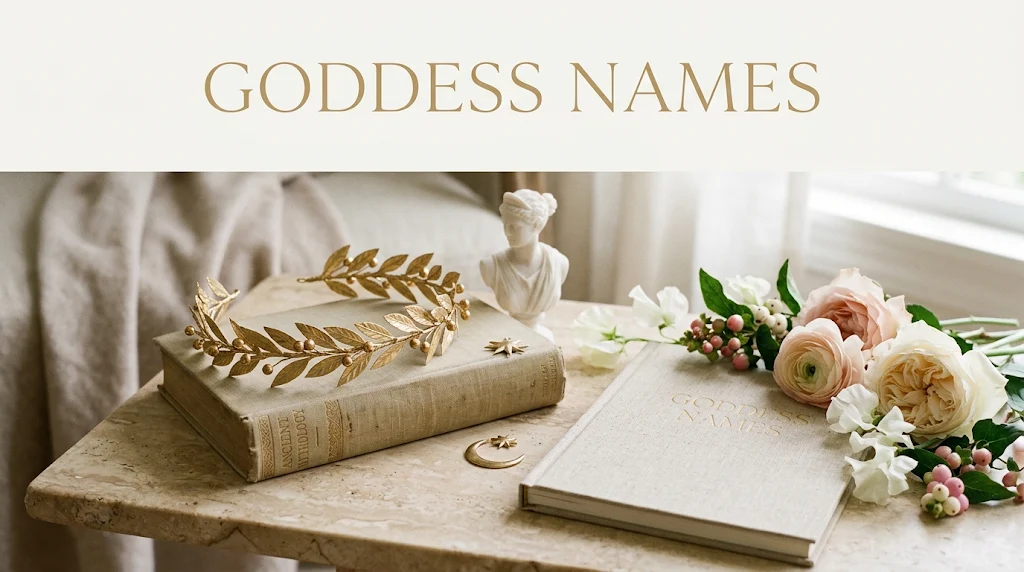
Goddess names carry stories of beauty, wisdom, courage, love, nature, and strength. From ancient Greek mythology to Hindu traditions, Norse legends, and Egyptian history, these names offer beautiful inspiration for parents, writers, and anyone searching for a meaningful name.
Goddess names are inspired by female deities from ancient mythologies and religious traditions. Popular choices include Athena, Aphrodite, Artemis, Isis, Freyja, Amaterasu, Saraswati, and Durga, representing wisdom, beauty, nature, love, and strength.
Some names sound beautiful, while others carry stories that have survived for thousands of years. Goddess names belong to the second group. Inspired by powerful female figures from ancient mythology and cultural traditions, these names represent wisdom, beauty, courage, love, nature, and creativity.
From Athena, the Greek goddess associated with wisdom, to Freyja, the Norse goddess connected with love and magic, every name has its own personality. Some feel soft and elegant, while others sound bold, mysterious, and unforgettable.
Many parents love mythological names because they offer more than an attractive sound. They connect a child with history, storytelling, and meaningful cultural traditions. Writers also use these names for fictional characters, fantasy worlds, and creative projects.
Whether you prefer ancient Greek names, beautiful Egyptian choices, Hindu goddess names, or rare names from other traditions, there are plenty of possibilities to explore.
Let’s discover ten beautiful goddess names, their backgrounds, meanings, nickname ideas, and the qualities that make each one special.
Athena
Greek mythology · Wisdom, courage, and strategy
Meaning: The exact etymology of Athena’s name is uncertain. She is traditionally associated with wisdom, strategic warfare, and crafts.
Origin: Ancient Greek mythology.
Personality: Athena represents intelligence, confidence, independence, and thoughtful leadership. She is an excellent inspiration for someone who values knowledge, creativity, and determination.
Style: Elegant, powerful, classic, intellectual, and timeless.
Best For: Baby girl, daughter, fictional heroine, fantasy character, or creative username.
Popularity: Athena is a recognizable mythological name that has gained attention among modern baby-name enthusiasts. It has an ancient foundation but feels fresh in contemporary naming styles.
Emotional Appeal: Athena has a strong personality without losing its feminine elegance. Its connection with wisdom makes it especially meaningful for families who value learning and independence.
Pop Culture Reference: Athena appears in numerous books, films, games, and adaptations of Greek mythology. Her Roman counterpart is Minerva.
Similar Names: Minerva, Artemis, Thea, Ariadne, Andromeda.
Why It Still Works Today: Athena combines history with a modern sound. It is distinctive without being difficult to recognize, and its short nickname, Thea, makes it even more versatile.
Aphrodite
Greek mythology · Love and beauty
Meaning: The etymology is debated. Aphrodite is traditionally associated with love, beauty, attraction, and desire.
Origin: Ancient Greek mythology.
Personality: Aphrodite represents charm, romance, creativity, and beauty. Her name feels expressive and artistic, making it an interesting choice for someone who loves elegant and feminine names.
Style: Romantic, luxurious, dramatic, vintage, and glamorous.
Best For: Fictional characters, fantasy heroines, artistic usernames, and mythology-inspired naming.
Popularity: Aphrodite is more unusual as an everyday given name than many shorter Greek names. It is recognizable because of its important place in classical mythology.
Emotional Appeal: The name has a graceful, memorable sound. Its connection with love and beauty gives it a romantic quality that appeals to readers and creative storytellers.
Pop Culture Reference: Aphrodite is widely referenced in literature, art, films, and modern retellings of Greek mythology. Her Roman counterpart is Venus.
Similar Names: Venus, Freya, Cora, Adora, Ariadne.
Why It Still Works Today: Aphrodite stands out because it is dramatic and full of history. Those who prefer shorter everyday forms can consider Dite, Aphra, or Aphro.
Artemis
Greek mythology · Wilderness and independence
Meaning: The original meaning of Artemis is uncertain. The goddess is associated with hunting, wilderness, wild animals, childbirth, and the protection of children.
Origin: Ancient Greek mythology.
Personality: Artemis represents independence, confidence, courage, and a strong connection with nature. She is often imagined as a determined figure who values freedom.
Style: Nature-inspired, adventurous, classic, mysterious, and strong.
Best For: Baby girl, daughter, fictional heroine, fantasy character, or nature-loving families.
Popularity: Artemis is a recognizable mythological name that offers something different from more familiar traditional names.
Emotional Appeal: Artemis has a confident sound and a meaningful connection with the natural world. It can appeal to parents who want a name that feels both feminine and adventurous.
Pop Culture Reference: Artemis appears throughout Greek mythology and in modern fantasy books, television, films, and games. Her Roman counterpart is Diana.
Similar Names: Diana, Athena, Selene, Aria, Aurora.
Why It Still Works Today: Artemis has a distinctive sound and a strong historical identity. Its shorter forms, such as Artie and Ari, make it easier to use in everyday conversations.
Hera
Greek mythology · Queenship and marriage
Meaning: The name’s exact etymology is debated. Hera is traditionally associated with queenship, marriage, and women’s lives.
Origin: Ancient Greek mythology.
Personality: Hera represents authority, confidence, dignity, and leadership. As queen of the Olympian gods, she has a commanding place in Greek mythology.
Style: Royal, elegant, short, classic, and sophisticated.
Best For: Baby girl, daughter, fictional queen, fantasy character, or a short and distinctive name.
Popularity: Hera is less commonly encountered as a modern given name than names such as Athena or Diana. Its simplicity makes it appealing to people who prefer short mythological names.
Emotional Appeal: Hera has a graceful yet powerful sound. It feels regal without being complicated, and its historical background gives it a memorable identity.
Pop Culture Reference: Hera appears in classical Greek literature and numerous modern mythology-inspired stories. Her Roman counterpart is Juno.
Similar Names: Juno, Hestia, Thea, Rhea, Helena.
Why It Still Works Today: Hera is short, easy to remember, and visually elegant. It works particularly well for someone who likes classic names with a strong mythological connection.
Isis
Egyptian mythology · Protection and motherhood
Meaning: Isis is the Greek form of the ancient Egyptian goddess’s name, commonly identified with Egyptian Aset. Its traditional name connection is often interpreted as referring to a throne, although details of the original etymology require care.
Origin: Ancient Egyptian mythology.
Personality: Isis represents protection, devotion, wisdom, motherhood, and magical knowledge in ancient Egyptian traditions.
Style: Ancient, elegant, mysterious, feminine, and timeless.
Best For: Fictional characters, mythology-inspired stories, historical projects, and families researching ancient Egyptian names.
Popularity: Isis has historical recognition as a mythological name. However, its modern associations are complicated by the use of the same word as the name of a violent extremist organization. Parents should consider that contemporary context before choosing it.
Emotional Appeal: Its ancient history and association with protection make it an important name in Egyptian mythology. It also has a short, graceful sound.
Pop Culture Reference: Isis appears in ancient Egyptian religious texts, artwork, museum collections, and modern historical fiction.
Similar Names: Aset, Nephthys, Hathor, Bastet, Selene.
Why It Still Works Today: Isis remains historically significant, but modern usage requires awareness of its wider associations. Aset is an alternative worth researching for those interested in the original Egyptian cultural context.
Freyja
Norse mythology · Love, beauty, and magic
Meaning: Lady or mistress, from Old Norse.
Origin: Old Norse mythology, particularly Scandinavian traditions.
Personality: Freyja represents independence, confidence, beauty, love, and magical knowledge. She is a complex figure whose stories include both affection and power.
Style: Romantic, mystical, elegant, bold, and vintage-inspired.
Best For: Baby girl, daughter, fantasy character, fictional heroine, or mythology-inspired username.
Popularity: Freyja and the modern spelling Freya are familiar in contemporary naming discussions. Freya is particularly accessible to English-speaking families.
Emotional Appeal: Freyja has a beautiful sound and a rich cultural background. Her association with love, beauty, and magic gives the name a memorable personality.
Pop Culture Reference: Freyja appears in Norse mythology, Viking-inspired fiction, video games, and modern fantasy stories.
Similar Names: Freya, Frigg, Freja, Eira, Sif.
Why It Still Works Today: Freyja feels both ancient and fashionable. The spelling Freya offers a simpler modern alternative, while Freyja preserves the traditional Norse form.
Amaterasu
Japanese mythology · Sun and heavenly light
Meaning: Shining over heaven, from Japanese name elements associated with heaven and shining.
Origin: Japanese mythology, particularly the Shinto tradition.
Personality: Amaterasu represents light, dignity, warmth, and heavenly power. She is one of the most important deities in Japanese mythology and is associated with the sun.
Style: Celestial, majestic, unusual, elegant, and spiritual.
Best For: Fictional characters, fantasy stories, mythology-inspired projects, and families interested in Japanese cultural names.
Popularity: Amaterasu is a distinctive mythological name rather than a common everyday given name in many English-speaking settings. Its length and cultural significance make it especially recognizable.
Emotional Appeal: The connection with sunlight and the heavens gives Amaterasu a bright and uplifting identity. It can inspire ideas of hope, illumination, and new beginnings.
Pop Culture Reference: Amaterasu appears in Japanese mythology and modern entertainment, including the video game Okami.
Similar Names: Amaya, Hikari, Akari, Tsukuyomi, Himari.
Why It Still Works Today: Amaterasu is memorable and carries a fascinating cultural story. Its traditional background makes it an interesting choice for writers and anyone exploring Japanese mythology.
Saraswati
Hindu tradition · Knowledge, music, and learning
Meaning: Possessing water or associated with flowing water, based on Sanskrit linguistic elements.
Origin: Sanskrit and Hindu traditions.
Personality: Saraswati represents wisdom, education, creativity, music, language, and artistic expression. She is traditionally associated with learning and the arts.
Style: Elegant, traditional, spiritual, melodic, and graceful.
Best For: Baby girl, daughter, fictional character, cultural naming inspiration, or a name connected with education and creativity.
Popularity: Saraswati is a traditional and recognizable name in Hindu communities, particularly in South Asia. Its cultural and religious significance gives it lasting importance.
Emotional Appeal: The name has a graceful rhythm and a beautiful connection with knowledge and creativity. It can be especially meaningful to families who value education, music, and learning.
Pop Culture Reference: Saraswati is represented in Hindu religious art, festivals, educational traditions, and cultural storytelling.
Similar Names: Sarika, Vani, Sharada, Lakshmi, Vidya.
Why It Still Works Today: Saraswati offers a strong cultural identity and a meaningful connection with knowledge. Short forms such as Sara can make it easier to use casually, although the complete name carries its own significance.
Durga
Hindu tradition · Strength and protection
Meaning: Commonly translated as difficult to approach or difficult to overcome.
Origin: Sanskrit and Hindu traditions.
Personality: Durga represents courage, protection, determination, and strength. She is widely revered as a powerful goddess who protects against harmful forces.
Style: Bold, spiritual, traditional, powerful, and memorable.
Best For: Baby girl, daughter, fictional heroine, mythological character, or a name inspired by strength.
Popularity: Durga is a well-known traditional name in Hindu communities, particularly in South Asia. Its religious significance gives it a strong cultural identity.
Emotional Appeal: Durga is associated with courage and protection. For families who value these qualities, the name carries a meaningful message that goes beyond its sound.
Pop Culture Reference: Durga features prominently in Hindu religious traditions, especially during festivals such as Durga Puja and Navaratri.
Similar Names: Parvati, Devi, Shakti, Kali, Gauri.
Why It Still Works Today: Durga is short, distinctive, and rich in cultural meaning. It offers a strong alternative for families who prefer traditional names with a clear connection to courage and protection.
Inanna
Sumerian mythology · Love, fertility, and power
Meaning: Often interpreted as Lady of the Heavens, although another scholarly interpretation connects it with Lady of the Date Clusters.
Origin: Ancient Sumerian mythology in Mesopotamia.
Personality: Inanna represents ambition, passion, confidence, love, and authority. Her mythology includes stories about relationships, power, and journeys between different realms.
Style: Ancient, mysterious, feminine, dramatic, and distinctive.
Best For: Baby girl, fictional queen, fantasy heroine, historical character, or mythology-inspired username.
Popularity: Inanna is relatively uncommon as an everyday modern given name, which makes it interesting for readers searching for unusual mythological choices.
Emotional Appeal: Inanna has a melodic sound and an extraordinary historical background. Her stories have survived through ancient Mesopotamian literature, giving the name a strong connection with early storytelling traditions.
Pop Culture Reference: Inanna appears in ancient Sumerian literary texts and modern mythology-inspired books and games.
Similar Names: Ishtar, Inara, Ianthe, Anya, Anahita.
Why It Still Works Today: Inanna feels distinctive without being difficult to read. Its ancient roots and graceful pronunciation make it a memorable choice for someone who loves historical and mythological names.
Quick Comparison Table
| Goddess Name | Meaning / Association | Style | Best For |
|---|---|---|---|
| Athena | Wisdom and strategy | Elegant | Baby girl |
| Aphrodite | Love and beauty | Romantic | Character |
| Artemis | Wilderness and independence | Adventurous | Baby girl |
| Hera | Queenship and marriage | Royal | Baby girl |
| Isis | Protection and motherhood | Ancient | Character |
| Freyja | Lady; love and magic | Mystical | Baby girl |
| Amaterasu | Shining over heaven | Celestial | Character |
| Saraswati | Possessing water; knowledge | Graceful | Baby girl |
| Durga | Difficult to overcome | Powerful | Baby girl |
| Inanna | Lady of the heavens (traditional interpretation) | Mysterious | Character |
How to Choose the Perfect Goddess Name
Choosing a goddess-inspired name can be exciting, especially when so many beautiful options have meaningful backgrounds. Here are some practical tips to help you find the right one.
1. Start With the Meaning
Think about the qualities you want the name to represent. Athena is associated with wisdom, Freyja with love and magic, and Durga with courage and protection. Choose a meaning that feels personally meaningful.
2. Explore Different Mythologies
Do not limit yourself to Greek mythology. Explore Egyptian, Norse, Hindu, Japanese, Roman, and Mesopotamian traditions. Each has its own stories and naming customs.
3. Consider the Pronunciation
Some mythological names are longer or less familiar. Say your favorite choices aloud and consider whether you prefer something simple, like Hera, or something distinctive, like Amaterasu.
4. Look for Natural Nicknames
A longer name can offer lovely shorter versions. For example:
- Athena – Thea, Athy
- Aphrodite – Aphra, Dite
- Artemis – Ari, Artie
- Freyja – Frey, Freya
- Saraswati – Sara, Sari
- Amaterasu – Ama, Amaya
These are suggested affectionate forms rather than necessarily traditional cultural nicknames.
5. Understand the Cultural Background
Some goddess names come from living religious traditions. Learn about their cultural and spiritual significance before using them, particularly when choosing names from traditions outside your own.
6. Think About Long-Term Use
A name should work beyond childhood. Consider how it sounds for a baby, teenager, and adult. A name with a meaningful history can remain special throughout life.
7. Check the Spelling
Some mythological names have different spellings across languages and historical sources. For example, Freyja and Freya are related forms, while Inanna and Inana are both used in scholarly references.
Most Popular Goddess Names Today
Some goddess names are especially recognizable because of their appearance in mythology, books, entertainment, and modern baby-name discussions.
Here are ten beautiful options:
- Athena
- Artemis
- Freya
- Aphrodite
- Hera
- Diana
- Aurora
- Selene
- Isis
- Amara
These names offer different styles. Athena and Artemis feel confident, Freya and Aurora feel elegant, while Selene has a soft celestial personality.
Popularity varies by country and year, so this list reflects general familiarity rather than an official ranking.
Vintage Goddess Names Making a Comeback
Ancient names can feel surprisingly fresh when they return to modern naming conversations. Many have a timeless quality because they are connected with historical stories and cultural traditions.
Here are some vintage-inspired choices:
- Hera
- Diana
- Juno
- Minerva
- Rhea
- Hestia
- Selene
- Demeter
- Theia
- Eos
These names are particularly appealing to people who enjoy classic feminine names with historical depth.
Modern Goddess Name Trends
Goddess-inspired naming has several appealing styles. Some people prefer short, simple names, while others enjoy dramatic names with ancient cultural backgrounds.
Short and Elegant Names
Names such as Hera, Rhea, Eos, and Theia have a clean, simple appearance. They are easy to remember and offer a classic feeling.
Celestial-Inspired Names
Names such as Selene, Aurora, and Amaterasu connect with the moon, dawn, or sun. They are wonderful choices for people who love astronomy and nature-inspired naming.
Strong and Powerful Names
Athena, Durga, Artemis, and Freyja have associations with courage, leadership, independence, or protection.
Romantic and Feminine Names
Aphrodite, Freyja, and Saraswati offer graceful sounds and meaningful cultural backgrounds.
Rare and Unusual Names
Inanna, Amaterasu, Hestia, and Ereshkigal are interesting choices for readers who want something less familiar.
A growing interest in mythology-inspired storytelling, fantasy literature, and historical names also gives these choices a place in modern creative naming.
Goddess Names by Meaning and Personality
Choosing a name becomes easier when you organize options around the qualities that matter most.
| Desired Quality | Goddess Name | Mythological Background |
|---|---|---|
| Wisdom | Athena | Greek |
| Love | Aphrodite | Greek |
| Independence | Artemis | Greek |
| Royalty | Hera | Greek |
| Protection | Isis | Egyptian |
| Beauty | Freyja | Norse |
| Light | Amaterasu | Japanese |
| Knowledge | Saraswati | Hindu |
| Strength | Durga | Hindu |
| Power | Inanna | Sumerian |
Which goddess names represent beauty? Aphrodite and Freyja are traditionally associated with beauty.
Which goddess names represent wisdom? Athena and Saraswati are especially associated with wisdom and knowledge.
Which goddess names represent strength? Durga, Athena, and Artemis offer strong mythological associations.
Which goddess names represent light? Amaterasu is particularly associated with heavenly light and the sun.
FAQs
What are the most beautiful goddess names?
Some beautiful goddess names include Athena, Freyja, Aphrodite, Artemis, Saraswati, and Amaterasu. Each has a distinctive sound and cultural background.
What is the most powerful goddess name?
Durga, Athena, and Inanna are powerful choices from different mythological traditions. Durga represents protection and strength, Athena is associated with wisdom and strategy, and Inanna has connections with love, authority, and power.
What are rare goddess names for girls?
Inanna, Amaterasu, Hestia, Ereshkigal, and Theia are interesting choices for anyone searching for less familiar mythological names.
Which goddess names mean beauty?
Aphrodite and Freyja are traditionally associated with beauty in Greek and Norse mythology. Their names are also connected with love and attraction.
What are Greek goddess names for baby girls?
Athena, Artemis, Hera, Aphrodite, Demeter, Rhea, Hestia, and Selene are examples of Greek goddess names.
Conclusion
Goddess names offer a beautiful combination of history, culture, and meaningful inspiration. From Athena’s wisdom and Freyja’s elegance to Durga’s strength and Saraswati’s connection with knowledge, every name has a story worth exploring.
Whether you prefer short and graceful names or ancient and powerful choices, mythology offers countless possibilities. Take time to understand each name’s origin, pronunciation, and cultural significance before making your decision.
The perfect name is one that feels meaningful and memorable. Choose your favorite, share this guide with friends who love mythology-inspired names, and leave a comment telling us which goddess name you like most.
Discover More Related Articles:
- Group Chat Names | Funny, Cute & Unique Ideas In 2026
- Ninja Turtles Names | Characters & Nicknames In 2026










1 thought on “Goddess Names | Beautiful, Powerful & Unique Ideas In 2026”