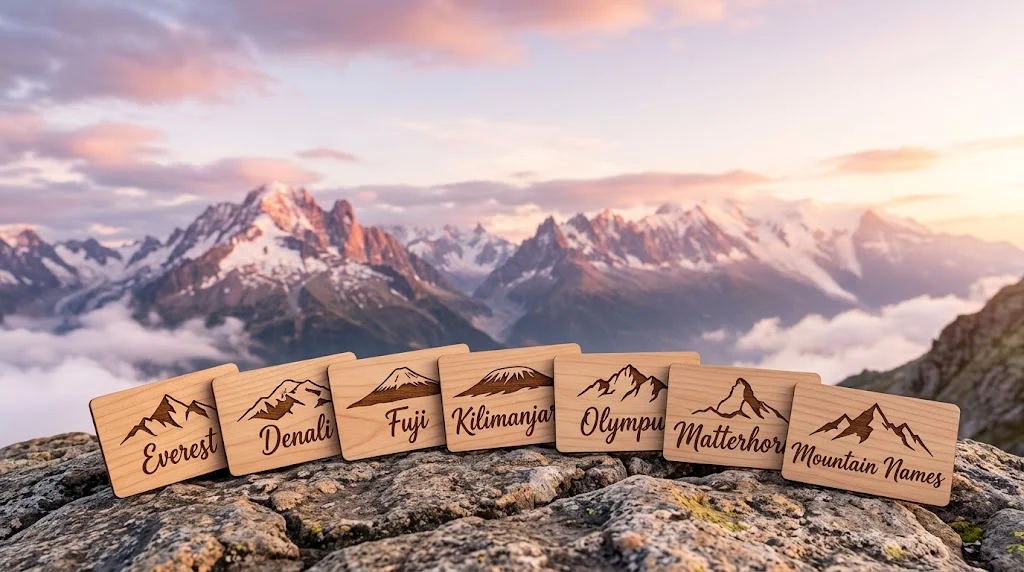
Mountain names include famous peaks such as Everest, K2, Denali, Kilimanjaro, Fuji, and Matterhorn. They can inspire names that represent strength, adventure, beauty, resilience, freedom, and the majesty of nature.
Mountains have fascinated people for thousands of years. They rise above landscapes, shape cultures, influence weather, and create some of the world’s most unforgettable scenery. Because of this, mountain names often carry a feeling of strength, adventure, mystery, and freedom.
Some mountain names are instantly recognizable. Everest suggests extraordinary height and achievement, while Fuji evokes the beauty of Japan. Other names, such as Denali, Matterhorn, and Kilimanjaro, have their own distinctive sounds and cultural histories.
Mountain-inspired names can be useful for many purposes. You might need a name for a fictional world, a hiking project, a pet, a business, a character, or simply want inspiration from nature.
In this guide, you’ll discover famous mountain names, what they mean or represent, their origins, personality associations, styles, and why they continue to capture people’s imagination.
🏔️ Everest
Meaning: Often explained as a name honoring George Everest, the British surveyor after whom the mountain was named.
Origin: English naming history; Himalayan geography
Personality: Everest feels bold, ambitious, adventurous, resilient, and powerful.
Style: Majestic, adventurous, strong, modern
Best For: Character name, fictional location, adventure brand, pet, project, nature-inspired naming
Popularity: Everest is one of the world’s most recognizable mountain names because of Mount Everest’s extraordinary height and global fame.
Emotional Appeal: The name represents reaching great heights and overcoming difficult challenges. It naturally suggests ambition and determination.
Pop Culture Reference: Mount Everest appears frequently in documentaries, adventure stories, books, films, and discussions about mountaineering.
Similar Names: Denali, Summit, Atlas, Alpine, Everest
Why It Still Works Today: Everest has moved beyond being simply a geographical name. Its strong sound makes it appealing as a modern name associated with achievement and adventure.
🌋 Kilimanjaro
Meaning: The origin and exact meaning of the name are debated, with different linguistic explanations proposed.
Origin: East Africa; associated with Tanzania
Personality: Kilimanjaro feels adventurous, grand, and unforgettable.
Style: Majestic, adventurous, geographic
Best For: Fictional world, travel project, adventure brand, character, nature inspiration
Popularity: Kilimanjaro is globally recognizable as one of Africa’s most famous mountains.
Emotional Appeal: The name immediately brings to mind African landscapes, open skies, wildlife, and a remarkable volcanic mountain rising above the surrounding plains.
Pop Culture Reference: Mount Kilimanjaro has appeared in travel documentaries, literature, photography, and adventure media.
Similar Names: Kili, Kenya, Serengeti, Meru, Denali
Why It Still Works Today: Kilimanjaro has a distinctive rhythm and strong geographical identity. Its shortened form, Kili, can also provide a more casual naming option.
❄️ Denali
Meaning: Commonly translated from Koyukon Athabascan as “the tall one” or “the high one.”
Origin: Alaska Native language and culture
Personality: Denali feels strong, calm, independent, natural, and resilient.
Style: Nature-inspired, powerful, modern, distinctive
Best For: Baby-name inspiration, character, pet, outdoor brand, fictional place
Popularity: Denali is increasingly recognizable beyond geography because of its short, memorable sound.
Emotional Appeal: The meaning connects directly with height and greatness. It also carries a strong association with the Alaskan wilderness.
Pop Culture Reference: Denali National Park and Preserve is closely associated with the mountain and the surrounding Alaskan landscape.
Similar Names: Everest, Alaska, Aspen, Summit, Sierra
Why It Still Works Today: Denali feels both ancient and modern. Its concise sound and strong natural association make it particularly attractive for contemporary naming.
🗻 Fuji
Meaning: The exact etymology is uncertain, although Mount Fuji has a long history of cultural and spiritual significance in Japan.
Origin: Japanese
Personality: Fuji feels peaceful, graceful, artistic, balanced, and distinctive.
Style: Minimalist, elegant, cultural, nature-inspired
Best For: Character name, creative project, travel brand, nature-inspired naming
Popularity: Fuji is internationally recognized because Mount Fuji is one of Japan’s most famous landmarks.
Emotional Appeal: Fuji combines simplicity with visual beauty. Its association with Japan’s iconic volcanic landscape gives it an artistic and serene quality.
Pop Culture Reference: Mount Fuji has been represented extensively in Japanese art, especially traditional landscape prints.
Similar Names: Yuki, Sora, Hana, Kai, Sakura
Why It Still Works Today: Fuji is short, memorable, and visually distinctive. It works especially well for people looking for a mountain-inspired name with an international feel.
🪨 Matterhorn
Meaning: Commonly associated with the German words for “meadow” and “horn,” reflecting the mountain’s distinctive shape and location.
Origin: German/Swiss geographical naming
Personality: Matterhorn feels dramatic, rugged, bold, and adventurous.
Style: Alpine, powerful, dramatic, classic
Best For: Fictional mountain, adventure project, game location, character inspiration
Popularity: The Matterhorn is one of the most recognizable mountains in the Alps because of its distinctive pyramid-like profile.
Emotional Appeal: Few mountain names sound as visually powerful. The name immediately suggests dramatic cliffs, alpine scenery, snow, and exploration.
Pop Culture Reference: The Matterhorn is particularly recognizable through photography, tourism, mountaineering, and its appearance in popular attractions.
Similar Names: Alpine, Mont Blanc, Eiger, Summit, Atlas
Why It Still Works Today: Its unusual sound and powerful imagery make Matterhorn especially useful when creating memorable fictional or adventure-themed names.
🏔️ Mont Blanc
Meaning: “White Mountain” in French
Origin: French
Personality: Mont Blanc feels elegant, refined, peaceful, and majestic.
Style: French, elegant, alpine, classic
Best For: Travel brand, fictional setting, character inspiration, nature project
Popularity: Mont Blanc is internationally famous as the highest mountain in the Alps.
Emotional Appeal: The simple meaning creates a clear image of a magnificent snow-covered peak. The French wording also gives the name a sophisticated quality.
Pop Culture Reference: Mont Blanc is frequently featured in European travel photography, mountaineering stories, literature, and documentaries.
Similar Names: Blanc, Alpine, Everest, Snowpeak, Eiger
Why It Still Works Today: The combination of a simple meaning and elegant pronunciation makes Mont Blanc especially appealing for sophisticated mountain-inspired concepts.
🌌 Olympus
Meaning: Mount Olympus is traditionally associated with the home of the gods in Greek mythology.
Origin: Greek
Personality: Olympus feels powerful, mythical, noble, mysterious, and grand.
Style: Mythological, fantasy, majestic, legendary
Best For: Fictional world, fantasy character, game location, creative project
Popularity: Olympus remains highly recognizable because of its important role in Greek mythology.
Emotional Appeal: The name suggests an extraordinary place above the ordinary world. It carries associations with mythology, power, and legendary stories.
Pop Culture Reference: Mount Olympus appears throughout adaptations and retellings of Greek mythology.
Similar Names: Atlas, Apollo, Athena, Titan, Helios
Why It Still Works Today: Mythological names continue to inspire fantasy, gaming, literature, and creative naming. Olympus has an especially grand and memorable quality.
🏔️ Aconcagua
Meaning: The origin of the name is debated, with several Indigenous-language explanations proposed.
Origin: Andes region of South America
Personality: Aconcagua feels adventurous, powerful, rare, and worldly.
Style: Geographic, adventurous, distinctive
Best For: Fictional mountain, adventure story, game setting, travel project
Popularity: Aconcagua is internationally known as the highest mountain in both the Western and Southern Hemispheres.
Emotional Appeal: Its unusual sound immediately gives it an adventurous personality. It feels like a name discovered on a great journey.
Pop Culture Reference: Aconcagua frequently appears in mountaineering literature, expedition stories, and adventure documentaries.
Similar Names: Andes, Everest, Denali, Altair, Atlas
Why It Still Works Today: Aconcagua is a striking choice when uniqueness matters. Its geographic identity gives it a sense of scale and exploration.
🏔️ Elbrus
Meaning: The name has complex historical and linguistic origins, with several interpretations connected to the region’s languages and history.
Origin: Caucasus region
Personality: Elbrus feels mysterious, strong, rugged, and sophisticated.
Style: Rare, powerful, geographic, adventurous
Best For: Fictional character, fantasy location, adventure project, creative naming
Popularity: Mount Elbrus is well known geographically as the highest peak of the Caucasus and commonly regarded as Europe’s highest mountain under one conventional geographic definition.
Emotional Appeal: Elbrus has a compact, dramatic sound. It feels ancient and remote, making it particularly appealing for fantasy and adventure themes.
Pop Culture Reference: Elbrus appears in mountaineering and exploration literature focused on the Caucasus.
Similar Names: Everest, Atlas, Altair, Denali, Ararat
Why It Still Works Today: Elbrus is unusual without being difficult to remember. It works beautifully for anyone seeking a mountain-inspired name with a mysterious edge.
🏔️ Ararat
Meaning: Traditionally associated with the biblical “mountains of Ararat”
Origin: Ancient Near Eastern and Armenian cultural traditions
Personality: Ararat feels ancient, spiritual, powerful, and dignified.
Style: Ancient, cultural, majestic, meaningful
Best For: Literary character, fictional setting, historical inspiration, nature project
Popularity: Ararat has strong recognition because of its religious, historical, and geographical associations.
Emotional Appeal: The name carries a sense of antiquity and mystery. It has been connected with stories, traditions, and the dramatic landscape of the region.
Pop Culture Reference: Ararat is especially prominent in biblical and Armenian cultural references.
Similar Names: Atlas, Olympus, Sinai, Zion, Denali
Why It Still Works Today: Ararat has a strong sound and deep cultural resonance. It is a compelling choice for people who prefer mountain names with historical depth.
🌟 Quick Comparison Table
| Mountain Name | Meaning/Association | Style | Best For |
|---|---|---|---|
| Everest | Named for George Everest | Powerful, modern | Adventure |
| Kilimanjaro | Debated etymology | majestic | Travel |
| Denali | “The tall/high one” | Natural, strong | Nature-inspired |
| Fuji | Japanese cultural landmark | Elegant, artistic | Creative use |
| Matterhorn | Alpine geographical name | Rugged, dramatic | Adventure |
| Mont Blanc | “White Mountain” | Elegant, classic | Travel/branding |
| Olympus | Home of Greek gods | Mythical, grand | Fantasy |
| Aconcagua | Indigenous-language origins debated | Rare, adventurous | Fiction |
| Elbrus | Complex regional origins | Mysterious, strong | Fantasy |
| Ararat | Ancient cultural association | Historic, majestic | Literature |
🌲 How to Choose the Perfect Mountain Name
Start by deciding what kind of feeling you want the name to create.
For strength and achievement, Everest is an obvious choice. For a natural and modern feeling, Denali works beautifully. If you prefer mythology and fantasy, Olympus or Ararat may be more fitting.
Think about the sound as well. Short names such as Fuji and Denali are easy to remember, while longer names such as Kilimanjaro and Aconcagua create a more dramatic impression.
Meaning matters too. If you want a name with a direct translation, Mont Blanc, meaning “White Mountain,” is particularly clear.
For creative projects, you do not necessarily need to use the exact name of a real mountain. You can use real peaks as inspiration and create original names such as Frostpeak, Stormcrest, Silver Summit, or Moonridge.
Most importantly, choose a name that fits the personality, setting, or purpose behind it.
🏆 Most Popular Mountain Names Today
Some mountain names have become globally recognizable because of their geographical importance, cultural history, or visual beauty.
Popular choices include:
- Everest
- Denali
- Kilimanjaro
- Fuji
- Olympus
- Matterhorn
- Mont Blanc
- Elbrus
- Aconcagua
- Ararat
These names work particularly well when you want a recognizable connection to mountains and adventure.
🕰️ Ancient and Historic Mountain Names
If you prefer names with a sense of history, mythology, or ancient culture, consider:
- Olympus
- Ararat
- Sinai
- Atlas
- Fuji
- Elbrus
- Parnassus
- Ida
- Etna
- Meru
Ancient mountain names can be especially useful for fantasy stories, historical fiction, mythology-inspired characters, and creative worldbuilding.
❄️ Modern Mountain Naming Trends
Modern naming often favors words that communicate strength, nature, exploration, and individuality.
Names such as Summit, Alpine, Ridge, Peak, Sierra, and Aspen can create a modern outdoor feeling without referring to one specific mountain.
Another popular approach is using mountain-related concepts as names. Words such as Storm, Snow, Cedar, Stone, Sky, and River can complement mountain-inspired themes.
For fictional settings, combining two natural elements can create memorable names. Examples include Silverpeak, Frost Ridge, Mooncrest, Thunder Mountain, and Star Summit.
🌍 Famous Mountain Names Around the World
Mountain names can be found across almost every continent and culture.
Some internationally famous examples include:
- Everest | Himalayas
- K2 | Karakoram
- Denali | Alaska
- Kilimanjaro | Tanzania
- Aconcagua | Andes
- Elbrus | Caucasus
- Fuji | Japan
- Mont Blanc | Alps
- Matterhorn | Alps
- Vinson Massif | Antarctica
Each mountain has its own geographical setting and cultural history, which makes these names valuable sources of inspiration.
💪 What Do Mountain Names Symbolize?
Mountain names often symbolize qualities that people admire.
Strength: Mountains withstand powerful weather and natural forces.
Resilience: Their presence over long periods can represent endurance.
Adventure: Mountains are closely connected with exploration and discovery.
Freedom: Open mountain landscapes often evoke a sense of space and independence.
Achievement: Reaching a summit is commonly used as a metaphor for accomplishing a difficult goal.
Mystery: Clouds, remote valleys, and hidden peaks give mountains an intriguing quality.
These symbolic meanings explain why mountain-inspired names are popular in stories, brands, projects, and personal naming.
🧭 Creative Mountain Names for Fiction
If you need an original name for a fantasy world, game, novel, or fictional location, try combining natural words.
Here are some ideas:
- Frostpeak
- Silver Summit
- Moonridge
- Stormcrest
- Thunderpeak
- Snowspire
- Iron Mountain
- Crystal Ridge
- Shadowpeak
- Starfall Mountain
- Wolfcrest
- Cloudspire
- Ember Mountain
- Wintercrest
- Golden Summit
These names are fictional combinations rather than historical mountain names, so they are best used as creative inspiration.
❓ FAQs
What are some famous mountain names?
Some of the world’s best-known mountain names include Everest, K2, Kilimanjaro, Denali, Fuji, Mont Blanc, Matterhorn, Elbrus, Aconcagua, and Olympus.
What is a good name inspired by a mountain?
Denali, Everest, Fuji, Summit, Alpine, Sierra, and Olympus are strong mountain-inspired choices.
What mountain name means white mountain?
Mont Blanc literally means “White Mountain” in French. The name reflects the mountain’s snowy appearance and its location in the Alps.
What is a powerful mountain name?
Everest, Olympus, Denali, Elbrus, and Aconcagua all have a powerful sound. For fictional names, options such as Stormcrest, Iron Mountain, Thunderpeak, and Frostpeak can create an even more dramatic effect.
What are good mountain names for fictional characters?
Names such as Everest, Denali, Atlas, Ararat, and Olympus can work as distinctive character inspiration.
Conclusion
The world’s mountains provide an incredible source of naming inspiration. From the globally recognized Everest to the elegant Fuji, mysterious Elbrus, and legendary Olympus, each name can create a different emotional impression.
When choosing among mountain names, consider the meaning, sound, cultural background, and symbolism behind your favorite. A short name like Denali may feel modern and powerful, while a name such as Kilimanjaro can create an adventurous atmosphere.
For fictional projects, you can also combine mountain-related words to create something completely original. Names such as Frostpeak, Moonridge, and Silver Summit can give a fictional landscape its own identity.
Whether you need a real mountain name, a creative place name, or simply some nature-inspired inspiration, these ideas offer plenty of directions to explore. Pick your favorite, share this list with another mountain lover, and let us know which name stands out to you most.
Internal Linking Ideas
- Nature Names Inspired by the Earth
- Beautiful Nature Names and Their Meanings
- Unique Names Inspired by Nature
- Fantasy Names for Characters and Places
- Beautiful Names Inspired by the Sky and Stars
External Authority Suggestions
For accurate geographical and historical information, use reputable sources such as national geographic organizations, government geological surveys, established universities, recognized mountaineering organizations, and authoritative geographical references.
Useful source types include national park services, geological surveys, university geography departments, and established encyclopedias. When discussing the etymology of a mountain, check sources connected with the relevant language and culture because many mountain-name origins are debated.
Avoid claiming a single meaning when reputable sources provide multiple competing explanations.
Discover More Related Articles:
- 16+ Names That Mean Ocean | Themed Baby Names You’ll Love In 2026
- 15+ Names Meaning Sun | Bright & Beautiful Names In 2026