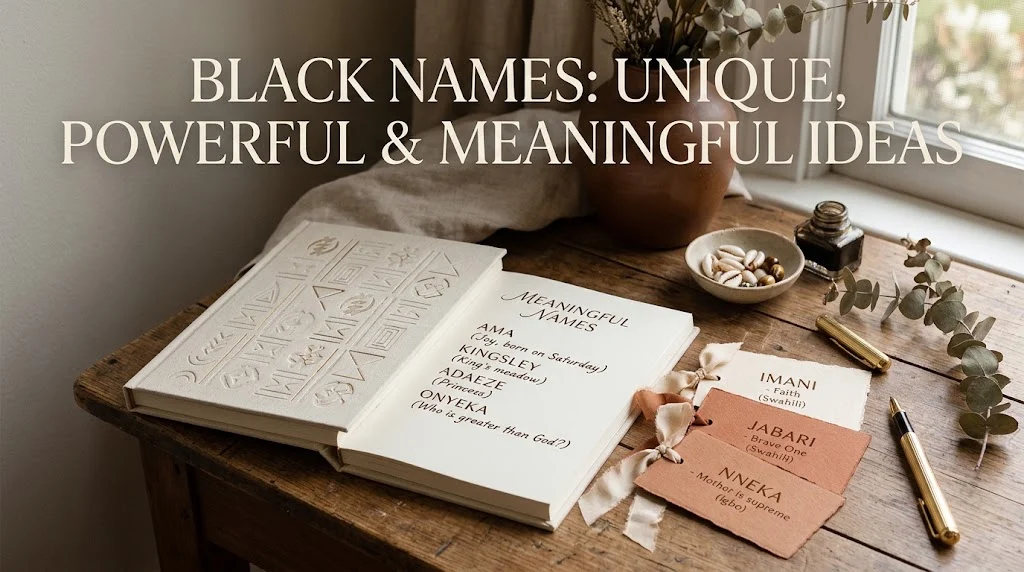
Black names include names from African, African American, Caribbean, and other Black cultural traditions. They may reflect family heritage, historical figures, spirituality, nature, personal qualities, or contemporary naming styles.
A name can tell a story before a person says a single word. It can celebrate family, honor ancestors, reflect cultural pride, or express a parent’s hopes for a child. That is what makes exploring Black names such a meaningful experience.
Black communities are wonderfully diverse, with naming traditions influenced by African languages, African American history, Caribbean cultures, religion, family customs, and modern creativity. Names such as Aaliyah, Amara, Malik, and Zuri have distinctive sounds and histories, while names such as Nia and Imani carry meanings that many families find inspiring.
There is no single style that defines Black names. Some are rooted in specific African languages, some have Arabic or Hebrew origins, and others reflect naming traditions that developed in African American communities. Many families also choose names simply because they love their sound or the meaning they represent.
Whether you are naming a baby, creating a fictional character, or exploring cultural naming traditions, this guide offers meaningful ideas to consider. Each name has its own background, personality, and appeal, helping you find a choice that feels special and memorable.
Aaliyah
Meaning: Commonly interpreted as “high,” “exalted,” or “rising.”
Origin: Arabic; the name is widely used in African American communities and many other cultures.
Personality: Aaliyah has a graceful, confident, and elegant feel. It can evoke ambition, independence, and quiet strength.
Style: Modern, feminine, elegant, timeless.
Best For: Baby girls, daughters, fictional characters, and meaningful usernames.
Popularity: Aaliyah became especially recognizable in the United States through singer Aaliyah, whose influence helped make the name familiar to a broad audience.
Emotional Appeal: Its smooth sound and uplifting meaning make Aaliyah attractive to families looking for a name that feels both beautiful and powerful.
Pop Culture Reference: The late singer Aaliyah remains an important cultural reference associated with the name.
Similar Names: Aliyah, Amaya, Aniyah, Alana, Ayana.
Why It Still Works Today: Aaliyah balances a fashionable sound with a meaningful origin. It feels suitable for a child while remaining elegant and recognizable in adulthood.
Amara
Meaning: Meanings vary by language; in Igbo, amara is associated with grace, while the name also has other linguistic histories.
Origin: Used across several cultures, including Igbo-speaking communities in Nigeria.
Personality: Amara feels warm, thoughtful, graceful, and confident. Its soft sound gives it a gentle quality without making it feel overly delicate.
Style: Elegant, modern, multicultural, feminine.
Best For: Baby girls, daughters, story characters, and creative usernames.
Popularity: Amara has attracted interest among families looking for short, internationally recognizable names. Its use is not limited to any one community.
Emotional Appeal: The association with grace makes it appealing to parents who want a name that feels positive and meaningful.
Pop Culture Reference: Amara appears in different works of entertainment and literature, although the name’s associations depend on the specific reference.
Similar Names: Ama, Amari, Anara, Samara, Zara.
Why It Still Works Today: Amara is easy to say in many languages and has a graceful rhythm. Its multicultural background makes it a versatile choice for families who value both meaning and sound.
Zuri
Meaning: Beautiful or good, depending on the linguistic context; in Swahili, zuri means “beautiful.”
Origin: Swahili, a language widely spoken in East Africa.
Personality: Zuri feels bright, creative, cheerful, and self-assured.
Style: Short, modern, playful, stylish.
Best For: Baby girls, nicknames, fictional characters, and social media usernames.
Popularity: Zuri has become more familiar to English-speaking audiences, particularly in the United States, where it appeals to parents seeking short names with positive meanings.
Emotional Appeal: Its meaning gives the name an uplifting message, while its two-syllable structure makes it easy to remember.
Pop Culture Reference: Zuri is used as a character name in various entertainment settings, including Disney’s Jessie.
Similar Names: Zola, Zaria, Zahara, Nia, Kira.
Why It Still Works Today: Zuri combines a clear meaning with a modern sound. It is a good option for parents who want a name that feels distinctive without being difficult to pronounce.
Nia
Meaning: Purpose in Swahili.
Origin: Swahili, with broader cultural significance through African American celebrations and naming practices.
Personality: Nia feels thoughtful, focused, calm, and determined.
Style: Minimalist, modern, meaningful, timeless.
Best For: Baby girls, daughters, characters, and short, memorable usernames.
Popularity: Nia has long been familiar in English-speaking countries. Its simple spelling and positive meaning contribute to its lasting appeal.
Emotional Appeal: A name meaning “purpose” can express a family’s hope that a child will grow into a life guided by values, curiosity, and direction.
Pop Culture Reference: Nia is also a familiar personal name in film, television, and public life.
Similar Names: Mia, Nyah, Nala, Nina, Zia.
Why It Still Works Today: Nia is short but meaningful. It works well across many settings and offers a positive connection to Swahili without requiring a complicated pronunciation.
Imani
Meaning: Faith.
Origin: Swahili and Arabic linguistic traditions are relevant to the name’s history and use.
Personality: Imani suggests hope, trust, resilience, and inner strength.
Style: Meaningful, elegant, spiritual, classic.
Best For: Baby girls and boys in some naming traditions, characters, and families seeking a name with spiritual significance.
Popularity: Imani is an established name in the United States and has been used by families from a range of cultural backgrounds.
Emotional Appeal: Faith is a powerful concept for many families. The name can reflect religious beliefs, trust in the future, or confidence during difficult times.
Pop Culture Reference: Imani appears as a personal name in entertainment and public life, but its meaning is the strongest reason many families choose it.
Similar Names: Iman, Amari, Amani, Nia, Zuri.
Why It Still Works Today: Imani carries a clear, positive meaning and a smooth sound. It is especially suitable for people who want a name that expresses hope and personal conviction.
Malik
Meaning: King.
Origin: Arabic. Malik is used across many communities, including African American communities.
Personality: Malik feels confident, dignified, determined, and strong.
Style: Bold, classic, masculine, modern.
Best For: Baby boys, sons, fictional heroes, and strong character names.
Popularity: Malik has been established as a personal name in many countries and communities for decades.
Emotional Appeal: Its meaning can symbolize leadership, dignity, and self-confidence. It offers a powerful message without needing an elaborate name.
Pop Culture Reference: Malik appears in sports, music, literature, and entertainment. Its many public uses have helped make it widely recognizable.
Similar Names: Malachi, Amir, Jamal, Kamil, Z Malik-inspired combinations.
Why It Still Works Today: Malik is short, memorable, and culturally versatile. Its traditional Arabic meaning gives it depth, while its strong sound makes it suitable for contemporary naming.
Kofi
Meaning: Traditionally associated with a boy born on Friday.
Origin: Akan naming traditions of Ghana.
Personality: Kofi feels friendly, confident, lively, and grounded in cultural heritage.
Style: Traditional, distinctive, meaningful, masculine.
Best For: Baby boys, family heritage projects, historical characters, and creative writing.
Popularity: Kofi is well known internationally, although its familiarity varies by country and community.
Emotional Appeal: Akan day names connect a child’s name with the day of the week on which the child is born. This tradition gives Kofi a specific cultural context beyond its sound.
Pop Culture Reference: Kofi Annan, the Ghanaian diplomat and former United Nations secretary-general, is a prominent person associated with the name.
Similar Names: Kwame, Kojo, Kwaku, Kobina, Kweku.
Why It Still Works Today: Kofi offers a direct connection to Ghanaian Akan culture. For families with relevant heritage, it can be a meaningful way to recognize a long-standing naming tradition.
Amari
Meaning: The meaning and origin vary depending on the language and cultural tradition.
Origin: Amari is used in several cultures and languages. Its precise origin should be checked against the intended cultural context.
Personality: Amari feels energetic, friendly, creative, and confident.
Style: Modern, versatile, contemporary, unisex in some communities.
Best For: Baby boys or girls, fictional characters, and modern usernames.
Popularity: Amari has gained recognition in the United States and is used for children of different genders.
Emotional Appeal: Its flowing sound and flexible use appeal to families who prefer names that feel current and adaptable.
Pop Culture Reference: Amari is used by different fictional characters and public figures, so its associations depend on the particular reference.
Similar Names: Amara, Amir, Ari, Kamari, Omari.
Why It Still Works Today: Amari feels contemporary and easy to pronounce. Because its origins and meanings differ across sources, families should verify the specific meaning they intend to associate with it.
Ayana
Meaning: The meaning depends on the language and tradition; different explanations appear in name references.
Origin: Ayana has been used in multiple cultures, including African and other international naming traditions.
Personality: Ayana feels gentle, expressive, graceful, and imaginative.
Style: Elegant, lyrical, feminine, modern.
Best For: Baby girls, daughters, fictional characters, and distinctive usernames.
Popularity: Ayana is familiar in several countries but remains less universally common than some short, established names.
Emotional Appeal: Its melodic sound makes it attractive to parents who want a name that feels warm and graceful.
Pop Culture Reference: The name appears in contemporary media and public life, although there is no single reference that defines it.
Similar Names: Ayanna, Aiyana, Amina, Amaya, Anaya.
Why It Still Works Today: Ayana has an elegant rhythm and an international feel. Because its meaning can vary, it is best to select a well-supported interpretation tied to the cultural origin that matters to you.
Omari
Meaning: Commonly associated with Arabic name traditions; exact interpretations may vary by source.
Origin: Related to the Arabic name Umar and used in various African and African American naming contexts.
Personality: Omari feels confident, composed, strong, and approachable.
Style: Classic, masculine, modern, distinctive.
Best For: Baby boys, sons, fictional characters, and memorable usernames.
Popularity: Omari is an established personal name in several English-speaking communities and is recognizable without being as ubiquitous as some traditional choices.
Emotional Appeal: Its strong sound and cultural history appeal to families looking for a name with a sense of identity and character.
Pop Culture Reference: Omari Hardwick, an American actor, is one well-known person with this name.
Similar Names: Omar, Amir, Malik, Kamari, Amari.
Why It Still Works Today: Omari combines a familiar sound with a distinctive rhythm. Its history across cultures makes it a meaningful choice for families who appreciate its linguistic background.
Quick Comparison Table
| Name | Meaning | Style | Best For |
|---|---|---|---|
| Aaliyah | High or exalted | Elegant, modern | Baby girls |
| Amara | Grace in Igbo | Soft, multicultural | Baby girls |
| Zuri | Beautiful in Swahili | Short, stylish | Baby girls, usernames |
| Nia | Purpose in Swahili | Minimalist, meaningful | Babies, characters |
| Imani | Faith | Spiritual, classic | Babies, characters |
| Malik | King | Strong, classic | Baby boys |
| Kofi | Boy born on Friday | Traditional, cultural | Baby boys |
| Amari | Varies by origin | Modern, versatile | Boys or girls |
| Ayana | Varies by origin | Graceful, lyrical | Baby girls |
| Omari | Connected to Arabic name traditions | Strong, modern | Baby boys |
How to Choose the Perfect Black Name
Choosing a name is a personal decision. These tips can help you find one that feels meaningful and suitable.
1. Start with the cultural background. Decide whether you are looking for a name from a particular African language, African American tradition, Caribbean culture, or another community. Black identity includes many cultures, so a specific origin can help narrow your search.
2. Research the meaning. A name may have different meanings in different languages. Check reliable references before accepting a popular online explanation.
3. Think about family heritage. Names can honor parents, grandparents, ancestors, or places that matter to a family. Talking with relatives may reveal names that are not widely listed online.
4. Consider pronunciation and spelling. Say the name aloud with the family name. Consider how it will sound at school, at work, and in everyday conversation.
5. Choose a style you love. You might prefer a short name such as Nia, a traditional name such as Kofi, or a bold name such as Malik. There is no single correct style.
6. Check the name’s gender usage. Some names are traditionally associated with one gender, while others are used more flexibly. Usage can differ across cultures and generations.
7. Respect the name’s context. If you choose a name from a culture outside your own, learn about its meaning and traditions. A name’s history can be just as important as its sound.
8. Picture the name at every age. Consider whether it feels suitable for a baby, a teenager, and an adult. A name that grows comfortably with the person can be a lasting choice.
Most Popular Black Names Today
There is no single list of names that represents every Black community. Popularity differs by country, generation, and family background. However, the following names are recognizable choices that many readers may wish to explore:
Girls’ names:
- Aaliyah
- Amara
- Zuri
- Nia
- Imani
- Ayana
- Naomi
- Maya
- Amina
- Simone
Boys’ names:
- Malik
- Kofi
- Omari
- Amir
- Elijah
- Isaiah
- Jordan
- Xavier
- Jamal
- Andre
Some of these names have African linguistic roots, while others come from Arabic, Hebrew, French, or other traditions. Their use in Black communities reflects the diversity of cultural and family histories.
For current popularity rankings, consult official birth-name statistics for the country you are interested in rather than assuming that a name is popular everywhere.
Vintage Black Names Making a Comeback
Vintage names can connect generations and bring a sense of history to a new baby’s identity. Their popularity changes over time, but many remain meaningful because they are associated with family, culture, and personal stories.
Names worth exploring include:
- Dorothy: A traditional English name with a long history.
- Evelyn: A classic name used across generations.
- Thelma: A vintage name associated with earlier generations.
- Ruth: A biblical name with a long history.
- Clara: A classic name associated with clarity and brightness through its Latin roots.
- Josephine: A traditional name with an elegant sound.
- Walter: A historic masculine name.
- Theodore: A classic name of Greek origin.
- Louis: A traditional name with European roots.
- Frederick: An established name with Germanic origins.
These names are not exclusively Black names. They are examples of traditional names that may be found in Black families, just as they are found in many other communities. Family records and oral histories can be especially helpful when searching for names from earlier generations.
Modern Black Naming Trends
Black naming traditions are diverse and continue to evolve. Modern choices can reflect cultural heritage, family creativity, personal meaning, and international influences.
Names with meaningful origins: Names such as Imani, Nia, and Zuri attract attention because their meanings are clear in Swahili and connect with positive ideas.
Names rooted in specific African cultures: Akan day names such as Kofi and Kwame reflect established naming traditions in Ghana. Learning the cultural context helps preserve their meaning.
Names with international histories: Names such as Malik and Aaliyah have linguistic histories that extend beyond any one community. Their popularity reflects the way names move across cultures.
Short and memorable names: Parents may prefer names that are easy to spell and pronounce. Nia and Zuri are examples of concise names with distinctive sounds.
Flexible gender usage: Some modern names are used for children of different genders. However, gender associations should be checked within the specific cultural context.
Family-inspired creativity: Some families choose a familiar name, combine family names, or select a new spelling. These choices can carry personal meaning even when they do not follow a traditional naming pattern.
The most important point is that no single trend defines Black naming. Every family can make a choice that reflects its own history, values, and preferences.
What Makes a Name a Black Name?
The term “Black names” is broad. It can refer to names used within African American communities, names rooted in African languages, or names associated with other Black communities around the world.
A name’s cultural significance depends on its history, language, and use. Some names have clear connections to a specific African culture, while others became common in Black communities through religion, migration, family traditions, or broader cultural influences.
FAQs
Are Black Names Always African in Origin?
No. Black people have diverse cultural and family histories. Names used in Black communities can come from African languages, Arabic, Hebrew, English, French, Spanish, and many other linguistic traditions.
What Are Some Unique Black Names for Girls?
Names such as Zuri, Nia, Ayana, Aaliyah, and Amara may appeal to readers looking for distinctive choices.
What Are Some Strong Black Names for Boys?
Malik, Kofi, and Omari are examples of names with distinctive sounds and cultural or linguistic histories.
Are African Names and African American Names the Same?
No. African names may come from particular languages and cultural traditions across the African continent.
Can I Choose a Black Name If I Am Not Black?
Anyone can research names from different cultures, but cultural understanding matters. Learn the name’s meaning, pronunciation, and history, and consider whether it has a specific ceremonial, religious, or community significance.
Conclusion
Choosing a name is an opportunity to celebrate identity, family, history, and personal meaning. Black names offer a wide range of possibilities, from African names rooted in specific languages to names shaped by African American history and broader cultural influences.
Aaliyah, Amara, Zuri, Nia, and Imani offer distinctive options for girls, while Malik, Kofi, and Omari provide meaningful choices for boys. Each name has its own story, and understanding that story can make the final decision more rewarding.
Take time to explore the language, origin, pronunciation, and cultural context of the names you love. If a name connects with your family’s heritage or simply expresses something important to you, that connection can make it especially meaningful.
Which name is your favorite? Share this guide with someone looking for inspiration, and leave a comment with the names you would add to the list.
Discover More Related Articles:
- Best Fantasy Football Names 2025 | Funny & Clever Ideas In 2026
- Two Syllable Boy Names | Beautiful Ideas With Meanings In 2026