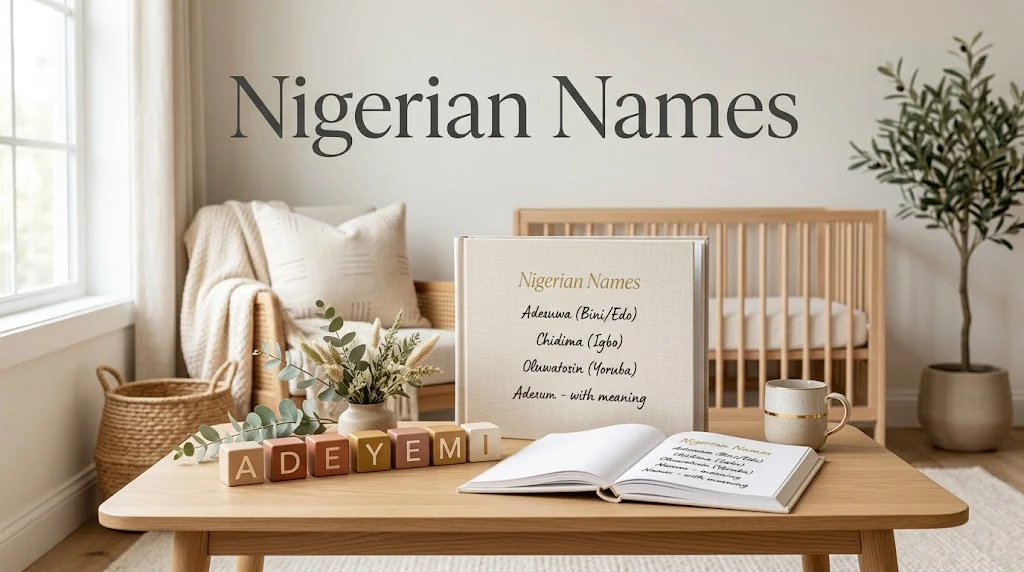
Nigerian names come from many cultural and linguistic traditions, including Yoruba, Igbo, Hausa, and others. Many names carry meanings connected to family, faith, gratitude, strength, beauty, birth circumstances, or hope.
A name can carry much more than a pleasant sound. It can tell a story about family, culture, faith, hope, or the circumstances surrounding a child’s arrival. That is one reason Nigerian names are so interesting. Nigeria is home to many ethnic groups and languages, so its naming traditions are wonderfully diverse.
A Yoruba name may express joy, wealth, destiny, or family history. An Igbo name may reflect gratitude, faith, or the importance of a child. Hausa names can also carry strong religious and cultural connections, particularly names shared across wider West African and Islamic naming traditions.
Another lovely part of choosing a Nigerian name is the possibility of using a shorter nickname in everyday life. A formal name can feel traditional and meaningful, while a nickname can sound playful, warm, or modern.
In this guide, we explore ten Nigerian names and nickname possibilities, along with their meanings, cultural backgrounds, personalities, styles, and best uses. Because Nigerian naming traditions are diverse, meanings can sometimes vary by language, spelling, or context.
Ada
Meaning: First daughter; daughter of honor or distinction in Igbo naming contexts.
Origin: Igbo, southeastern Nigeria.
Personality: Ada feels graceful, confident, warm, and quietly strong. It has the kind of personality that works equally well for someone gentle and someone determined. The name can feel connected to family pride without sounding overly formal.
Style: Classic, elegant, short, traditional, feminine.
Best For: Baby girl, daughter, sister, best friend, social media nickname.
Popularity: Ada is an established name rather than a passing trend. Its short form makes it especially easy to use internationally.
Emotional Appeal: There is something beautifully simple about Ada. It feels affectionate without being overly cute, and its connection with daughterhood gives it a special family-centered feeling.
Pop Culture Reference: Ada is also a widely used name outside Nigeria, including in literature and modern entertainment, although those uses do not define its Nigerian meaning.
Similar Nicknames: Addy, Adie, Dada, Adah, A.
Why It Still Works Today: Ada is short, memorable, and easy to pronounce. It can sit comfortably beside a traditional Nigerian surname while also fitting a modern naming style. For parents who want something culturally meaningful but uncomplicated, Ada is an appealing choice.
Amara
Meaning: Grace, mercy, or related concepts depending on linguistic context.
Origin: The name is strongly associated with Igbo usage in Nigeria, although similar forms occur in other languages and cultures.
Personality: Amara feels calm, thoughtful, graceful, and optimistic. It has a soft sound but does not feel fragile. Someone called Amara might easily suit a creative, compassionate, or quietly confident personality.
Style: Elegant, modern, soft, sophisticated, international.
Best For: Baby girl, daughter, sister, friend, username, affectionate nickname.
Popularity: Amara has gained international recognition and works particularly well for families looking for a name with African roots and a contemporary sound.
Emotional Appeal: The name has a warm, uplifting quality. Its association with grace and positive ideas makes it attractive for parents who want the meaning to feel as beautiful as the pronunciation.
Pop Culture Reference: Amara has appeared as a character name in various books and screen productions, but individual uses should not be confused with its Nigerian linguistic background.
Similar Nicknames: Ama, Mari, Mara, Ari, Amy.
Why It Still Works Today: Amara balances heritage and modern style. It does not require a complicated nickname because the original name is already easy to say, while Ama or Mara can give it a more casual everyday feel.
Chioma
Meaning: Good fortune, good life, or blessed goodness, depending on interpretation and context.
Origin: Igbo, southeastern Nigeria.
Personality: Chioma feels joyful, friendly, generous, and bright. It has an expressive quality that suits someone who brings warmth into a room. The name can feel both traditional and affectionate.
Style: Traditional, warm, melodic, feminine, meaningful.
Best For: Baby girl, daughter, sister, close friend, family nickname.
Popularity: Chioma is a recognizable Igbo name and remains closely connected with Nigerian identity.
Emotional Appeal: Its positive meaning gives Chioma a naturally hopeful feeling. It can remind a family of gratitude, good fortune, and the happiness associated with a loved one.
Pop Culture Reference: Chioma has been used by numerous Nigerian public figures and personalities, making it familiar to many people in contemporary Nigerian culture.
Similar Nicknames: Chichi, Chi, Oma, Mimi, Chio.
Why It Still Works Today: Chioma has a distinctive sound while remaining easy to turn into affectionate short forms. Chichi and Chi can feel playful, while Oma offers a softer alternative. The full name keeps its cultural richness even when a nickname is used.
Chinedu
Meaning: God leads or God guides, based on its Igbo linguistic elements.
Origin: Igbo, southeastern Nigeria.
Personality: Chinedu sounds dependable, thoughtful, grounded, and strong. It suits a person who gives others a sense of stability. The meaning also gives the name a clear spiritual dimension for families who value faith in naming.
Style: Traditional, strong, spiritual, classic, masculine.
Best For: Baby boy, son, brother, friend, family nickname.
Popularity: Chinedu is an established Nigerian name, particularly associated with Igbo-speaking communities.
Emotional Appeal: Parents often choose names with meanings that express hopes or beliefs. Chinedu can carry the comforting idea of divine guidance, making it emotionally meaningful.
Pop Culture Reference: Chinedu is also found among Nigerian actors, athletes, musicians, and other public figures. These modern uses have helped keep the name recognizable.
Similar Nicknames: Chine, Nedu, Chino, Eddy, Chined.
Why It Still Works Today: Chinedu has a traditional foundation but can easily be shortened. Nedu and Chino provide more casual options, while the complete name retains its formal and cultural character.
Ifeoma
Meaning: Good thing, beautiful thing, or something precious, depending on translation and context.
Origin: Igbo, southeastern Nigeria.
Personality: Ifeoma feels affectionate, elegant, caring, and optimistic. It has a gentle rhythm that gives it a warm personality. The name works particularly well for someone associated with kindness and beauty of character.
Style: Traditional, feminine, graceful, soft, melodic.
Best For: Baby girl, daughter, sister, close friend, family nickname.
Popularity: Ifeoma is a well-established Igbo name with a distinctly Nigerian identity.
Emotional Appeal: Names that express something precious can feel especially meaningful within a family. Ifeoma has that quality: it sounds like a name chosen with affection and appreciation.
Pop Culture Reference: Ifeoma is used by Nigerian public figures and appears across Nigerian literature and popular culture, although individual associations vary.
Similar Nicknames: Ify, Ife, Oma, Fifi, Ifo.
Why It Still Works Today: Ifeoma has enough character to stand out while offering several easy nicknames. Ify is particularly casual and friendly, while Ife keeps more of the original sound.
Tunde
Meaning: A shortened form of names such as Babatunde, commonly interpreted as “father has returned” or “the father has returned.”
Origin: Yoruba, southwestern Nigeria.
Personality: Tunde feels friendly, confident, energetic, and approachable. It is the sort of name that sounds equally natural among relatives, classmates, coworkers, and friends.
Style: Classic, friendly, masculine, familiar, versatile.
Best For: Baby boy, son, brother, friend, adult nickname.
Popularity: Tunde is a familiar Yoruba name and short form. Its compact structure also makes it easy to use outside Nigeria.
Emotional Appeal: The idea behind Babatunde connects the name with family continuity and the emotional importance of generations. As a short form, Tunde keeps that connection while sounding casual.
Pop Culture Reference: Tunde is used by Nigerian and international public figures, particularly in media, sports, business, and entertainment.
Similar Nicknames: Tun, Tuns, T, Tundy, Dey.
Why It Still Works Today: Tunde does not feel tied to only one age group. It can suit a child, teenager, or adult, which gives it lasting usefulness. It also sounds natural in both formal and casual settings.
Ayo
Meaning: Joy.
Origin: Yoruba, southwestern Nigeria.
Personality: Ayo feels cheerful, lively, optimistic, and welcoming. Its meaning is wonderfully direct, so the personality naturally follows: happiness, warmth, and positive energy.
Style: Short, modern, cheerful, unisex, stylish.
Best For: Baby boy, baby girl, friend, sibling, family nickname, username.
Popularity: Ayo is a familiar Yoruba name and short form. Its simplicity makes it appealing in both traditional and modern settings.
Emotional Appeal: Few meanings are as universally uplifting as joy. Ayo can represent the happiness a child brings to a family or simply the hope for a joyful life.
Pop Culture Reference: Ayo appears in Nigerian music, entertainment, sports, and public life. It is also used as a given name and as part of longer Yoruba names.
Similar Nicknames: Ay, Yoyo, A, Yoy, Ay-Ay.
Why It Still Works Today: Ayo is short, memorable, and easy to pronounce. It also works across genders in some naming contexts, giving modern families more flexibility. As a nickname, it has an upbeat sound that is easy for friends and family to embrace.
Zainab
Meaning: A traditional Arabic name with several historical interpretations; it is widely used in Muslim communities, including Nigeria.
Origin: Arabic, with widespread use in northern Nigeria and other Muslim communities.
Personality: Zainab feels graceful, composed, intelligent, and confident. It has a classic quality that can suit someone who is calm and self-assured.
Style: Classic, elegant, religious, feminine, timeless.
Best For: Baby girl, daughter, sister, friend, formal name with a cute short form.
Popularity: Zainab is an established name across many Muslim-majority and Muslim communities worldwide, including Nigeria.
Emotional Appeal: Zainab has a strong historical and religious presence. For many families, that connection gives the name a sense of tradition and continuity.
Pop Culture Reference: Zainab is a common personal name among Nigerian and international public figures, as well as historical and religious figures.
Similar Nicknames: Zai, Zaina, Zizi, Zee, Nabi.
Why It Still Works Today: Zainab combines heritage with flexibility. The full name feels dignified, while short forms such as Zai or Zee can create a more relaxed everyday identity.
Amina
Meaning: Often associated with trustworthy, faithful, safe, or secure, depending on the Arabic form and interpretation.
Origin: Arabic; widely used in Nigeria, especially among Muslim communities.
Personality: Amina feels gentle, trustworthy, intelligent, and composed. It has a peaceful sound that works beautifully for someone with a calm and caring personality.
Style: Classic, elegant, traditional, international, feminine.
Best For: Baby girl, daughter, sister, friend, family nickname.
Popularity: Amina is an established name across Africa and the wider Muslim world. Its international familiarity makes it easy to recognize and pronounce.
Emotional Appeal: The name’s associations with trust and safety can make it especially meaningful for families looking for a name with a positive character-based meaning.
Pop Culture Reference: Amina is connected with historical and cultural figures across Africa and the Muslim world, including the well-known Hausa historical tradition surrounding Queen Amina of Zazzau.
Similar Nicknames: Ami, Mina, Mimi, Mina-B, Amy.
Why It Still Works Today: Amina has a timeless structure. It can sound traditional in a family setting but equally natural in a modern classroom or workplace. Mina and Ami also provide simple nickname options.
Chukwuemeka
Meaning: God has done great or wonderful things.
Origin: Igbo, southeastern Nigeria.
Personality: Chukwuemeka feels strong, grateful, spiritual, and thoughtful. Its meaning gives it a clear sense of celebration and appreciation.
Style: Traditional, spiritual, powerful, formal, meaningful.
Best For: Baby boy, son, family name, formal name with a shorter nickname.
Popularity: Chukwuemeka is a recognizable Igbo name and remains an important example of the way personal names can express faith and gratitude.
Emotional Appeal: The meaning is especially powerful because it sounds like a statement of gratitude. For families who see a child’s arrival as a blessing, this type of name can carry deep emotional significance.
Pop Culture Reference: Chukwuemeka is used by Nigerian athletes, academics, entertainers, and other public figures.
Similar Nicknames: Emeka, Chuks, Chukwu, Mek, Emeks.
Why It Still Works Today: The full name is distinctive and culturally rich, while Emeka and Chuks make it easier for everyday conversation. This combination gives families the best of both worlds: a meaningful formal name and practical short forms.
Quick Comparison Table
| Name | Meaning | Style | Best For |
|---|---|---|---|
| Ada | First daughter / daughter of distinction | Classic | Baby girl |
| Amara | Grace or mercy | Modern & elegant | Baby girl |
| Chioma | Good thing / good fortune | Traditional | Baby girl |
| Chinedu | God leads or guides | Strong & spiritual | Baby boy |
| Ifeoma | Good or beautiful thing | Soft & classic | Baby girl |
| Tunde | Father has returned | Friendly & classic | Baby boy |
| Ayo | Joy | Cheerful & modern | Boy or girl |
| Zainab | Traditional Arabic name | Elegant & timeless | Baby girl |
| Amina | Trustworthy / faithful | Classic | Baby girl |
| Chukwuemeka | God has done great things | Spiritual & traditional | Baby boy |
How to Choose the Perfect Nigerian Name
Choosing a name becomes easier when you look beyond how it sounds.
Start with the meaning.
Ask what you want the name to express. Do you want joy, gratitude, faith, strength, beauty, family, or hope? A meaningful name often becomes more special as the child grows.
Consider the language.
Nigeria has hundreds of languages and many naming traditions. If a name comes from Yoruba, Igbo, Hausa, or another Nigerian language, learn how it is used within that culture.
Check the pronunciation.
A beautiful name should also be comfortable for the people who will use it every day. Practice saying the full name and its likely nickname aloud.
Think about nicknames.
Some longer names naturally create short forms. Chukwuemeka can become Emeka or Chuks, while Ifeoma can become Ify. Consider whether you like both the formal name and its everyday versions.
Think about the surname.
Say the first name, middle name, and surname together. A name may sound completely different when spoken as a full combination.
Respect cultural meaning.
Avoid choosing a name simply because it sounds unusual. Understanding its linguistic and cultural background makes the choice more respectful and meaningful.
Consider the child’s whole life.
A name should work for a baby, but it will eventually belong to a teenager and an adult too. Look for something that can grow naturally with the person.
Most Popular Nigerian Nicknames Today
Nigerian names often create wonderfully short and affectionate forms. Some nickname styles are based on shortening the original name, while others develop naturally within families and friendship groups.
Here are some examples:
- Ada
- Ayo
- Ama
- Chi
- Chichi
- Ify
- Ife
- Emeka
- Chuks
- Tunde
- Mina
- Zai
- Zee
- Mimi
- Oma
The best nickname is often the one that feels natural when family and friends actually say it. A short name does not have to be complicated to feel special.
Vintage Nigerian Names Making a Comeback
Traditional names rarely disappear completely. Instead, they often move between generations. Parents may rediscover names used by grandparents or older relatives and give them a fresh place in modern families.
Examples worth exploring include:
- Ada
- Amina
- Zainab
- Ifeoma
- Chioma
- Chinedu
- Chukwuemeka
- Babatunde
- Olumide
- Yetunde
A traditional name can also feel modern when paired with a simple nickname. This is one reason older names continue to appeal to families who want something connected to heritage without making everyday use feel overly formal.
Modern Nigerian Nickname Trends
Modern Nigerian naming choices often combine heritage with flexibility. Families may choose a culturally meaningful full name while using a short nickname at home, school, work, or online.
Short names are especially convenient. Ayo, Ada, and Ama are memorable and easy to pronounce. Longer names such as Chukwuemeka or Babatunde can provide formal depth while nicknames such as Emeka or Tunde offer a relaxed alternative.
Another trend is choosing names that travel well across cultures. Nigerian families living internationally may appreciate names that preserve cultural identity while remaining relatively easy for people from different language backgrounds to say.
Social media has also influenced nickname creativity. A familiar name can become a distinctive username through spelling, initials, repetition, or a playful variation.
The important thing is to keep the original meaning and cultural background in mind rather than changing a name simply to make it sound fashionable.
What Makes Nigerian Names So Meaningful?
One of the most interesting features of Nigerian naming traditions is the connection between names and life experiences.
A name may celebrate a child’s arrival, express gratitude, describe a family hope, recognize faith, or connect the child with a particular family story. In many cases, the name is not selected only because it sounds beautiful.
This makes Nigerian names particularly rich for parents researching meaningful baby names.
It is also important to remember that Nigeria is not a single naming culture. Yoruba, Igbo, Hausa, Fulani, Kanuri, Edo, Ibibio, Efik, and many other communities have their own languages and traditions. Even names that appear similar can have different meanings or cultural uses.
When researching a name, therefore, it is best to verify its spelling, pronunciation, language, and meaning from a reliable cultural or linguistic source.
Nigerian Names and Nicknames: A Quick Guide
What does a Nigerian name mean?
It depends on the language and culture. Nigerian names can express ideas such as joy, gratitude, faith, family, beauty, strength, or birth circumstances.
Why do Nigerian names have nicknames?
Like names in many cultures, Nigerian names can naturally be shortened for everyday conversation. Family and friends may also create affectionate forms.
Are Nigerian names only traditional?
No. Nigerian naming today includes traditional names, Christian and biblical names, Islamic names, English names, and newer combinations, depending on the family and community.
Can a Nigerian name work internationally?
Yes. Names such as Ada, Ayo, Amara, Amina, and Tunde are relatively concise and can be easy to use in multicultural settings.
Are all Nigerian names African in origin?
Nigerian naming traditions include names from indigenous Nigerian languages as well as Arabic, English, Hebrew, and other traditions adopted through religion, history, and cultural exchange.
Is it okay to use a nickname instead of a full name?
That depends on the person and situation. A nickname may be perfect for family and friends, while a full name may be preferred for formal documents and professional settings.
FAQs
What are some beautiful Nigerian names?
Beautiful Nigerian names include Ada, Amara, Chioma, Ifeoma, Ayo, Tunde, Chinedu, Amina, Zainab, and Chukwuemeka.
What are popular Nigerian girl names?
Names such as Ada, Amara, Chioma, Ifeoma, Amina, and Zainab are examples of recognizable names used in Nigerian communities.
What are popular Nigerian boy names?
Chinedu, Chukwuemeka, Tunde, and many other names are used by Nigerian families.
What Nigerian names mean joy?
Other Nigerian names can express happiness, gratitude, blessings, or positive family experiences, although the exact meaning can change depending on the language and the interpretation of individual name elements.
Are Nigerian names unique?
Many Nigerian names may feel distinctive to people unfamiliar with the country’s languages, but uniqueness should not be the only reason for choosing one.
Conclusion
The beauty of Nigerian names lies in their variety and the stories they can carry. A short name such as Ada or Ayo can feel simple and modern, while a longer name such as Chukwuemeka can preserve a powerful message of faith and gratitude.
When choosing a name, look beyond sound. Explore its language, meaning, cultural background, pronunciation, and possible nickname. The right name should feel meaningful to the family while remaining comfortable for the person who will carry it.
Whether you prefer something traditional, elegant, cheerful, spiritual, or modern, there are many wonderful Nigerian names to explore. Pick the one that speaks to you and fits your story best. If you enjoyed these ideas, share this guide with someone searching for a meaningful name and leave a comment with your favorite.
Discover More Related Articles:
- 95+ Mountain Names | Beautiful & Powerful Names In 2026
- 97+ Earthy Names | Inspired by Trees, Flowers, Mountains & the Sea In 2026