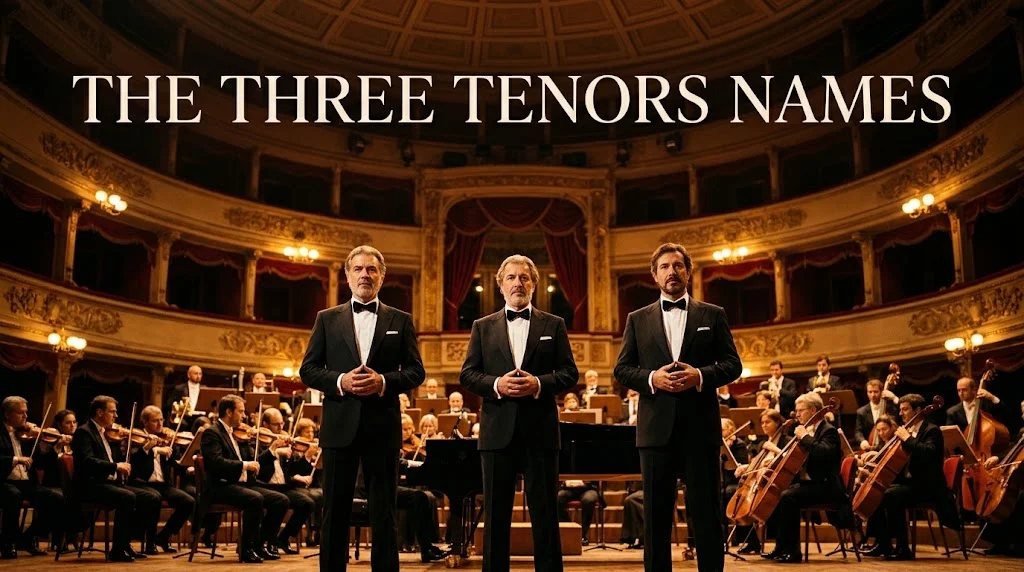
The Three Tenors were Luciano Pavarotti, Plácido Domingo, and José Carreras. These world-famous opera singers performed together in concerts that introduced classical vocal music to millions of people around the world.
Some musical groups become famous for their songs, while others change how people experience an entire genre. The Three Tenors did both. Their powerful voices, memorable performances, and shared love of opera helped bring classical music to audiences far beyond traditional opera houses.
If you are searching for the three tenors names, the answer is Luciano Pavarotti, Plácido Domingo, and José Carreras. These three celebrated singers came from different backgrounds but shared extraordinary vocal talent and international success.
Their collaboration became a major musical event in 1990, when they performed together in Rome before the FIFA World Cup final. The concert attracted worldwide attention and helped make opera more accessible to everyday listeners.
In this guide, you will discover each singer’s background, musical style, career highlights, and lasting influence. You will also learn how the trio came together, which performances made them famous, and why their music continues to attract new listeners.
Who Were the Three Tenors?


The Three Tenors were three internationally acclaimed opera singers who performed together as a trio:
- Luciano Pavarotti | the Italian tenor famous for his brilliant, powerful voice.
- Plácido Domingo | the Spanish singer celebrated for his versatility as a tenor and his later work as a conductor.
- José Carreras | the Spanish tenor admired for his expressive singing and emotional interpretations.
Their first major joint concert took place on July 7, 1990, at the Baths of Caracalla in Rome, Italy. The event was associated with the 1990 FIFA World Cup and was conducted by Zubin Mehta.
The concert’s combination of famous opera arias, popular songs, and the singers’ distinct personalities created a special experience for audiences. Their success led to further concerts, recordings, and television broadcasts.
Luciano Pavarotti

Full name: Luciano Pavarotti
Nationality: Italian
Born: October 12, 1935
Died: September 6, 2007
Musical style: Lyric tenor, opera, classical crossover
Luciano Pavarotti was one of the most recognizable opera singers of the twentieth century. Born in Modena, Italy, he became famous for his bright, resonant voice, impressive high notes, and ability to communicate emotion to large audiences.
His career included performances at leading opera houses around the world. He became particularly associated with roles in Italian opera, including works by Giuseppe Verdi and Giacomo Puccini. His performance of the aria Nessun dorma became one of his signature musical moments.
Pavarotti’s friendly public personality and clear vocal delivery helped introduce opera to listeners who might never have attended a traditional opera performance.
As one of the Three Tenors, he helped transform their concerts into major international events. His legacy continues through recordings, broadcasts, and the influence he had on classical music audiences.
Plácido Domingo

Full name: Plácido Domingo
Nationality: Spanish
Born: January 21, 1941
Musical style: Opera, tenor repertoire, conducting
Plácido Domingo is a Spanish opera singer known for his broad repertoire, dramatic interpretations, and long career on the international stage. Born in Madrid, he grew up in a musical family and developed a career that extended across opera, concerts, and recordings.
Domingo became known for performing a wide range of roles, particularly in Italian and French opera. Over time, he also built a reputation as a conductor and arts administrator.
His versatility made him an important member of the Three Tenors. While Pavarotti was celebrated for his distinctive high notes and Carreras for his expressive tone, Domingo brought dramatic intensity and flexibility to their performances.
The trio’s concerts helped Domingo reach listeners outside the usual opera audience. His career has remained an important part of discussions about modern opera and international classical music.
José Carreras

Full name: Josep Maria Carreras i Coll, professionally known as José Carreras
Nationality: Spanish, from Catalonia
Born: December 5, 1946
Musical style: Lyric tenor, opera, classical concert
José Carreras developed an international career through his expressive voice and emotionally engaging performances. Born in Barcelona, Spain, he became interested in music at an early age and went on to perform leading roles in major opera productions.
Carreras was particularly admired for the warmth and lyrical quality of his singing. His interpretations of Italian opera helped establish his reputation as a leading tenor.
In 1987, he was diagnosed with leukemia. After treatment and recovery, he returned to performing and later helped establish the José Carreras International Leukemia Foundation, which supports research and efforts to combat the disease.
His participation in the Three Tenors concerts brought his voice to an enormous international audience. His musical legacy includes opera performances, recordings, and charitable work.
How Did the Three Tenors Become Famous?
The trio became widely known following their landmark concert in Rome on July 7, 1990. The performance took place at the Baths of Caracalla as part of the cultural celebrations surrounding the FIFA World Cup.
The concert was special because it brought together three major opera stars in one event. Rather than presenting a traditional opera with a single storyline, the singers performed a selection of arias and other songs designed for a concert audience.
Their chemistry, individual vocal strengths, and shared performances made the event memorable. Television broadcasts and recordings expanded its reach beyond the people who attended in person.
The Three Tenors later performed together at other major events, including the 1994 World Cup concert in Los Angeles. Their recordings became exceptionally successful, helping classical music reach a much wider audience.
What Made Each Tenor Different?
Although all three singers were celebrated tenors, each had a distinctive musical identity.
| Singer | Nationality | Known For | Distinctive Quality |
|---|---|---|---|
| Luciano Pavarotti | Italian | Famous opera arias and high notes | Bright, powerful vocal sound |
| Plácido Domingo | Spanish | Broad repertoire and dramatic roles | Versatility and dramatic intensity |
| José Carreras | Spanish | Expressive opera performances | Warm, lyrical delivery |
These descriptions are broad summaries rather than strict rankings. Vocal qualities vary by role, period, and performance, and all three singers developed extensive careers beyond their work as a trio.
Their differences helped make the collaboration effective. Instead of sounding identical, they brought their own musical personalities to the same stage.
The Most Famous Three Tenors Concert
The 1990 Rome concert remains one of the best-known events associated with the trio.

The concert featured a mixture of opera arias, ensemble performances, and songs that appealed to a broad audience. The outdoor setting and the singers’ combined fame gave it a sense of occasion.
One of the best-known pieces associated with the Three Tenors is Nessun dorma, the famous aria from Giacomo Puccini’s opera Turandot. The trio’s performances of familiar musical selections helped introduce opera to people who were new to the genre.
Their 1994 concert in Los Angeles and subsequent international appearances reinforced their reputation as a successful classical crossover collaboration.
The recordings and television broadcasts also demonstrated that classical vocal music could attract huge audiences when presented in an engaging format.
Why Were They Called the Three Tenors?
The word tenor describes a high adult male singing voice in classical music. It is one of the main voice categories used in opera, alongside bass, baritone, alto, mezzo-soprano, and soprano.
Pavarotti, Domingo, and Carreras were all renowned for their tenor singing. Their collaboration became known as the Three Tenors because it brought these three major tenor performers together.
The name was simple, memorable, and directly connected to their musical identities. It also helped distinguish their concerts and recordings from their individual solo careers.
What Is the Legacy of the Three Tenors?
The Three Tenors helped make opera and classical vocal music more familiar to a global audience. Their concerts demonstrated that famous arias could reach people who did not regularly attend opera performances.
Their influence can be seen in several areas:
- Wider audiences: Their televised concerts introduced opera to millions of viewers.
- Successful recordings: Their albums helped classical music reach mainstream record buyers.
- Cultural events: Their World Cup concerts linked classical music with major international sporting occasions.
- Individual careers: Each singer continued to be recognized for accomplishments beyond the trio.
- Lasting musical interest: Their recordings remain an accessible introduction to famous operatic voices.
The singers had different careers, personalities, and musical strengths, but their joint performances created a lasting place for them in modern music history.
FAQs
What Are the Three Tenors Names?
The Three Tenors were Luciano Pavarotti, Plácido Domingo, and José Carreras.
Which Three Tenor Was Italian?
Luciano Pavarotti was Italian. He was born in Modena, Italy, in 1935 and became famous for his powerful voice, celebrated opera performances, and signature interpretation of Nessun dorma.
Were the Three Tenors Brothers?
No, the Three Tenors were not brothers. They were three professional opera singers who came together for collaborative concerts.
When Did the Three Tenors First Perform Together?
The Three Tenors gave their landmark joint concert on July 7, 1990, at the Baths of Caracalla in Rome.
Who Was the Most Famous of the Three Tenors?
Luciano Pavarotti was arguably the most widely recognizable member of the trio, particularly among general audiences.
Conclusion
The story of the three tenors names begins with three extraordinary artists: Luciano Pavarotti, Plácido Domingo, and José Carreras. Their landmark 1990 concert in Rome brought their remarkable voices together and helped introduce opera to audiences around the world.
Each singer contributed something different. Pavarotti became famous for his powerful voice, Domingo for his versatility and dramatic performances, and Carreras for his expressive singing. Together, they created concerts that crossed cultural boundaries and made classical music more accessible.
Their collaboration remains an important chapter in modern musical history. Whether you are discovering opera for the first time or revisiting their most memorable performances, the Three Tenors offer a wonderful introduction to the beauty and emotional power of the human voice.
Share this article with a music lover, and let us know which of these legendary singers you enjoy listening to most.
Discover More Related Articles:
- Czech Last Names | Beautiful Surnames & Meanings In 2026
- V Boy Names | Unique, Modern & Meaningful Ideas In 2026