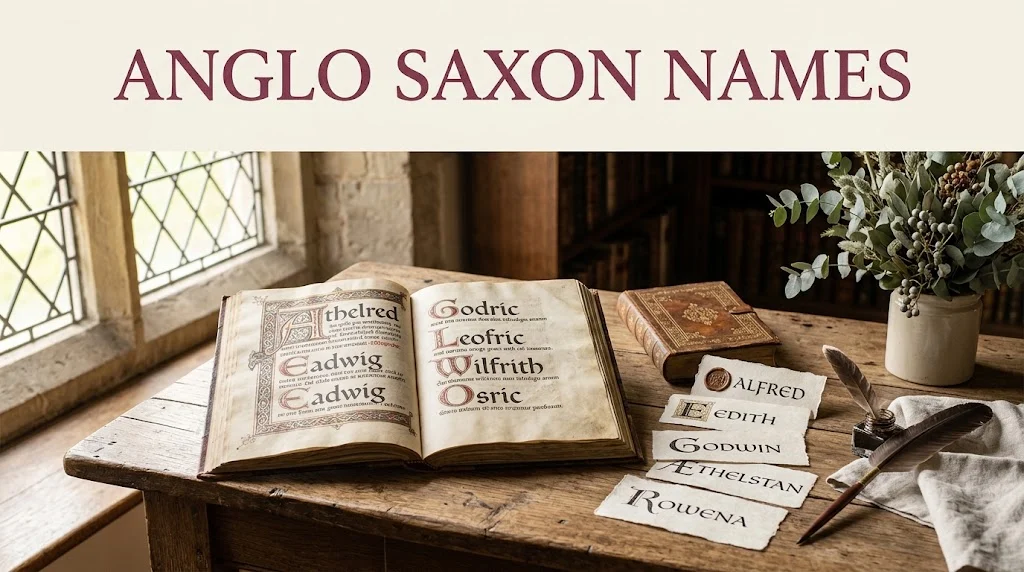
Anglo Saxon names are names associated with the early medieval English kingdoms and Old English language. Many combine Germanic elements connected with strength, protection, battle, leadership, nature, family, and personal qualities.
Names can preserve pieces of history long after the people who first used them are gone. Anglo Saxon names are a fascinating example. They are connected with the early medieval peoples and kingdoms of England and with the Old English language spoken during that period.
Many traditional names from this era were built from meaningful elements. Words associated with strength, protection, courage, power, peace, friendship, and nature could be combined to create personal names. Some names were used by kings, warriors, nobles, religious figures, and ordinary members of Anglo-Saxon communities.
Today, these historic names appeal to parents, writers, gamers, historians, and anyone who enjoys names with an old-world character. Some sound surprisingly familiar because they influenced names still used in England today. Others feel rare and distinctive.
In this guide, we explore ten Anglo-Saxon or Old English names and name forms, looking at their meanings, origins, personality, style, popularity, nickname possibilities, and why they can still work today.
Alfred
Meaning: Often interpreted from Old English elements connected with “elf” and “counsel.”
Origin: Old English, associated with Anglo-Saxon England.
Personality: Alfred feels intelligent, thoughtful, dignified, and dependable. It has an academic quality without sounding cold. The name can suit someone imagined as a careful leader, wise friend, or curious learner.
Style: Classic, vintage, royal, intellectual, traditional.
Best For: Baby boy, son, historical character, writer’s character, family name.
Popularity: Alfred is a historic English name that has remained recognizable long after the Anglo-Saxon period. Its long association with King Alfred the Great gives it particular historical importance.
Emotional Appeal: Alfred feels warm and respectable. It also has an approachable short form, making the traditional name easier to use casually.
Pop Culture Reference: Alfred is strongly associated with Alfred the Great and has also appeared widely in literature and popular culture.
Similar Nicknames: Alf, Alfie, Fred, Freddie, Al.
Why It Still Works Today: Alfred combines history with everyday usability. Alfie gives it a friendly modern nickname, while Alfred itself retains a dignified traditional feel.
Edward
Meaning: Commonly interpreted as “wealthy guardian” or “prosperous protector.”
Origin: Old English.
Personality: Edward feels responsible, calm, intelligent, and reliable. It has a polished personality that can work equally well for a child or adult.
Style: Classic, royal, elegant, traditional, timeless.
Best For: Baby boy, son, historical character, formal name.
Popularity: Edward has remained one of the best-known traditional English names and continued far beyond the Anglo-Saxon period.
Emotional Appeal: The protective meaning gives Edward a reassuring quality. Its long history also makes it feel connected to generations of English naming.
Pop Culture Reference: Several English kings were named Edward, giving the name a strong royal and historical association.
Similar Nicknames: Ed, Eddie, Eddy, Ted, Teddy.
Why It Still Works Today: Edward offers unusual flexibility. Teddy feels playful for a child, while Edward sounds polished and professional for an adult.
Eadith
Meaning: Commonly associated with “wealth” or “fortune” and “battle.”
Origin: Old English.
Personality: Eadith feels strong, independent, graceful, and historic. It has a distinctly medieval character but also an elegant sound.
Style: Vintage, rare, feminine, historic, strong.
Best For: Baby girl, historical character, fantasy character, literary character.
Popularity: The spelling Eadith is uncommon today, although the related form Edith became much more familiar in later English usage.
Emotional Appeal: Eadith is appealing to people who enjoy names that feel genuinely old rather than simply vintage-inspired. Its traditional structure gives it an authentic historical atmosphere.
Pop Culture Reference: The related name Edith appears frequently in literature and entertainment, but Eadith itself is more strongly suited to historical naming.
Similar Nicknames: Eadie, Edie, Eda, Edith, Ead.
Why It Still Works Today: Eadith provides a more unusual alternative to Edith. It is especially attractive for families or writers looking for an old English name with a distinctive spelling.
Godwin
Meaning: Often interpreted as “friend of God” or “God’s friend.”
Origin: Old English/Germanic naming tradition.
Personality: Godwin feels serious, loyal, thoughtful, and authoritative. It carries a strong medieval atmosphere and sounds particularly suited to someone imagined as a leader or counselor.
Style: Ancient, masculine, traditional, strong, historic.
Best For: Baby boy, historical character, fantasy character, family history research.
Popularity: Godwin is uncommon as a modern first name but has strong historical associations.
Emotional Appeal: The combination of friendship and faith gives the name a meaningful quality. It can appeal to families who enjoy names with a clear historical and spiritual character.
Pop Culture Reference: Godwin was used by notable figures in Anglo-Saxon England, including Earl Godwin, an influential 11th-century English nobleman.
Similar Nicknames: God, Win, Winnie, Wynn, Gody.
Why It Still Works Today: Godwin is distinctive without being invented. Its historic roots make it especially attractive for people searching for genuinely old English names rather than modern names designed to sound ancient.
Harold
Meaning: Commonly associated with elements meaning “army” and “rule” or “power.”
Origin: Old English/Germanic.
Personality: Harold feels strong, organized, courageous, and commanding. It has a traditional personality that works particularly well for someone imagined as a leader.
Style: Vintage, masculine, historic, strong, traditional.
Best For: Baby boy, historical character, warrior character, family name.
Popularity: Harold was once much more common in England and remains recognizable today, although it has a distinctly vintage quality.
Emotional Appeal: Harold has a powerful historical identity. Its connection with leadership and military vocabulary gives it an unmistakably strong character.
Pop Culture Reference: Harold is closely associated with Harold Godwinson, the last crowned Anglo-Saxon king of England.
Similar Nicknames: Harry, Hal, Harl, Har, H.
Why It Still Works Today: Harry makes Harold surprisingly flexible. The full name feels historic, while Harry provides a familiar and friendly everyday alternative.
Leofric
Meaning: Built from Old English elements associated with “dear” or “beloved” and “power” or “ruler.”
Origin: Old English.
Personality: Leofric feels noble, thoughtful, powerful, and romantic. It has a distinctly medieval sound without feeling harsh.
Style: Rare, medieval, masculine, noble, literary.
Best For: Baby boy, historical character, fantasy character, writer’s character.
Popularity: Leofric is rare as a modern given name, which makes it attractive to people seeking something distinctive.
Emotional Appeal: The contrast between affection and authority gives Leofric an interesting character. It can suggest someone who is both respected and loved.
Pop Culture Reference: Leofric is associated with historical figures from Anglo-Saxon England and has also appeared in modern historical fiction.
Similar Nicknames: Leo, Leof, Ric, Rick, Lio.
Why It Still Works Today: Leo makes Leofric easier to use in modern settings. The full form remains unusual and historical, while the short form feels contemporary and familiar.
Wulfric
Meaning: Commonly interpreted as “wolf power” or “wolf ruler,” using Germanic/Old English elements.
Origin: Old English/Germanic.
Personality: Wulfric feels bold, independent, protective, and fierce. The wolf element gives it a strong natural image.
Style: Ancient, warrior-like, rare, masculine, powerful.
Best For: Baby boy, fantasy character, historical character, gaming character, writer’s character.
Popularity: Wulfric is uncommon today, which gives it a distinctive old-world atmosphere.
Emotional Appeal: Animal-based names have always carried symbolic power. The wolf association can suggest courage, independence, loyalty, and strength.
Pop Culture Reference: Wulfric appears in historical records and has also inspired names and characters in historical and fantasy settings.
Similar Nicknames: Wolf, Wulf, Ric, Wulfie, Rick.
Why It Still Works Today: Wulfric offers an authentic ancient feel while allowing modern nicknames such as Wolf or Ric. It is especially appealing for people who want a name that immediately creates an image.
Cuthbert
Meaning: Commonly interpreted from elements associated with “famous” and “bright.”
Origin: Old English.
Personality: Cuthbert feels wise, gentle, scholarly, and quietly distinctive. It has a friendly vintage quality rather than an aggressive warrior image.
Style: Vintage, traditional, rare, scholarly, charming.
Best For: Baby boy, literary character, historical character, family name.
Popularity: Cuthbert is uncommon today but remains recognizable as a historic English name.
Emotional Appeal: Cuthbert has a warm storybook quality. It can suit someone who wants a name that feels old-fashioned without sounding overly formal.
Pop Culture Reference: Saint Cuthbert was an important early medieval English Christian figure, giving the name significant historical and religious associations.
Similar Nicknames: Cuth, Bert, Bertie, Cuddy, Cub.
Why It Still Works Today: Bert and Bertie make Cuthbert more approachable. The full name remains distinctive, while the nickname can feel cheerful and affectionate.
Godgifu
Meaning: Commonly interpreted as “gift of God.”
Origin: Old English.
Personality: Godgifu feels graceful, meaningful, spiritual, and deeply historic. It has a strong connection with the naming traditions of Anglo-Saxon England.
Style: Ancient, feminine, spiritual, rare, historical.
Best For: Baby girl, historical character, medieval character, research-inspired naming.
Popularity: Godgifu is extremely uncommon today, making it a particularly distinctive historical choice.
Emotional Appeal: The idea of a child being regarded as a gift gives this name a tender and celebratory quality.
Pop Culture Reference: Godgifu is historically associated with Godiva, the later Latinized form of the name connected with the famous medieval figure Lady Godiva.
Similar Nicknames: Gifu, Gody, Gigi, Goda, Gifu.
Why It Still Works Today: While the complete name is very rare, its historical character makes it valuable for writers, history enthusiasts, and families seeking an authentic Old English form.
Eadgar
Meaning: Commonly interpreted as “prosperity” or “wealth” combined with “spear.”
Origin: Old English.
Personality: Eadgar feels strong, intelligent, courageous, and noble. It has a distinctly Anglo-Saxon character and sounds particularly appropriate for a historical setting.
Style: Ancient, masculine, strong, rare, regal.
Best For: Baby boy, historical character, fantasy character, writer’s character.
Popularity: Eadgar is much rarer today than its later form, Edgar.
Emotional Appeal: The name combines prosperity with a traditional weapon symbol, creating a balance between success and strength.
Pop Culture Reference: Edgar is a well-known literary and cultural name, while Eadgar represents an older Old English form.
Similar Nicknames: Ed, Eddie, Gar, Ead, Edgar.
Why It Still Works Today: Eadgar offers history lovers a more authentic-looking Old English form while Edgar provides a familiar modern alternative. It is a strong choice for anyone who wants a name with genuine historical roots.
Quick Comparison Table
| Name | Meaning | Style | Best For |
|---|---|---|---|
| Alfred | Elf + counsel | Classic | Baby boy |
| Edward | Wealthy guardian | Royal & timeless | Baby boy |
| Eadith | Wealth + battle | Rare & historic | Baby girl |
| Godwin | Friend of God | Strong & spiritual | Baby boy |
| Harold | Army + rule | Powerful & vintage | Baby boy |
| Leofric | Beloved + power | Noble & rare | Baby boy |
| Wulfric | Wolf + power | Bold & ancient | Baby boy |
| Cuthbert | Bright/famous | Vintage & scholarly | Baby boy |
| Godgifu | Gift of God | Ancient & spiritual | Baby girl |
| Eadgar | Prosperity + spear | Strong & historic | Baby boy |
How to Choose the Perfect Anglo Saxon Name
Choosing an old historical name can be exciting, but it helps to look beyond how unusual it sounds.
Check the historical spelling.
Old English names can appear in several spellings because historical texts used different writing conventions. A modern version may look very different from an older form.
Learn the meaning.
Many Anglo-Saxon names contain two meaningful elements. Understanding those elements can make the name feel much more personal.
Consider pronunciation.
Some Old English forms are unfamiliar to modern readers. Decide whether you want an historically accurate pronunciation or a modernized version.
Look at related modern names.
Some historic forms have modern descendants. Eadgar, for example, is related to Edgar, while Eadith is connected with Edith.
Think about the setting.
If you are choosing a name for a baby, consider how it will sound in everyday life. If you are naming a fictional character, historical accuracy may be more important.
Consider nicknames.
A rare historical name can become easier to use through a modern nickname. Leofric can suggest Leo, while Wulfric can inspire Wolf or Wulf.
Respect the history.
Avoid assuming that every name associated with medieval England had exactly the same meaning or pronunciation throughout the period. Historical naming was complex and changed over time.
Most Popular Anglo Saxon Names Today
Many names associated with Anglo-Saxon or Old English traditions survived into later English naming and remain familiar today.
Some recognizable examples include:
- Alfred
- Edward
- Edgar
- Harold
- Edmund
- Edwin
- Edith
- Godwin
- Cuthbert
- Ethelred
- Ethel
- Mildred
Not every name on this list is equally common today, and some are more strongly associated with later English periods than others. Their continued recognition shows how deeply Old English naming traditions influenced the English language.
Vintage Anglo Saxon Names Making a Comeback
Vintage names often return because modern parents appreciate names that feel established rather than newly invented.
Some Old English-inspired choices worth exploring include:
- Alfred
- Edith
- Edward
- Edgar
- Edmund
- Edwin
- Harold
- Ethel
- Mildred
- Cuthbert
Names such as Alfred and Edith have a particularly strong advantage: they have historical roots but are still easy for modern speakers to recognize.
Modern Anglo Saxon Name Trends
Today’s interest in Anglo-Saxon names is often part of a larger revival of vintage, medieval, and nature-inspired naming.
Short names are particularly attractive because they feel easier to use in modern life. Names such as Ada, Alfred, Ed, and Leo can create a bridge between historical naming and contemporary style.
Another trend is choosing an ancient full name with a modern nickname. This allows parents to preserve a traditional connection while giving the child an everyday name that feels familiar.
Writers and fantasy creators also continue to explore Anglo-Saxon naming because Old English name elements can create strong character identities. Elements related to wolves, spears, rulers, friendship, wealth, and protection can immediately suggest a character’s personality or role.
However, it is useful to distinguish genuine historical names from modern fantasy creations that merely sound Old English. Not every name containing an ancient-looking element is historically attested.
What Are Anglo Saxon Names?
Anglo-Saxon names are personal names associated with the Germanic-speaking peoples who settled in and shaped early medieval England. Many were formed from Old English or related Germanic elements.
These names often used two elements. One might refer to strength, wealth, protection, animals, weapons, friendship, or status, while another added a second quality or image.
This structure is one reason Anglo-Saxon names can sound so distinctive. They often combine ideas rather than simply representing one word.
The term “Anglo-Saxon” itself is also a historical label that covers complex populations and changing identities. Early medieval England was not culturally uniform, and naming practices varied by region, period, family, and social group.
Anglo Saxon Names and Nicknames
Historic names can produce surprisingly modern nicknames.
Alfred → Alfie
A traditional name becomes friendly and youthful.
Edward → Teddy
A formal royal name can become a warm family nickname.
Harold → Harry
A historic name can connect naturally with a highly familiar short form.
Leofric → Leo
A rare medieval name can have a very modern-sounding nickname.
Cuthbert → Bertie
A formal historic name becomes playful and affectionate.
This combination of an ancient full name and a familiar nickname is one of the easiest ways to make a historic choice feel comfortable today.
FAQs
What are Anglo Saxon names?
Anglo-Saxon names are names associated with the peoples, languages, and kingdoms of early medieval England.
What is a famous Anglo Saxon name?
Alfred is one of the most famous Anglo-Saxon-associated names because of Alfred the Great, king of Wessex.
What are strong Anglo Saxon names?
Names such as Wulfric, Harold, Godwin, Leofric, and Eadgar have strong sounds or meanings connected with power, leadership, weapons, animals, or protection.
Are Anglo Saxon names still used today?
Yes. Some names with Old English roots remain familiar, including Alfred, Edward, Edith, Edgar, Edmund, and Harold.
Are Anglo Saxon names good for babies?
They can be excellent choices for families who appreciate history, traditional names, and distinctive meanings.
Conclusion
Anglo Saxon names offer a fascinating way to connect modern naming with the language and history of early medieval England. From the familiar Alfred and Edward to rare choices such as Leofric, Wulfric, and Godgifu, these names carry a distinctive old-world character.
Many were built from meaningful elements connected with wealth, friendship, protection, leadership, animals, weapons, or faith. That gives them more than an ancient sound; they can also tell a story.
If you love vintage names, medieval history, traditional English names, or distinctive baby-name ideas, an Anglo-Saxon choice may be worth exploring. Take time to research the exact form and meaning before deciding, especially because historical spellings and interpretations can vary.
Pick the name that feels right for your story, save your favorites, and share this guide with another name lover. Which Anglo-Saxon name would you choose?
Discover More Related Articles:
- Australian Girl Names | Beautiful Ideas & Meanings In 2026
- Labubu Doll Names | Cute, Funny & Unique Ideas In 2026