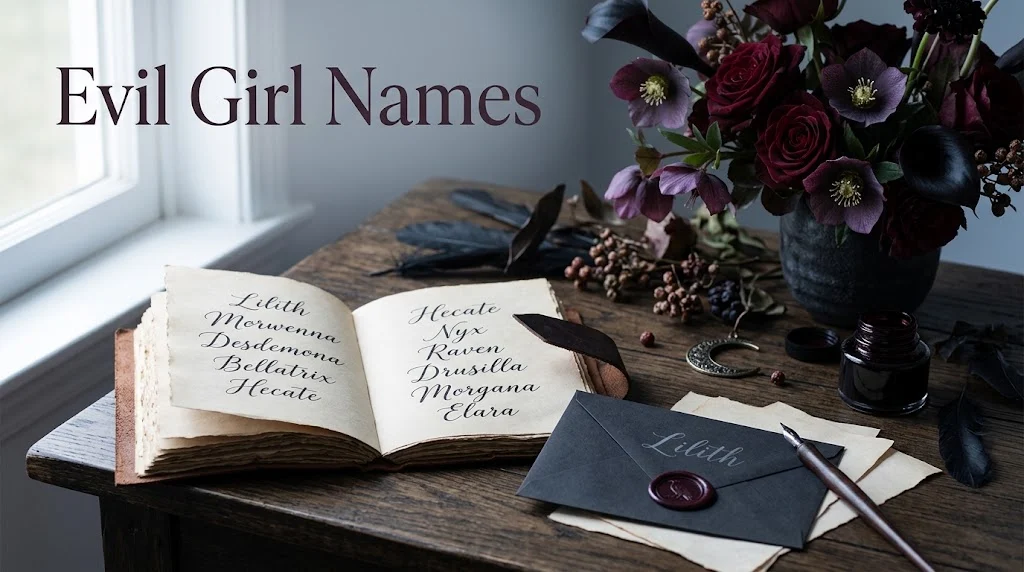
Evil girl names are dark or mysterious female names inspired by mythology, fantasy, gothic fiction, legends, and villain characters. Popular choices often suggest darkness, magic, night, mystery, power, or an intimidating personality.
Some names feel sweet and sunny. Others have a darker edge that immediately creates a sense of mystery. If you are writing a fantasy story, designing a game character, creating a gothic persona, or simply searching for an unusual name, evil girl names can offer plenty of creative inspiration.
The word “evil” does not always have to mean genuinely harmful. In fiction, a dark name can suggest a mysterious queen, powerful sorceress, clever villainess, haunted heroine, supernatural character, or morally complicated figure. A name can create that atmosphere before the character even speaks.
Many dark feminine names come from mythology, literature, folklore, and fantasy. Others are ordinary names that have developed darker associations through stories and popular culture.
This guide explores 30 options with different moods. Some are elegant and subtle, while others sound dramatic and intimidating. Along the way, you will find meanings, origins, personality ideas, styles, best uses, popularity notes, and nickname suggestions to help you find a name that fits your character perfectly.
Lilith
Meaning: Often associated with night or supernatural folklore, although the name’s historical interpretations are complex.
Origin: Hebrew and Mesopotamian-associated traditions.
Personality: Lilith feels independent, mysterious, intelligent, and powerful. It works especially well for a character who refuses to follow expectations and has an enigmatic presence.
Style: Gothic, dark, elegant, mysterious, mythological.
Best For: Fantasy character, villainess, gothic persona, story character, username.
Popularity: Lilith has become increasingly familiar as a dramatic feminine name and frequently appears in fantasy and dark-fiction settings.
Emotional Appeal: The name has a strong, haunting sound without being difficult to pronounce. Its long association with folklore gives it immediate supernatural atmosphere.
Pop Culture Reference: Lilith appears in numerous works of literature, television, games, and fantasy fiction.
Similar Nicknames: Lily, Lili, Lith, Lila, Lili.
Why It Still Works Today: Lilith combines an elegant sound with an unmistakably mysterious identity. It can suit a sophisticated villain as easily as a morally complex heroine.
Belladonna
Meaning: “Beautiful lady”; also the common name of the deadly nightshade plant.
Origin: Italian.
Personality: Belladonna sounds beautiful but dangerous, making it ideal for a character whose appearance hides a darker nature.
Style: Gothic, romantic, dramatic, botanical, mysterious.
Best For: Villainess, witch character, dark fantasy heroine, gothic username.
Popularity: Belladonna is uncommon as an everyday personal name but familiar in literature, fantasy, and botanical contexts.
Emotional Appeal: Its contrast is what makes it memorable. The name sounds elegant while carrying a darker botanical association.
Pop Culture Reference: Belladonna appears in fantasy, literature, music, and stories involving poisonous plants.
Similar Nicknames: Bella, Donna, Belle, Donna, Dona.
Why It Still Works Today: Belladonna offers an instantly dramatic character identity. Bella gives it a softer nickname, creating an interesting contrast between beauty and darkness.
Morgana
Meaning: Commonly connected with Morgan le Fay and Arthurian legend; exact etymology is debated.
Origin: Arthurian and Welsh-associated naming traditions.
Personality: Morgana feels intelligent, magical, regal, and mysterious. It works beautifully for a powerful enchantress or ambitious fantasy character.
Style: Medieval, magical, gothic, elegant, fantasy.
Best For: Sorceress, queen, villainess, fantasy character, role-playing character.
Popularity: Morgana is recognizable internationally, particularly through Arthurian stories and fantasy adaptations.
Emotional Appeal: Few names sound as naturally suited to a magical character. Morgana immediately suggests ancient legends and hidden power.
Pop Culture Reference: Morgan le Fay and related versions of the name appear throughout Arthurian literature and modern adaptations.
Similar Nicknames: Morg, Morga, Ana, Mory, Gana.
Why It Still Works Today: Morgana has enough historical atmosphere to make a character feel established without sounding ordinary. It is especially effective in medieval or high-fantasy settings.
Raven
Meaning: Raven, the black bird.
Origin: English.
Personality: Raven feels observant, mysterious, clever, and independent. It can suit a character who prefers shadows and keeps her intentions hidden.
Style: Gothic, modern, dark, nature-inspired, mysterious.
Best For: Fictional character, gothic persona, gamer name, username, fantasy character.
Popularity: Raven is a recognizable modern name with strong gothic and alternative associations.
Emotional Appeal: The raven has long been connected with mystery, intelligence, storytelling, and dark symbolism. That makes the name instantly atmospheric.
Pop Culture Reference: Raven is strongly associated with fictional characters in comics, animation, television, and fantasy.
Similar Nicknames: Rae, Rave, Rav, Ravy, Vee.
Why It Still Works Today: Raven is short, memorable, and visually evocative. It can create a dark aesthetic without needing an elaborate backstory.
Nyx
Meaning: Night.
Origin: Ancient Greek mythology.
Personality: Nyx feels powerful, mysterious, ancient, and commanding. It is particularly suitable for a supernatural character connected with darkness or the night.
Style: Mythological, dark, minimalist, powerful, celestial.
Best For: Goddess character, fantasy villain, supernatural character, gamer tag.
Popularity: Nyx remains a niche but recognizable mythological name, particularly among fantasy and mythology fans.
Emotional Appeal: Its meaning is extremely simple and atmospheric. One short syllable creates a strong image of nighttime and mystery.
Pop Culture Reference: Nyx is the primordial goddess or personification of night in Greek mythology.
Similar Nicknames: Nix, Nixi, Nya, Nyny, X.
Why It Still Works Today: Nyx is ideal when you want a name that feels ancient but modern at the same time. Its short form also works particularly well for fictional worlds and gaming.
Hecate
Meaning: An ancient Greek goddess associated with magic, crossroads, night, and other liminal themes.
Origin: Ancient Greek mythology.
Personality: Hecate feels wise, mysterious, formidable, and magical. Rather than simply sounding frightening, the name suggests a character who understands hidden knowledge.
Style: Mythological, witchy, dark, ancient, powerful.
Best For: Witch character, goddess, fantasy villainess, mythology-inspired character.
Popularity: Hecate is well known among readers interested in Greek mythology, fantasy, and modern witchcraft-themed fiction.
Emotional Appeal: The name has a strong historical and mythological identity. It feels ancient and serious rather than artificially dark.
Pop Culture Reference: Hecate appears in mythology-inspired novels, games, television, and fantasy stories.
Similar Nicknames: Hec, Heca, Kate, Kati, Hattie.
Why It Still Works Today: Hecate gives a character immediate mythological depth. It works especially well when the story involves magic, secrets, crossroads, or supernatural forces.
Circe
Meaning: A famous enchantress from Greek mythology; the exact ancient etymology is uncertain.
Origin: Ancient Greek mythology.
Personality: Circe feels clever, independent, magical, and unpredictable. It suits a character whose intelligence is more dangerous than physical strength.
Style: Mythological, elegant, witchy, mysterious, sophisticated.
Best For: Sorceress, fantasy character, literary character, mythology-inspired villain.
Popularity: Circe has gained renewed attention through modern retellings of Greek mythology.
Emotional Appeal: The name is short and beautiful while carrying a strong mythological identity.
Pop Culture Reference: Circe is a central figure in Homer’s Odyssey and has inspired numerous modern adaptations.
Similar Nicknames: Cici, Cee, Cira, Cici-Rae, C.
Why It Still Works Today: Circe is perfect for a character who combines elegance with supernatural power. Its literary history gives it more depth than a name created solely to sound dark.
Bellatrix
Meaning: “Female warrior” or “warrior” in Latin-derived interpretation.
Origin: Latin.
Personality: Bellatrix feels fierce, dramatic, confident, and intimidating. It works particularly well for a character who commands attention.
Style: Dark, celestial, dramatic, elegant, powerful.
Best For: Villainess, fantasy character, space-themed character, gothic persona.
Popularity: Bellatrix is relatively uncommon as an everyday name but widely recognized through astronomy and popular fiction.
Emotional Appeal: The combination of a beautiful sound and a powerful meaning makes Bellatrix memorable.
Pop Culture Reference: Bellatrix Lestrange is a major antagonist in the Harry Potter series.
Similar Nicknames: Bella, Trix, Trixie, Bell, Belli.
Why It Still Works Today: Bellatrix can sound aristocratic, magical, or dangerous depending on the character. Its nickname options also allow you to shift between elegant and playful tones.
Persephone
Meaning: A major figure in Greek mythology associated with the underworld and seasonal mythology.
Origin: Ancient Greek mythology.
Personality: Persephone feels elegant, mysterious, resilient, and otherworldly. It is excellent for characters who exist between two worlds.
Style: Mythological, gothic, romantic, elegant, dark fantasy.
Best For: Queen character, fantasy heroine, supernatural character, mythology-inspired villainess.
Popularity: Persephone has become increasingly familiar through mythology retellings and modern fantasy.
Emotional Appeal: The character’s connection with both the living world and the underworld creates a rich symbolic identity.
Pop Culture Reference: Persephone appears throughout Greek mythology and has inspired many modern books, games, and adaptations.
Similar Nicknames: Percy, Persy, Sephy, Seph, Perri.
Why It Still Works Today: Persephone gives writers a name with built-in mythology and emotional complexity. It can work for a villain, antihero, queen, or supernatural heroine.
Medea
Meaning: A famous mythological figure associated with magic and the Argonaut legend.
Origin: Ancient Greek mythology.
Personality: Medea feels intelligent, powerful, dramatic, and emotionally complex. It is best suited to a character with a complicated story rather than a simple stereotype.
Style: Mythological, tragic, dark, dramatic, literary.
Best For: Tragic character, sorceress, villainess, literary fiction, mythology-inspired story.
Popularity: Medea is well known in classical literature but remains uncommon as a contemporary personal name.
Emotional Appeal: The name carries a strong literary history and immediately suggests a character with depth.
Pop Culture Reference: Medea is the central character of Euripides’ tragedy Medea.
Similar Nicknames: Mea, Med, Dea, Maddy, M.
Why It Still Works Today: Medea is especially effective for writers who want a character name with literary weight rather than a generic “evil” sound.
Drusilla
Meaning: A feminine form derived from the Roman family name Drusus.
Origin: Latin/Roman.
Personality: Drusilla feels aristocratic, eccentric, mysterious, and old-world. It can suit a character who seems elegant on the surface but unsettling underneath.
Style: Gothic, vintage, aristocratic, Victorian, dramatic.
Best For: Gothic character, vampire-inspired fiction, historical fantasy, villainess.
Popularity: Drusilla is uncommon today, which gives it an old-fashioned and distinctive quality.
Emotional Appeal: Its unusual rhythm makes it memorable. It sounds as though it belongs in an old mansion, mysterious kingdom, or gothic novel.
Pop Culture Reference: Drusilla has been used for fictional characters in several works, including gothic and supernatural fiction.
Similar Nicknames: Dru, Drue, Silla, Della, Rilla.
Why It Still Works Today: Drusilla is perfect for a vintage-dark aesthetic. The nickname Dru also gives the character a short, modern alternative.
Vesper
Meaning: Evening or evening star; from Latin vesper.
Origin: Latin.
Personality: Vesper feels calm, secretive, elegant, and intelligent. It suggests darkness arriving gradually rather than obvious menace.
Style: Dark, celestial, elegant, modern, mysterious.
Best For: Spy character, gothic heroine, fantasy character, mysterious username.
Popularity: Vesper remains relatively uncommon but has become recognizable in modern fiction.
Emotional Appeal: The connection with evening gives the name a beautiful twilight quality.
Pop Culture Reference: Vesper Lynd is a major character in Ian Fleming’s Casino Royale.
Similar Nicknames: Ves, Vessi, Vee, Vera, Esper.
Why It Still Works Today: Vesper is a strong option for someone who wants a dark name without an overtly sinister meaning. It feels sophisticated and contemporary.
Morrigan
Meaning: A powerful figure in Irish mythology, often associated with battle, fate, sovereignty, and transformation.
Origin: Irish/Celtic mythology.
Personality: Morrigan feels fierce, mysterious, strategic, and commanding.
Style: Celtic, mythological, dark, powerful, fantasy.
Best For: Warrior queen, fantasy villainess, goddess character, game character.
Popularity: Morrigan is especially familiar among mythology and fantasy audiences.
Emotional Appeal: The name carries an ancient, powerful presence. It feels suited to a character who controls her own destiny.
Pop Culture Reference: The Morrígan appears in Irish mythology and has inspired numerous modern fantasy works and games.
Similar Nicknames: Mori, Mory, Rigan, Riri, Mo.
Why It Still Works Today: Morrigan has a dramatic sound and a strong mythological foundation. It is ideal for fantasy worlds where power and mystery are central themes.
Maleficent
Meaning: Associated with causing harm or evil; from Latin-derived terminology.
Origin: Latin/French-derived word history.
Personality: Maleficent sounds imposing, elegant, magical, and theatrical.
Style: Dark fantasy, regal, gothic, dramatic.
Best For: Fairy-tale villain, fantasy character, cosplay persona, fictional queen.
Popularity: The name is strongly recognized as a fictional character name rather than an everyday personal name.
Emotional Appeal: It instantly communicates a dark fairy-tale atmosphere.
Pop Culture Reference: Maleficent is the famous antagonist from Disney’s Sleeping Beauty and the later film adaptations.
Similar Nicknames: Mal, Mally, Fici, Effie, M.
Why It Still Works Today: Maleficent is highly recognizable and works when you specifically want a dramatic fairy-tale villain aesthetic.
Ravenna
Meaning: A place name associated with the Italian city Ravenna; modern fantasy associations have added a darker feel.
Origin: Italian place-name tradition.
Personality: Ravenna feels regal, ambitious, elegant, and mysterious.
Style: Gothic, royal, dark fantasy, sophisticated.
Best For: Queen, villainess, fantasy character, dark royalty.
Popularity: Ravenna is uncommon as a personal name, giving it a distinctive fictional quality.
Emotional Appeal: The name sounds luxurious and dramatic without being difficult to pronounce.
Pop Culture Reference: Ravenna is the name of the antagonist in Snow White & the Huntsman.
Similar Nicknames: Raven, Rave, Rae, Vena, Renny.
Why It Still Works Today: Ravenna is particularly effective for a powerful female character who needs an elegant rather than overtly frightening identity.
Lamia
Meaning: A figure from Greek mythology associated with a supernatural female creature.
Origin: Ancient Greek mythology.
Personality: Lamia feels mysterious, dangerous, seductive in the literary sense, and supernatural. It is best used for fictional characters rather than everyday naming.
Style: Mythological, dark fantasy, ancient, eerie.
Best For: Monster character, fantasy villainess, mythology-inspired story.
Popularity: Lamia is uncommon as a personal name but recognizable in mythology and fantasy literature.
Emotional Appeal: The name creates an immediate supernatural atmosphere.
Pop Culture Reference: Lamia appears in Greek mythology and has influenced later literature, poetry, and fantasy fiction.
Similar Nicknames: Mia, Lami, Lia, Ami, Lala.
Why It Still Works Today: Lamia is a compact choice with a long mythological background. It works particularly well when building a supernatural character.
Ophelia
Meaning: A Greek-derived literary name often interpreted as “help” or “aid.”
Origin: Greek-derived literary tradition.
Personality: Ophelia feels delicate, poetic, mysterious, and melancholic.
Style: Gothic, literary, romantic, vintage, dramatic.
Best For: Gothic heroine, tragic character, literary fiction, dark fantasy.
Popularity: Ophelia has become increasingly recognizable as a vintage-style name.
Emotional Appeal: Shakespeare’s famous character gives Ophelia a strong literary atmosphere, although the character is not inherently “evil.”
Pop Culture Reference: Ophelia is one of the best-known characters in Shakespeare’s Hamlet.
Similar Nicknames: Ophie, Lia, Ellie, Fia, Phelia.
Why It Still Works Today: Ophelia demonstrates that a dark aesthetic does not require an evil meaning. Its literary history makes it ideal for mysterious or tragic characters.
Desdemona
Meaning: The name has Greek associations and is traditionally connected with ideas of ill-fated or unfortunate circumstances.
Origin: Greek literary tradition.
Personality: Desdemona feels dramatic, sophisticated, tragic, and mysterious.
Style: Literary, gothic, vintage, elegant, dramatic.
Best For: Gothic character, historical fiction, tragic heroine, fantasy character.
Popularity: Desdemona is rare as a modern given name but highly recognizable to readers of Shakespeare.
Emotional Appeal: Its elaborate sound creates a strong old-world atmosphere.
Pop Culture Reference: Desdemona is the central female character in Shakespeare’s Othello.
Similar Nicknames: Des, Dessie, Mona, Demi, Desi.
Why It Still Works Today: Desdemona works beautifully when the goal is literary darkness rather than a straightforward villain identity.
Nightshade
Meaning: A name inspired by a group of plants commonly associated with nightshade.
Origin: English botanical vocabulary.
Personality: Nightshade feels secretive, mysterious, dangerous, and unconventional.
Style: Gothic, botanical, fantasy, dark, dramatic.
Best For: Fantasy character, witch character, gaming character, fictional surname.
Popularity: Very uncommon as a personal name, which makes it especially suitable for fictional worlds.
Emotional Appeal: It combines nighttime imagery with botanical mystery.
Pop Culture Reference: Nightshade appears as a fictional name and title in various fantasy and superhero contexts.
Similar Nicknames: Night, Shade, Shady, Nia, Nyx.
Why It Still Works Today: Nightshade immediately creates an atmosphere. It is especially effective as a character surname, alias, or fantasy title.
Belladonna
Meaning: “Beautiful lady”; also associated with the nightshade plant.
Origin: Italian.
Personality: Beautiful, mysterious, deceptive, dramatic.
Style: Gothic, botanical, elegant.
Best For: Witch, villainess, fantasy character.
Popularity: Rare as a personal name but recognizable in fiction.
Emotional Appeal: The contrast between beauty and danger makes it memorable.
Similar Nicknames: Bella, Belle, Donna.
Why It Still Works Today: Belladonna offers a sophisticated dark-fantasy feeling without needing additional description.
Tempest
Meaning: A violent storm or turbulent weather.
Origin: English.
Personality: Tempest feels powerful, unpredictable, fierce, and dramatic.
Style: Nature-inspired, dark, modern, fantasy.
Best For: Supernatural character, villainess, warrior, fantasy heroine.
Popularity: Uncommon as a given name but recognizable as a literary word.
Emotional Appeal: The storm imagery gives the name energy and movement.
Similar Nicknames: Tem, Tempi, Tess, Temp, Tessa.
Why It Still Works Today: Tempest is ideal for a character whose personality is intense or unpredictable.
Wicked
Meaning: A word associated with something morally bad or mischievous.
Origin: English.
Personality: Wicked feels bold, playful, rebellious, and theatrical.
Style: Edgy, modern, fantasy, playful.
Best For: Fictional alias, username, fantasy character, stage persona.
Popularity: Not a conventional given name, but highly recognizable as a descriptive word.
Emotional Appeal: It has a strong attitude and works well for creative naming.
Similar Nicknames: Wick, Wicky, Kiki, W.
Why It Still Works Today: Wicked works best as an alias or character name rather than a traditional personal name.
Sable
Meaning: A word associated with black or very dark coloring and also with the sable animal.
Origin: English/French usage.
Personality: Sable feels elegant, quiet, mysterious, and sophisticated.
Style: Gothic, sleek, nature-inspired, dark, elegant.
Best For: Fantasy character, gothic persona, mysterious heroine, username.
Popularity: Sable is uncommon but recognizable as a modern word-name.
Emotional Appeal: Its association with deep darkness gives it a subtle rather than frightening aesthetic.
Similar Nicknames: Sab, Sabi, Belle, Bee, S.
Why It Still Works Today: Sable is a great choice when you want darkness to feel refined rather than aggressive.
Onyx
Meaning: A type of dark gemstone.
Origin: Greek.
Personality: Onyx feels strong, mysterious, polished, and confident.
Style: Modern, gemstone-inspired, dark, edgy.
Best For: Fantasy character, gamer name, username, mysterious persona.
Popularity: Onyx is increasingly recognizable as a modern word-name.
Emotional Appeal: Gemstone imagery makes the name feel powerful and visually distinctive.
Similar Nicknames: Nyx, Oni, Onni, Nix, O.
Why It Still Works Today: Onyx has a contemporary sound and a naturally dark visual association, making it excellent for fictional naming.
Crimson
Meaning: A deep red color.
Origin: English, ultimately from older European and Middle Eastern linguistic pathways.
Personality: Crimson feels bold, dramatic, passionate, and intense.
Style: Gothic, dramatic, modern, fantasy.
Best For: Villainess, vampire-inspired character, fantasy queen, username.
Popularity: Rare as a personal name but recognizable as a color word.
Emotional Appeal: Crimson creates an immediate visual impression and works especially well in dark fantasy settings.
Similar Nicknames: Crim, Crissy, C.C., Mina, Crimson.
Why It Still Works Today: Crimson is unusual without being difficult to understand. It can function as a character name, alias, or surname.
Morrigan
Meaning: A powerful figure associated with Irish mythology, battle, fate, sovereignty, and transformation.
Origin: Irish mythology.
Personality: Strong, strategic, mysterious, commanding.
Style: Celtic, mythological, dark fantasy.
Best For: Warrior queen, goddess, fantasy villain.
Popularity: Familiar among mythology and fantasy audiences.
Emotional Appeal: The ancient mythological background gives the name a commanding identity.
Similar Nicknames: Mori, Mo, Rigan, Riri.
Why It Still Works Today: Morrigan feels powerful without needing an artificial dark meaning. Its mythological roots provide built-in character depth.
Quick Comparison Table
| Name | Meaning / Association | Style | Best For |
|---|---|---|---|
| Lilith | Night / dark folklore | Gothic | Villainess |
| Belladonna | Beautiful lady / nightshade | Gothic | Witch |
| Morgana | Arthurian magic | Fantasy | Sorceress |
| Raven | Black bird | Gothic | Character |
| Nyx | Night | Mythological | Goddess |
How to Choose the Perfect Evil Girl Name
Choosing a dark character name becomes much easier when you first decide what kind of darkness you want.
Choose the mood first.
Do you want elegant darkness, supernatural mystery, gothic beauty, ancient mythology, or a dramatic villain aesthetic? Your answer will immediately narrow the list.
Think about the character’s role.
A powerful queen might need a name such as Morgana or Morrigan. A mysterious girl could suit Raven or Vesper. A mythological character may work better with Nyx, Hecate, Circe, or Persephone.
Consider the meaning.
A name does not have to literally mean “evil.” Night, storms, shadows, dark gemstones, and mythology can create the same atmosphere more subtly.
Match the setting.
A medieval fantasy world may suit Morgana or Morrigan. A modern gothic story could use Raven or Sable. A supernatural game might suit Nyx or Onyx.
Say it aloud.
The best character names have a strong rhythm. Try saying the first and last name together to see whether they create the mood you want.
Think about nicknames.
A long dramatic name becomes more versatile when it has a short form. Bellatrix can become Trix, Morgana can become Ana, and Persephone can become Seph.
Avoid stereotypes.
A female character does not need a traditionally “evil” name to be intimidating. Personality, actions, dialogue, and character development create the real impression.
Most Popular Dark Girl Name Ideas
For a quick shortlist, consider:
- Raven
- Lilith
- Nyx
- Morgana
- Bellatrix
- Hecate
- Circe
- Persephone
- Morrigan
- Vesper
- Sable
- Onyx
These names cover several styles, from mythology and fantasy to gothic and modern.
Vintage Dark Girl Names Making a Comeback
Vintage names can create a darker atmosphere without using obviously sinister words.
Consider:
- Drusilla
- Ophelia
- Desdemona
- Morgana
- Medea
- Belladonna
- Persephone
- Circe
These names work particularly well in historical fiction, gothic stories, fantasy novels, and period-inspired character designs.
Modern Dark Girl Name Trends
Modern dark naming trends often favor short, visual, and atmospheric names. Names such as Nyx, Raven, Sable, and Onyx are memorable because they create an image quickly.
Another popular approach is using nature and celestial imagery. Night, storms, ravens, gemstones, shadows, and the moon can all suggest mystery without directly using words such as “evil.”
Mythological names are also strong choices because they give fictional characters an existing story framework. A name such as Hecate, Circe, or Persephone immediately connects a character with ancient mythology.
For contemporary fantasy, short names often work especially well because they are easy to remember and look distinctive on a character profile, game screen, or social media account.
What Makes a Girl Name Sound Evil?
A name can sound dark because of its meaning, history, sound, or cultural associations. Names connected with night, storms, shadows, mythology, supernatural beings, or dark colors often create a mysterious mood.
For fictional characters, sound matters too. Hard consonants can make a name feel powerful, while softer sounds can create an eerie or elegant atmosphere.
The context is equally important. A name such as Raven may sound mysterious in one story and completely ordinary in another. Character design, setting, clothing, dialogue, and personality all influence how readers interpret a name.
Are Evil Girl Names Suitable for Real Babies?
Some dark-themed names can work as real names, while others are better suited to fictional characters, usernames, or creative projects. Names such as Raven, Ophelia, Persephone, and Sable can function as real given names, while names such as Wicked or Nightshade are much more unconventional.
If you are choosing a real baby name, consider whether the meaning and cultural associations are appropriate for everyday life. For fictional characters, you have much more creative freedom.
FAQs
What are the best evil girl names for fictional characters?
Popular dark choices include Lilith, Morgana, Raven, Nyx, Hecate, Bellatrix, Circe, Morrigan, and Vesper.
What girl names mean darkness?
Nyx is directly connected with night in Greek mythology. Other names and words, such as Raven, Sable, Onyx, and Nightshade, create dark associations through symbolism rather than literally meaning “darkness.”
What are good gothic girl names?
Raven, Lilith, Vesper, Sable, Ophelia, Drusilla, Belladonna, and Persephone all work well for gothic characters.
What are some evil girl names from mythology?
Nyx, Hecate, Circe, Medea, Lamia, Persephone, and Morrigan are connected with mythological traditions.
What are unique evil girl names?
Unique dark options include Nightshade, Tempest, Sable, Onyx, Belladonna, Vesper, and Ravenna.
Conclusion
The most interesting evil girl names do more than sound frightening. They create an atmosphere. A name such as Nyx suggests night, Raven brings dark nature imagery, while Morgana and Morrigan connect a character with powerful mythological traditions.
For a fictional character, think about the entire story behind the name. Consider her personality, role, setting, abilities, and relationships. A mysterious name can make a character feel intriguing, while a regal one can suggest power without directly saying it.
Whether you are creating a gothic heroine, fantasy villain, supernatural queen, witch, or mysterious username, there is plenty of inspiration to explore. Pick the name that best matches your character’s world, and consider sharing this list with other writers, gamers, or fantasy fans looking for dark naming ideas.
Discover More Related Articles: