Germanic names are personal names rooted in the historical Germanic languages and naming traditions of northern and central Europe. Many feature meanings connected with strength, protection, nature, leadership, peace, or personal qualities.
Some names feel modern because they are trendy. Others feel powerful because they carry centuries of history. Germanic names belong to the second group. Their roots reach into the languages and cultures of Germanic-speaking peoples across northern and central Europe, including traditions that later influenced English, German, Dutch, Scandinavian, and other European naming systems.
What makes these names especially interesting is their structure. Many traditional names were formed from meaningful elements. One part might relate to strength, protection, peace, battle, fame, or nature, while another added a second quality. As a result, many old names carry a deeper message than their modern forms reveal.
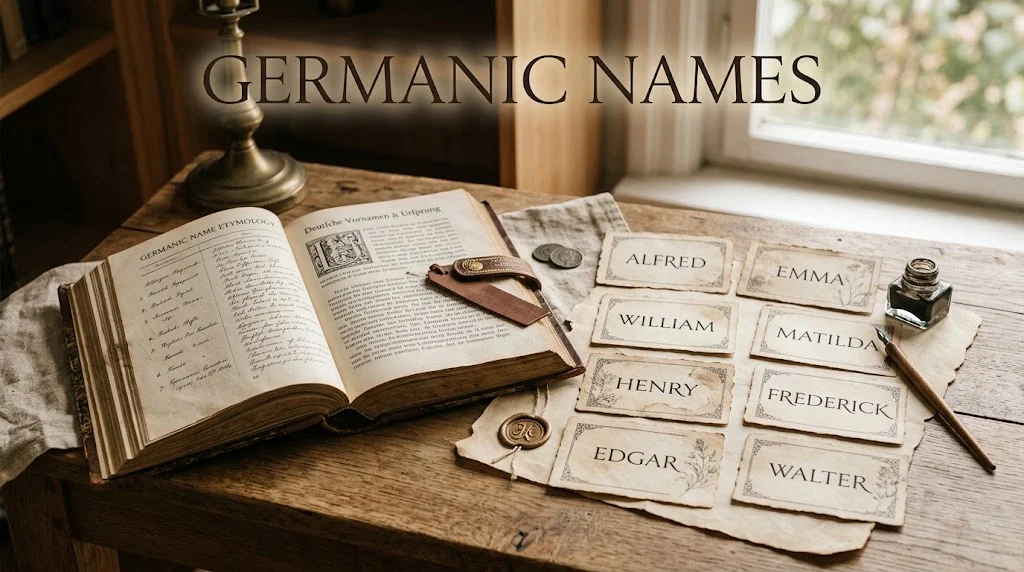
Some Germanic names are familiar today, while others have an ancient or unusual sound. Names such as Alfred, Emma, William, Matilda, and Frederick have survived through generations, while less familiar historical choices can provide inspiration for parents, writers, and anyone searching for something distinctive.
This guide explores ten notable Germanic-rooted names, their meanings, styles, history, and modern appeal.
Alfred
Meaning: Traditionally associated with “elf” and “counsel.”
Origin: Old English, from Germanic name elements.
Personality: Alfred feels wise, thoughtful, dependable, and scholarly. It can suggest someone calm and intelligent rather than flashy.
Style: Classic, vintage, distinguished, traditional.
Best For: Baby boys, historical characters, writers, and families looking for a traditional name.
Popularity: Alfred has a long history of use in England and other English-speaking settings. Its vintage character has also helped it remain recognizable.
Emotional Appeal: Alfred has a gentle but dignified sound. Its association with counsel gives it an intellectual quality, while its historical use gives it depth.
Pop Culture Reference: Alfred is strongly associated with Alfred the Great, the ninth-century king of Wessex, which gives the name a particularly strong historical connection.
Similar Names: Albert, Edgar, Edwin, Arthur, Frederick.
Why It Still Works Today: Alfred has the advantage of being historic without being difficult to pronounce. Its nickname possibilities, including Alfie, also give it a softer modern side.
Emma
Meaning: Often connected with the Germanic element ermen, meaning “whole,” “universal,” or “great.”
Origin: Germanic.
Personality: Emma feels warm, graceful, friendly, and confident.
Style: Classic, elegant, feminine, timeless.
Best For: Baby girls, characters, daughters, and anyone looking for a familiar traditional name.
Popularity: Emma has remained widely used in many countries and has repeatedly appeared among popular girls’ names.
Emotional Appeal: Its short, gentle sound makes Emma approachable. Despite its simplicity, its historical roots give it considerable depth.
Pop Culture Reference: Emma Woodhouse is the central character of Jane Austen’s Emma, while the name has also appeared widely in literature and entertainment.
Similar Names: Emily, Emilia, Ella, Elsa, Amelia.
Why It Still Works Today: Emma demonstrates how an old Germanic-rooted name can become completely at home in modern naming. It is short, recognizable, and easy to use internationally.
William
Meaning: Commonly interpreted from Germanic elements associated with “will” or “desire” and “protection” or “helmet.”
Origin: Germanic.
Personality: William feels dependable, confident, traditional, and strong.
Style: Classic, royal, formal, timeless.
Best For: Baby boys, family names, historical characters, and formal names with nickname options.
Popularity: William has remained one of the best-known traditional names in English-speaking countries and has been used by royalty and historical figures.
Emotional Appeal: William combines a formal full name with friendly short forms such as Will and Liam. That flexibility makes it appealing across generations.
Pop Culture Reference: William Shakespeare is one of the most famous historical bearers of the name, and numerous monarchs have also carried it.
Similar Names: Wilhelm, Wilhelm, Walter, Henry, Edward.
Why It Still Works Today: William can sound formal on a birth certificate but relaxed in everyday life. Its history and nickname options allow it to fit many personalities.
Matilda
Meaning: Traditionally associated with “strength in battle” or “might in battle.”
Origin: Germanic.
Personality: Matilda feels courageous, intelligent, independent, and spirited.
Style: Vintage, literary, feminine, strong.
Best For: Baby girls, literary characters, historical settings, and families who like old-fashioned names.
Popularity: Matilda has enjoyed renewed interest in several English-speaking countries and has a distinctly vintage-modern appeal.
Emotional Appeal: The contrast between its graceful sound and powerful meaning makes Matilda especially memorable.
Pop Culture Reference: Matilda is famously associated with Roald Dahl’s children’s novel Matilda and its adaptations.
Similar Names: Mathilda, Mathilde, Hilda, Adelaide, Edith.
Why It Still Works Today: Matilda feels traditional without sounding overly formal. Its strong historical meaning and literary associations give it an appealing personality.
Henry
Meaning: Commonly interpreted as “home ruler” or “ruler of the household.”
Origin: Germanic.
Personality: Henry feels warm, confident, steady, and trustworthy.
Style: Classic, royal, vintage, friendly.
Best For: Baby boys, family names, historical characters, and traditional naming styles.
Popularity: Henry has remained a widely recognized name and has experienced renewed popularity in modern times.
Emotional Appeal: Henry balances strength with warmth. It can sound dignified in a formal setting but friendly in everyday conversation.
Pop Culture Reference: Numerous European kings have been named Henry, giving the name a strong historical and royal association.
Similar Names: Harry, Henrik, Heinrich, Henri, Edward.
Why It Still Works Today: Henry is easy to pronounce, historically established, and adaptable to both traditional and modern families.
Frederick
Meaning: Traditionally associated with “peaceful ruler” or “peaceful power.”
Origin: Germanic.
Personality: Frederick suggests leadership, patience, dignity, and stability.
Style: Formal, royal, vintage, sophisticated.
Best For: Baby boys, historical characters, formal names, and families seeking a distinguished classic.
Popularity: Frederick has a long history across Europe and continues to appear in modern naming, especially among people drawn to vintage names.
Emotional Appeal: The combination of leadership and peace creates a balanced meaning. It suggests strength that does not depend entirely on aggression.
Pop Culture Reference: Frederick has been used by numerous European rulers, nobles, writers, and musicians throughout history.
Similar Names: Friedrich, Fred, Freddie, Alfred, Frederick.
Why It Still Works Today: Frederick offers several nickname possibilities, including Fred and Freddie. Its formal sound also gives it a strong presence without feeling overly unusual.
Gertrude
Meaning: Traditionally associated with “spear” and “strength.”
Origin: Germanic.
Personality: Gertrude feels strong, serious, independent, and resilient.
Style: Vintage, traditional, distinctive, historical.
Best For: Historical characters, literary projects, vintage naming, and people seeking an uncommon traditional name.
Popularity: Gertrude is less common today than many classic Germanic-rooted names, which gives it a distinctly old-fashioned character.
Emotional Appeal: The name has a strong historical personality. Its meaning can appeal to anyone looking for a name associated with courage and resilience.
Pop Culture Reference: Gertrude appears in Shakespeare’s Hamlet as the name of Hamlet’s mother.
Similar Names: Gerda, Greta, Hilda, Matilda, Brunhilda.
Why It Still Works Today: For modern parents or writers seeking something unusual, Gertrude offers genuine historical depth rather than a newly invented “old-fashioned” sound.
Edgar
Meaning: Commonly associated with “wealth” or “fortune” and “spear.”
Origin: Old English, with Germanic roots.
Personality: Edgar feels intelligent, serious, creative, and mysterious.
Style: Literary, vintage, strong, classic.
Best For: Baby boys, writers, historical characters, and gothic or literary-inspired settings.
Popularity: Edgar has remained recognizable through English literature and history, although it is less common than some other classic names.
Emotional Appeal: Edgar has a slightly mysterious quality. It sounds traditional while carrying enough character to stand out.
Pop Culture Reference: Edgar Allan Poe is perhaps the most famous literary bearer of the name.
Similar Names: Edmund, Edwin, Edward, Alfred, Edgar.
Why It Still Works Today: Edgar is distinctive without being unfamiliar. Its literary history also makes it especially appealing for readers and writers.
Brunhilda
Meaning: Traditionally connected with elements associated with “armor” or “protection” and “battle.”
Origin: Germanic.
Personality: Brunhilda feels powerful, dramatic, courageous, and commanding.
Style: Ancient, legendary, dramatic, strong.
Best For: Fictional characters, historical-inspired stories, fantasy settings, and people researching early Germanic naming.
Popularity: Brunhilda is uncommon in everyday modern naming but remains culturally significant through Germanic legend and literature.
Emotional Appeal: Its bold sound makes it memorable. It also carries a strong warrior-like image rooted in legendary traditions.
Pop Culture Reference: Brunhild is a major figure in Germanic heroic tradition, including the Nibelungenlied and related legendary material. Variants of the name appear across different traditions.
Similar Names: Brunhild, Hilda, Hildegard, Matilda, Gertrude.
Why It Still Works Today: Brunhilda is not a conventional modern choice, but that is precisely its appeal for historical fiction, fantasy writing, and people looking for an unmistakably ancient name.
Walter
Meaning: Traditionally associated with “ruler” and “army.”
Origin: Germanic.
Personality: Walter feels dependable, mature, strong, and practical.
Style: Vintage, classic, traditional, dignified.
Best For: Baby boys, family names, historical characters, and vintage-inspired naming.
Popularity: Walter was particularly popular in earlier generations and has gained renewed attention alongside other vintage names.
Emotional Appeal: Walter has a steady, grounded quality. Its traditional meaning gives it a strong connection with leadership and responsibility.
Pop Culture Reference: Walter has been used by numerous historical figures and fictional characters, making it familiar across literature and popular culture.
Similar Names: Alfred, Albert, Harold, William, Edwin.
Why It Still Works Today: Vintage names can feel fresh when they return after several generations. Walter is recognizable, easy to pronounce, and full of traditional character.
Quick Comparison Table
| Name | Meaning | Style | Best For |
|---|---|---|---|
| Alfred | Elf + counsel | Classic, wise | Boys, characters |
| Emma | Whole, universal | Elegant, timeless | Girls, babies |
| William | Will + protection | Royal, classic | Boys, families |
| Matilda | Strength in battle | Vintage, strong | Girls, characters |
| Henry | Home ruler | Classic, warm | Boys, babies |
| Frederick | Peaceful ruler | Formal, refined | Boys, characters |
| Gertrude | Spear + strength | Vintage, strong | Girls, history |
| Edgar | Fortune + spear | Literary, mysterious | Boys, writers |
| Brunhilda | Protection + battle | Ancient, dramatic | Characters |
| Walter | Ruler + army | Vintage, traditional | Boys, families |
How to Choose the Perfect Germanic Name
Choosing a Germanic-rooted name is easier when you decide what kind of historical connection you want.
Start with the meaning. Many traditional Germanic names were built from meaningful elements. Look for ideas that match what you want the name to express, such as peace, strength, protection, leadership, wisdom, or family.
Decide how traditional you want to be. Names such as William and Henry are deeply traditional but remain familiar today. More unusual choices such as Brunhilda can create a much stronger historical or legendary feeling.
Consider pronunciation. A name may have a fascinating historical origin but still need to work in everyday conversation. Say it aloud several times before choosing it.
Look at regional history. “Germanic” is a broad historical category rather than a single modern culture. Germanic languages and naming traditions developed across different regions, including areas associated with modern Germany, England, the Netherlands, Scandinavia, and beyond.
Check the original form. A modern English name may have an older Germanic ancestor. For example, William has Germanic roots but became widely established through later European history.
Think about nicknames. Names such as William, Frederick, and Alfred offer shorter forms that can create a more casual everyday style.
Research uncertain meanings. Historical name meanings are not always perfectly straightforward. Spellings changed across languages and centuries, so reputable linguistic sources are preferable to simplistic online “name meaning” lists.
Most Popular Germanic Name Styles Today
Germanic-rooted names appear in several different styles.
Classic names remain the easiest to use. William, Henry, Emma, and Frederick have histories stretching across generations while still feeling familiar.
Vintage names are also attracting interest. Names such as Walter, Alfred, Matilda, and Edgar can feel fresh precisely because they are less common among younger generations in some regions.
Strong names often contain elements historically associated with battle, protection, rulers, armies, or courage. These names can be especially appealing for fictional characters.
Nature and symbolic names also appear in Germanic naming traditions, although their meanings can become less obvious as names pass from one language into another.
Legendary names such as Brunhild connect strongly with heroic literature and mythology. They are particularly useful for fantasy, historical fiction, and world-building.
Vintage Germanic Names Making a Comeback
Vintage names can return because people rediscover their history and distinctive sound.
Some Germanic-rooted choices that have a vintage appeal include Alfred, Walter, Edgar, Matilda, Frederick, Edith, Albert, and Gertrude.
These names have something modern invented names often lack: a documented history of use across generations.
A vintage name can also be flexible. Alfred can become Alfie, Frederick can become Freddie, and William can become Will or Liam. This allows a formal historical name to have a casual everyday personality.
Modern Germanic Name Trends
Modern naming often favors names that are short, recognizable, and easy to pronounce internationally. This has helped some Germanic-rooted names remain relevant.
Another trend is the revival of vintage names. Parents may choose an older name because it feels distinctive without being completely unfamiliar.
Historical and mythological inspiration is also popular in fiction. Writers often look toward Germanic, Anglo-Saxon, and Scandinavian naming traditions when creating characters with medieval or legendary settings.
There is also growing interest in understanding the difference between related naming traditions. Not every Old English, German, Norse, or Scandinavian name should automatically be treated as interchangeable. Their histories overlap, but they developed in different linguistic and cultural contexts.
FAQs
What Are Germanic Names?
Germanic names are names that developed from or were influenced by historical Germanic languages and naming traditions.
Are Germanic Names the Same as Norse Names?
Not exactly. Old Norse is a Germanic language, so Norse names belong to the wider Germanic linguistic family.
What Do Germanic Names Usually Mean?
Many traditional Germanic names were created from meaningful name elements. These can relate to concepts such as strength, protection, leadership, peace, fame, battle, family, or personal qualities.
Are Germanic Names Good for Babies?
Yes. Many Germanic-rooted names remain familiar and practical today, including Emma, William, Henry, and Frederick.
Are Germanic Names Old-Fashioned?
Some are vintage or ancient, but not all feel old-fashioned. Names such as Emma, Henry, and William remain common in modern societies, while names such as Brunhilda or Gertrude have a more distinctly historical character.
Conclusion
Germanic names offer a fascinating combination of history, language, symbolism, and timeless style. Some, such as Emma, Henry, and William, have become familiar around the world. Others, such as Brunhilda and Gertrude, preserve a much stronger connection to older European naming traditions.
When choosing a Germanic-rooted name, focus on more than how it sounds. Explore its original elements, historical development, cultural setting, pronunciation, and modern use. A name can be ancient in origin while still feeling completely natural today.
Whether you are choosing a baby name, researching family history, creating a fictional character, or simply exploring European names, these traditions offer plenty of inspiration. Pick the name whose meaning and personality speak to you, share this guide with another name lover, and let us know which Germanic name is your favorite.
Discover More Related Articles:
- Photography Business Names | Creative Ideas for Your Brand In 2026
- Old School Boy Names | Classic & Vintage Ideas In 2026