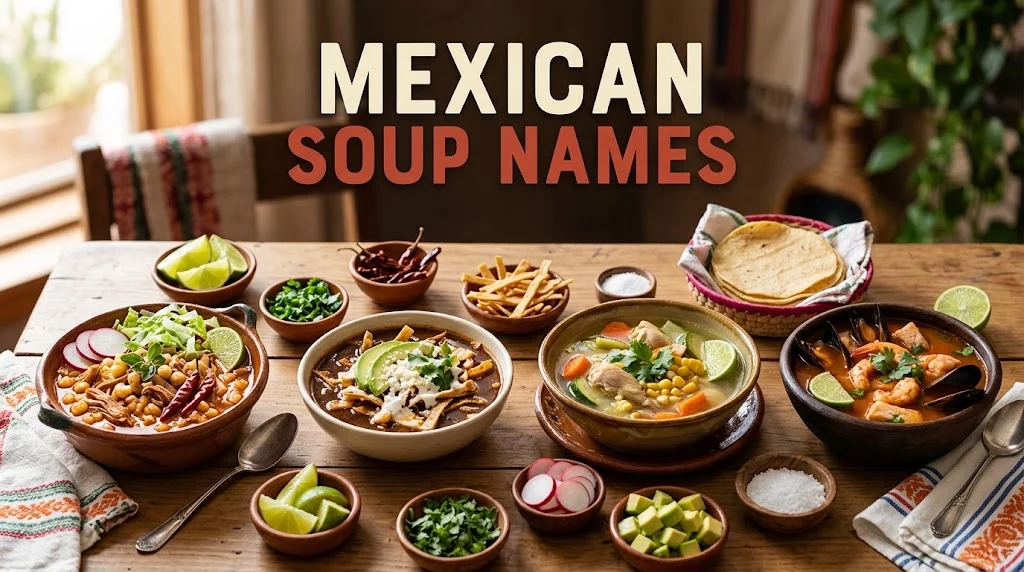
Popular Mexican soup names include pozole, sopa de tortilla, caldo de pollo, caldo de res, menudo, sopa de fideo, sopa de lima, and caldo de camarón. Mexican soups range from light broths to hearty meals.
A warm bowl of soup can tell you a surprising amount about a country’s food culture. Mexican soups are a wonderful example. They bring together ingredients such as corn, beans, chiles, tomatoes, herbs, vegetables, chicken, beef, and seafood in countless combinations.
If you are searching for Mexican soup names, you will quickly discover that there is no single style of Mexican soup. Some are light and comforting, while others are hearty enough to serve as a complete meal. Some recipes are closely associated with particular regions, while others are everyday family favorites.
Names such as pozole, menudo, sopa de tortilla, and caldo de pollo are familiar to many Mexican-food lovers. Each one has its own ingredients, texture, history, and way of serving.
In this guide, we explore ten well-known Mexican soups and soup-like dishes. You will learn what each name refers to, its typical ingredients, flavor profile, style, best occasion, popularity, and what makes it special.
Pozole
Meaning: A traditional Mexican stew or soup centered on hominy.
Origin: Mexico, with deep roots in Indigenous Mexican food traditions.
Personality: Pozole is hearty, festive, communal, and comforting. It is the kind of dish that feels made for a gathering rather than a rushed weekday lunch.
Style: Hearty, traditional, festive, flavorful, filling.
Best For: Family gatherings, celebrations, weekends, holidays, and comforting dinners.
Popularity: Pozole is one of the best-known traditional Mexican dishes and comes in several regional and family variations. Common versions include red, green, and white pozole.
Emotional Appeal: Pozole is strongly associated with sharing food with family and friends. A large pot placed in the middle of a table naturally creates a social meal.
Pop Culture Reference: Pozole frequently appears in Mexican food culture, restaurants, cooking programs, and celebrations.
Similar Soups: Menudo, caldo de res, chicken pozole, tortilla soup, bean soup.
Why It Still Works Today: Pozole combines familiar ingredients with a deeply traditional preparation. The soup can also be customized with toppings such as shredded lettuce or cabbage, radishes, onion, lime, and other garnishes.
The defining ingredient is hominy, which gives pozole its distinctive texture. Pork is common in traditional versions, although chicken and other variations are also enjoyed.
Sopa de Tortilla
Meaning: Literally, “tortilla soup.”
Origin: Mexico, with the dish particularly associated with central Mexican cuisine.
Personality: Sopa de tortilla is warm, colorful, comforting, and playful. It balances a flavorful tomato-and-chile broth with crispy tortilla strips.
Style: Classic, comforting, colorful, crispy, flavorful.
Best For: Lunch, dinner, casual gatherings, restaurant meals, and cool evenings.
Popularity: It is one of the most recognizable Mexican soups outside Mexico and is widely served in Mexican restaurants.
Emotional Appeal: The combination of a warm broth and crunchy tortilla strips makes this soup satisfying without feeling overly complicated.
Pop Culture Reference: Tortilla soup appears frequently in Mexican and Mexican-inspired restaurant menus and cooking media.
Similar Soups: Sopa de fideo, tomato soup, chicken tortilla soup, caldo de pollo.
Why It Still Works Today: The recipe is flexible. Depending on the cook, it may be served with avocado, cheese, cream, chiles, cilantro, chicken, or other toppings.
Its name immediately tells diners what makes the dish special: tortillas are not just served alongside the soup. Crispy tortilla strips become an important part of the finished bowl.
Caldo de Pollo
Meaning: Chicken broth or chicken soup.
Origin: Mexico, with many regional and household variations.
Personality: Caldo de pollo feels caring, simple, nourishing, and homemade. It is the kind of meal people often associate with family kitchens and comforting food.
Style: Homemade, traditional, wholesome, comforting.
Best For: Family dinners, rainy days, recovery meals, everyday cooking, and cold weather.
Popularity: Caldo de pollo is widely enjoyed throughout Mexico and is also popular in Mexican and Mexican-American households.
Emotional Appeal: Chicken soup has a universal comfort-food quality, but Mexican versions often include vegetables, herbs, rice, or other ingredients that make the bowl especially satisfying.
Pop Culture Reference: Caldo de pollo is a familiar part of Mexican home cooking and frequently appears in recipe collections and family food traditions.
Similar Soups: Caldo de res, sopa de verduras, chicken tortilla soup, sopa de fideo.
Why It Still Works Today: Its simplicity is its strength. A basic chicken broth can become a complete meal when combined with chicken pieces, carrots, zucchini, potatoes, corn, cabbage, rice, or other vegetables.
There is no single universal recipe for caldo de pollo. Ingredients vary between families and regions, which is part of the dish’s charm.
Caldo de Res
Meaning: Beef broth or beef soup.
Origin: Mexico, with regional and household variations.
Personality: Caldo de res is hearty, rustic, generous, and deeply comforting. It is designed to feel substantial rather than delicate.
Style: Hearty, rustic, traditional, filling.
Best For: Family meals, weekends, cold weather, large gatherings, and comforting dinners.
Popularity: It is a familiar Mexican comfort food and is especially appreciated for its combination of beef, broth, and vegetables.
Emotional Appeal: A large pot of caldo de res can feed several people, making it well suited to family-style dining. The long cooking process can also produce a rich, satisfying broth.
Pop Culture Reference: Caldo de res is widely represented in Mexican home cooking and restaurant menus.
Similar Soups: Caldo de pollo, pozole, menudo, vegetable caldo.
Why It Still Works Today: The dish is filling, adaptable, and practical. Common ingredients can include beef, corn, potatoes, carrots, cabbage, squash, and other vegetables.
The exact cut of beef and vegetables can vary. This flexibility allows different families to create their own preferred version while keeping the basic identity of the dish.
Menudo
Meaning: A traditional Mexican soup made with tripe, commonly prepared with a chile-based broth.
Origin: Mexico.
Personality: Menudo is bold, traditional, hearty, and distinctive. It is a dish with a strong identity and a long-standing place in Mexican food culture.
Style: Traditional, hearty, spicy, slow-cooked.
Best For: Family gatherings, weekends, special occasions, and traditional meals.
Popularity: Menudo is especially well known in Mexico and Mexican communities abroad.
Emotional Appeal: Menudo is often connected with family recipes and gatherings. For people who grew up eating it, the aroma and flavor can bring back memories of home and relatives.
Pop Culture Reference: Menudo is frequently discussed in Mexican food media and appears in restaurants specializing in regional or traditional cuisine.
Similar Soups: Pozole, caldo de res, spicy beef soups.
Why It Still Works Today: Menudo represents a traditional style of cooking that values slow preparation and bold flavors. Recipes differ by region and household.
The dish is commonly served with garnishes such as lime, onion, cilantro, and oregano. Because its main ingredient is tripe, it has a distinctive texture that makes it different from many other Mexican soups.
Sopa de Fideo
Meaning: Noodle soup.
Origin: Mexico, with Spanish culinary influence incorporated into Mexican home cooking.
Personality: Sopa de fideo is simple, cozy, familiar, and family-friendly.
Style: Simple, comforting, affordable, everyday.
Best For: Quick lunches, family meals, children, casual dinners, and comfort food.
Popularity: It is a familiar homemade soup in many Mexican households.
Emotional Appeal: Its simplicity makes it nostalgic. For many people, a bowl of noodle soup represents an uncomplicated homemade meal.
Pop Culture Reference: Sopa de fideo is commonly featured in Mexican home-cooking recipes and family food traditions.
Similar Soups: Sopa de tortilla, caldo de pollo, tomato noodle soup.
Why It Still Works Today: It is inexpensive, easy to customize, and quick compared with many slow-cooked Mexican soups. The noodles are commonly toasted before being cooked in a tomato-based broth, giving the soup a distinctive flavor.
Different cooks may add vegetables, chicken, or other ingredients. The result can range from a very simple bowl to a more substantial family meal.
Sopa de Lima
Meaning: Lime soup.
Origin: Yucatán Peninsula, Mexico.
Personality: Sopa de lima feels bright, fresh, aromatic, and refreshing. It stands apart from heavier Mexican soups because citrus plays an important role in its flavor.
Style: Regional, bright, aromatic, savory, citrusy.
Best For: Lunch, dinner, warm weather, regional Mexican food exploration.
Popularity: Sopa de lima is especially associated with Yucatán cuisine and is well known among people exploring regional Mexican dishes.
Emotional Appeal: Its bright citrus flavor gives the soup a refreshing character. It demonstrates how Mexican cuisine can be both comforting and lively at the same time.
Pop Culture Reference: Sopa de lima is frequently highlighted when discussing traditional Yucatecan cuisine.
Similar Soups: Chicken broth soups, caldo de pollo, regional Mexican citrus soups.
Why It Still Works Today: Its distinctive flavor makes it an excellent choice for people who want something different from heavier soups.
Traditional preparations often use chicken or turkey, citrus, broth, and regional seasonings. The final flavor is savory with a recognizable citrus note.
Caldo de Camarón
Meaning: Shrimp broth or shrimp soup.
Origin: Mexico, particularly associated with coastal and seafood-rich cooking traditions.
Personality: Caldo de camarón is bold, savory, aromatic, and satisfying. It has the personality of a seafood dish while still offering the comfort of a warm broth.
Style: Seafood, savory, spicy, aromatic, regional.
Best For: Seafood lovers, dinner, weekend meals, coastal-inspired menus.
Popularity: Shrimp-based soups are popular in Mexican coastal cooking and are also common on Mexican seafood restaurant menus.
Emotional Appeal: Seafood brings a different dimension to Mexican soup traditions. The combination of shrimp, chiles, vegetables, and broth can create a deeply flavorful bowl.
Pop Culture Reference: Caldo de camarón is a recognizable dish within Mexican mariscos culture.
Similar Soups: Seafood caldo, fish soup, shrimp broth, regional mariscos soups.
Why It Still Works Today: It is flavorful enough to serve as a main course and flexible enough for different recipes. Ingredients can vary by region and household.
Depending on the recipe, the broth may include tomatoes, chiles, vegetables, herbs, and other seafood ingredients. It is often served with lime for extra brightness.
Caldo de Siete Mares
Meaning: “Seven seas broth.”
Origin: Mexico, associated with Mexican seafood and coastal culinary traditions.
Personality: Caldo de siete mares feels abundant, bold, festive, and adventurous. It is designed for seafood lovers who enjoy variety in one bowl.
Style: Seafood, hearty, festive, flavorful, coastal.
Best For: Seafood dinners, celebrations, restaurant meals, weekend gatherings.
Popularity: It is a recognizable Mexican seafood soup, particularly in Mexican seafood restaurants and coastal food traditions.
Emotional Appeal: The appeal comes from abundance. Instead of focusing on one seafood ingredient, the soup can bring together several varieties in one richly flavored broth.
Pop Culture Reference: Caldo de siete mares appears frequently in Mexican mariscos restaurant culture.
Similar Soups: Caldo de camarón, fish soup, seafood caldo, seafood stew.
Why It Still Works Today: Its generous style makes it ideal for diners who want a memorable meal rather than a small starter.
Recipes vary, but seafood may include shrimp, fish, crab, clams, or other available ingredients. The exact combination depends on the region, restaurant, and cook.
Caldo Tlalpeño
Meaning: A traditional Mexican chicken-based soup associated with Tlalpan.
Origin: Mexico City, particularly associated with the Tlalpan area.
Personality: Caldo Tlalpeño is hearty, comforting, savory, and colorful. It combines a flavorful broth with ingredients that make it satisfying enough for a full meal.
Style: Traditional, hearty, spicy, colorful.
Best For: Lunch, dinner, cool weather, traditional Mexican meals.
Popularity: It is a well-known soup in Mexican cuisine and is especially associated with Mexico City.
Emotional Appeal: The dish has the comforting character of chicken soup but adds beans, vegetables, chile, and other ingredients for a more substantial bowl.
Pop Culture Reference: Caldo Tlalpeño is commonly discussed as part of Mexico City’s traditional food culture.
Similar Soups: Caldo de pollo, sopa de verduras, chicken tortilla soup.
Why It Still Works Today: It offers a balanced combination of protein, vegetables, beans, broth, and chile. Recipes differ, but it is commonly served with ingredients such as chickpeas or beans, vegetables, avocado, cheese, and other garnishes.
Quick Comparison Table
| Soup | Main Character | Style | Best For |
|---|---|---|---|
| Pozole | Hominy & savory broth | Hearty & festive | Gatherings |
| Sopa de Tortilla | Tomato-chile broth & tortillas | Crispy & comforting | Dinner |
| Caldo de Pollo | Chicken & vegetables | Simple & homemade | Family meals |
| Caldo de Res | Beef & vegetables | Rustic & hearty | Cold days |
| Menudo | Tripe & chile broth | Traditional & bold | Weekends |
| Sopa de Fideo | Noodles & broth | Simple & cozy | Everyday meals |
| Sopa de Lima | Citrus & chicken | Bright & aromatic | Lunch |
| Caldo de Camarón | Shrimp & broth | Seafood & savory | Seafood dinners |
| Caldo de Siete Mares | Mixed seafood | Abundant & festive | Gatherings |
| Caldo Tlalpeño | Chicken, beans & vegetables | Hearty & flavorful | Full meals |
How to Choose the Perfect Mexican Soup
Choosing a Mexican soup becomes easier when you first decide what kind of meal you want.
Choose pozole for gatherings.
If you are feeding several people and want a traditional dish with plenty of toppings, pozole is a strong choice.
Choose sopa de tortilla for texture.
Crispy tortilla strips make this soup particularly appealing when you want contrasting textures.
Choose caldo de pollo for comfort.
A simple chicken soup with vegetables is ideal when you want something familiar and nourishing.
Choose caldo de res for a hearty meal.
Beef and vegetables make this soup filling enough to serve as a main course.
Choose sopa de lima for something bright.
The citrus-forward character makes it a refreshing alternative to richer soups.
Choose caldo de camarón for seafood.
If shrimp is your favorite, this is an easy place to start.
Choose sopa de fideo for simplicity.
It is a practical choice for an everyday family meal.
Consider regional cuisine.
Mexico has many culinary regions. If you enjoy exploring food culture, trying soups associated with Yucatán, Mexico City, or coastal areas can make the experience more interesting.
Most Popular Mexican Soups Today
Some Mexican soups have become especially recognizable both inside and outside Mexico. Popular choices include:
- Pozole
- Sopa de tortilla
- Caldo de pollo
- Caldo de res
- Menudo
- Sopa de fideo
- Sopa de lima
- Caldo de camarón
- Caldo Tlalpeño
- Caldo de siete mares
Popularity can vary by region, family tradition, restaurant, and personal taste. A soup that is common in one part of Mexico may be less familiar elsewhere.
Traditional Mexican Soups Worth Trying
If your goal is to explore traditional Mexican cooking, start with soups that showcase different ingredients and regional styles.
Pozole introduces you to hominy-based cooking and festive serving traditions.
Sopa de lima highlights the bright flavors associated with Yucatán.
Caldo Tlalpeño offers a hearty Mexico City-style soup.
Menudo demonstrates a traditional slow-cooked preparation with a distinctive ingredient.
Caldo de camarón lets you explore Mexican seafood traditions.
Trying several soups rather than judging Mexican soup by one recipe is the best way to appreciate its diversity.
Modern Mexican Soup Trends
Modern Mexican cooking continues to evolve while drawing from traditional ingredients and techniques. Restaurants and home cooks may adapt classic soups with different proteins, vegetables, garnishes, or presentation styles.
One noticeable approach is creating lighter versions of traditional dishes. Another is using seasonal vegetables or plant-based proteins while maintaining familiar Mexican flavors.
Toppings have also become an important part of presentation. Lime, avocado, fresh herbs, chile, onion, cheese, crispy tortilla strips, and other garnishes can add color, texture, and acidity.
The key is understanding the original dish before changing it. A modern variation can be creative while still respecting the ingredients and traditions that inspired it.
What Are Mexican Caldos?
The word caldo generally refers to broth or a broth-based dish. Mexican caldos can contain meat, poultry, seafood, vegetables, or combinations of these ingredients.
Some caldos are light and simple, while others are substantial enough to be served as a complete meal. Caldo de pollo and caldo de res are two familiar examples.
The word itself is useful when exploring Mexican menus because it can immediately indicate that a dish is centered around a broth.
What Makes Mexican Soups Different?
Mexican soups are not defined by one ingredient. Their variety comes from the country’s diverse regional cuisines.
Corn and beans have deep roots in Mexican food traditions. Chiles provide different levels and types of heat. Tomatoes, herbs, citrus, vegetables, meat, poultry, and seafood add further layers.
Some soups emphasize a rich broth. Others focus on texture, such as the contrast between crispy tortillas and smooth soup. Still others depend on citrus, chile, or a particular regional ingredient.
This diversity is why exploring Mexican soup names can lead you to very different dishes rather than variations of one basic recipe.
FAQs
What are the most popular Mexican soup names?
Some of the most recognizable Mexican soup names include pozole, sopa de tortilla, caldo de pollo, caldo de res, menudo, sopa de fideo, sopa de lima, caldo de camarón, and caldo Tlalpeño.
What is a traditional Mexican soup?
There is no single traditional Mexican soup because Mexican cuisine includes many regional traditions.
What is the best Mexican soup for a cold day?
Hearty soups such as pozole, caldo de res, caldo de pollo, and caldo Tlalpeño are excellent choices for cold days.
Which Mexican soup is made with noodles?
Sopa de fideo is the classic Mexican noodle soup. It commonly uses thin noodles cooked in a tomato-based broth.
Which Mexican soup is made with hominy?
Pozole is the best-known Mexican soup made with hominy. Hominy gives the dish its characteristic texture.
Conclusion
The world of Mexican soup names is much larger than a single style of soup. From the festive richness of pozole to the comforting simplicity of caldo de pollo, each dish offers a different way to experience Mexican cooking.
Sopa de tortilla brings crispy texture, sopa de lima adds bright citrus flavor, and caldo de camarón highlights Mexico’s seafood traditions. Meanwhile, dishes such as caldo de res and menudo show how hearty ingredients can create deeply satisfying meals.
If you are exploring Mexican cuisine, start with the soup that matches your favorite flavors and then try something completely different. You may discover a new family favorite along the way. Share this guide with another food lover, and let us know which Mexican soup you would try first.
Discover More Related Articles:
- Australian Girl Names | Beautiful Ideas & Meanings In 2026
- Labubu Doll Names | Cute, Funny & Unique Ideas In 2026











1 thought on “Mexican Soup Names | Delicious Ideas & Meanings In 2026”