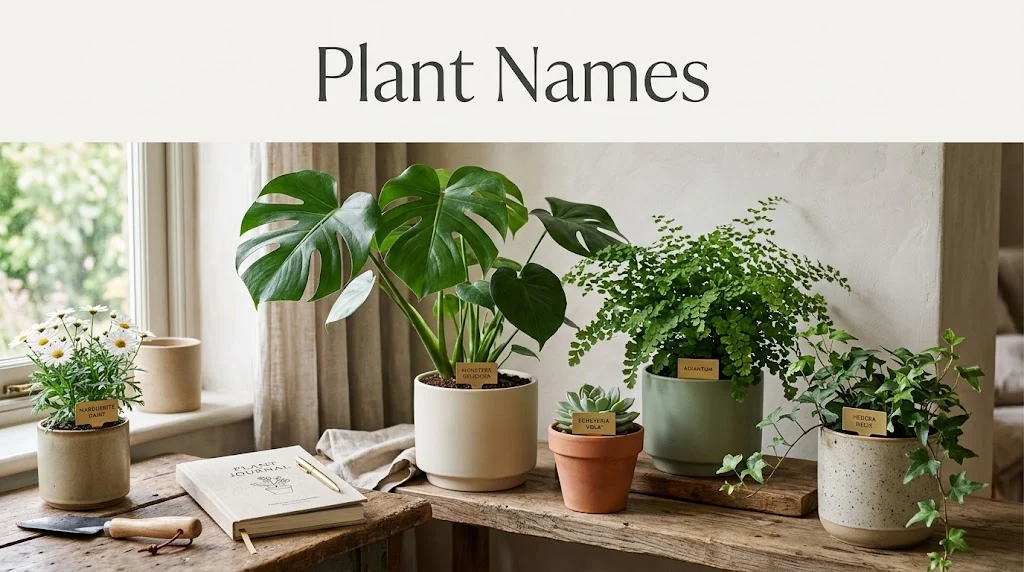
Plant names can be cute, funny, elegant, or inspired by nature. Popular ideas include Rosie, Fern, Ivy, Basil, Daisy, Willow, Clover, Sunny, Olive, and Flora.
A beautiful plant deserves a name that makes it feel like part of the family. Whether you have a tiny succulent on your desk, a leafy monstera in your living room, or a colorful flower sitting by your window, giving it a name adds a little extra personality to your space.
The best plant names can come from almost anywhere. You might choose something inspired by flowers, trees, colors, nature, favorite characters, or even a funny personality trait. Some people love sweet names like Daisy and Rosie, while others prefer unusual choices like Clover, Juniper, or Basil.
Naming a plant can also become a fun way to connect with nature. A simple green houseplant might become your favorite little companion once you give it a name that feels right.
In this guide, you’ll discover creative ideas, their meanings, origins, personality styles, and the best situations for using them. Whether you prefer something adorable, elegant, funny, or completely unique, there is a perfect name waiting for your leafy friend.
Rosie
Meaning: Rose flower; traditionally associated with love and beauty.
Origin: English, derived from the flower name Rose.
Personality: Rosie feels sweet, cheerful, gentle, and welcoming. It is a lovely choice for a flowering plant or a houseplant with soft, delicate leaves.
Style: Cute, vintage, feminine, floral, classic.
Best For: Rose plants, flowering houseplants, small indoor plants, garden flowers, and decorative pots.
Popularity: Rosie is a familiar vintage-style name that remains popular as a friendly and affectionate nickname.
Emotional Appeal: The name feels warm and familiar. It can make an ordinary flower pot feel like a little companion in your home.
Pop Culture Reference: Rosie is a recognizable character name in books, films, and television.
Similar Nicknames: Rose, Rosy, Rosa, Ro, Rosette.
Why It Still Works Today: Rosie has a timeless floral connection and an easy, cheerful sound. It is especially suitable for plants with pink, red, or rose-like flowers.
Fern
Meaning: A green, leafy plant belonging to an ancient group of vascular plants.
Origin: English, from the Old English word associated with the fern plant.
Personality: Fern feels peaceful, natural, quiet, and elegant. It suits a plant with delicate fronds or a relaxed, woodland-inspired appearance.
Style: Botanical, vintage, earthy, minimalist, aesthetic.
Best For: Boston ferns, indoor ferns, hanging plants, leafy houseplants, and garden greenery.
Popularity: Fern has a vintage botanical feel and is also used as a personal name.
Emotional Appeal: Fern brings to mind shady forests, fresh air, and peaceful green spaces. It is perfect for someone who loves a natural, understated style.
Pop Culture Reference: Fern appears as a character name in literature, including Charlotte’s Web.
Similar Nicknames: Fernie, Fifi, Ferny, Flora, Fawn.
Why It Still Works Today: Its short spelling and botanical meaning make Fern memorable. It works particularly well for plants with lush green foliage.
Ivy
Meaning: A climbing evergreen plant.
Origin: English, derived from the Old English plant name.
Personality: Ivy feels elegant, confident, graceful, and independent. It is a charming name for a climbing plant that grows along shelves, walls, or hanging baskets.
Style: Elegant, modern, botanical, classic, sophisticated.
Best For: English ivy, trailing plants, climbing vines, hanging greenery, and decorative indoor plants.
Popularity: Ivy is a well-known botanical name that has remained fashionable as both a personal name and a nature-inspired nickname.
Emotional Appeal: Ivy symbolizes natural beauty and persistence. Its connection with climbing greenery makes it especially fitting for plants that spread and grow.
Pop Culture Reference: Ivy is widely recognized in literature and entertainment, including the fictional character Poison Ivy.
Similar Nicknames: Ivie, Ives, Vivi, Ivy-Bee, Iva.
Why It Still Works Today: Ivy is short, stylish, and easy to remember. Its botanical connection makes it an excellent choice for a trailing or climbing houseplant.
Daisy
Meaning: A cheerful flowering plant; the flower name is associated with the expression “day’s eye.”
Origin: English, from the Old English name for the daisy flower.
Personality: Daisy feels bright, playful, friendly, and optimistic. It is a perfect match for a plant that brings color and happiness to a room.
Style: Cute, vintage, floral, cheerful, feminine.
Best For: Daisy flowers, flowering pots, colorful garden plants, and small decorative houseplants.
Popularity: Daisy is a timeless flower-inspired name that continues to appeal to people who love cheerful botanical names.
Emotional Appeal: Daisy reminds people of sunny afternoons, spring gardens, and simple happiness. It is a lovely name for a plant that makes a space feel brighter.
Pop Culture Reference: Daisy is a familiar name in literature, films, and popular culture.
Similar Nicknames: Daze, Dais, Didi, Day, Daisy-Boo.
Why It Still Works Today: Daisy is easy to pronounce and full of personality. It works especially well for plants with white, yellow, or colorful blooms.
Willow
Meaning: A graceful tree belonging to the willow family.
Origin: English, derived from the Old English word for the willow tree.
Personality: Willow feels calm, gentle, dreamy, and graceful. It is a beautiful choice for a plant with long, flowing leaves or a soft natural appearance.
Style: Aesthetic, elegant, nature-inspired, peaceful, vintage.
Best For: Willow trees, indoor trees, tall leafy plants, and plants with flowing foliage.
Popularity: Willow has become a recognizable nature-inspired name and is popular in modern naming styles.
Emotional Appeal: The name brings to mind peaceful gardens, flowing branches, and quiet natural beauty. It creates a soft and relaxing feeling.
Pop Culture Reference: Willow appears in fantasy stories, films, and television, including the fantasy film Willow.
Similar Nicknames: Willa, Willy, Will, Lo, Willow-Bee.
Why It Still Works Today: Willow has a gentle sound and a strong botanical connection. It is particularly suitable for plants with graceful shapes or tree-like growth.
Basil
Meaning: A fragrant culinary herb.
Origin: The plant name comes through Latin and Greek from an ancient Greek word meaning royal.
Personality: Basil feels playful, fresh, clever, and slightly quirky. It is an excellent name for a plant that belongs in a kitchen or herb garden.
Style: Funny, botanical, classic, earthy, charming.
Best For: Sweet basil, Thai basil, kitchen herbs, herb gardens, and small edible plants.
Popularity: Basil is a traditional herb name that also works as a distinctive personal name.
Emotional Appeal: The name is practical and amusing at the same time. It gives a little personality to an everyday kitchen plant.
Pop Culture Reference: Basil is a familiar character name in literature and entertainment, including the detective Basil of Baker Street.
Similar Nicknames: Baz, Bazzy, Basi, Billy, B.
Why It Still Works Today: Basil is easy to recognize and has a strong connection with fresh herbs and home cooking. It is especially fun for someone who enjoys growing their own ingredients.
Clover
Meaning: A small flowering plant with three-part leaves, commonly associated with good luck.
Origin: English, from the plant name.
Personality: Clover feels lucky, cheerful, friendly, and whimsical. It is a lovely name for a small plant that adds a natural touch to a desk or garden.
Style: Cute, whimsical, earthy, vintage, playful.
Best For: Clover plants, small leafy plants, garden greenery, succulents, and decorative pots.
Popularity: Clover is a distinctive botanical name that fits the growing interest in nature-inspired naming.
Emotional Appeal: Many people associate four-leaf clovers with good luck. That gives the name a positive and hopeful feeling.
Pop Culture Reference: Clover appears as a personal name in children’s entertainment and fiction.
Similar Nicknames: Clovy, Clove, Coco, Love, Cee.
Why It Still Works Today: Clover has a memorable sound and a charming natural connection. It is ideal for someone who wants something less common than Daisy or Rosie.
Sunny
Meaning: Full of sunshine, brightness, and warmth.
Origin: English, derived from the word sunny.
Personality: Sunny feels cheerful, energetic, friendly, and positive. It suits a plant that brightens a room or enjoys a sunny windowsill.
Style: Cute, modern, playful, cheerful, unisex.
Best For: Sunflowers, bright flowering plants, succulents, cactus plants, and sunny-window houseplants.
Popularity: Sunny is a familiar affectionate name that works across different ages and styles.
Emotional Appeal: Sunny brings an immediate sense of happiness. It is perfect for a plant that makes your room feel more welcoming.
Pop Culture Reference: Sunny is used as a character name in various books and entertainment productions.
Similar Nicknames: Sun, Sunshine, Sol, Sunbeam, Sunny-B.
Why It Still Works Today: Sunny is simple, positive, and easy to say. It can suit almost any plant, especially one placed in a bright and cheerful corner.
Olive
Meaning: Olive tree or olive fruit, traditionally associated with peace.
Origin: English, derived from the Latin word oliva.
Personality: Olive feels peaceful, sophisticated, gentle, and quietly charming. It is a lovely choice for a plant with silvery-green leaves or a Mediterranean appearance.
Style: Vintage, elegant, botanical, minimalist, classic.
Best For: Olive trees, silver-leaf plants, indoor trees, decorative greenery, and Mediterranean garden plants.
Popularity: Olive is a recognizable botanical name that has enjoyed renewed interest as a vintage-style personal name.
Emotional Appeal: The olive branch has long been used as a symbol of peace. This gives Olive a gentle and positive meaning.
Pop Culture Reference: Olive is used in literature and entertainment, including the classic comic character Olive Oyl.
Similar Nicknames: Ollie, Liv, Livvy, Oli, O.
Why It Still Works Today: Olive combines natural beauty with a sophisticated sound. It is a wonderful option for someone who wants a plant name that feels elegant rather than overly playful.
Flora
Meaning: Flower; also the name of the Roman goddess associated with flowers and spring.
Origin: Latin.
Personality: Flora feels graceful, creative, romantic, and full of life. It is an especially fitting choice for someone with a collection of flowering plants.
Style: Elegant, vintage, floral, artistic, botanical.
Best For: Flowering plants, indoor gardens, colorful flowers, plant collections, and decorative greenery.
Popularity: Flora is a classic botanical name with a vintage charm that continues to appeal to nature lovers.
Emotional Appeal: The name celebrates flowers, springtime, and natural beauty. It can make a plant feel like a special part of your home.
Pop Culture Reference: Flora is one of the three good fairies in Disney’s Sleeping Beauty.
Similar Nicknames: Flo, Flossie, Flor, Flori, Fifi.
Why It Still Works Today: Flora has a direct connection with flowers and nature. Its graceful sound makes it a lovely name for almost any flowering plant.
Quick Comparison Table
| Plant Name | Meaning | Style | Best For |
|---|---|---|---|
| Rosie | Rose flower | Cute & vintage | Flowering plants |
| Fern | Leafy botanical plant | Earthy & aesthetic | Ferns |
| Ivy | Climbing evergreen | Elegant & modern | Vines |
| Daisy | Cheerful flower | Playful & classic | Daisy plants |
| Willow | Graceful tree | Soft & dreamy | Indoor trees |
| Basil | Fragrant herb | Funny & earthy | Herb plants |
| Clover | Lucky leafy plant | Whimsical & cute | Small greenery |
| Sunny | Sunshine & brightness | Cheerful & modern | Sun-loving plants |
| Olive | Olive tree | Elegant & vintage | Olive trees |
| Flora | Flower | Romantic & classic | Flowering plants |
How to Choose the Perfect Plant Name
Choosing a name for your plant should be enjoyable. You do not need a complicated naming system. A little creativity and observation can help you find something that feels just right.
1. Look at Your Plant’s Appearance
Start with its leaves, flowers, size, and colors. A plant with tiny pink flowers might suit Rosie, while a tall plant with flowing leaves could be called Willow.
2. Think About Its Personality
Some plants look cheerful, others appear elegant or unusual. You can choose a name that matches the feeling your plant gives you.
3. Use Nature as Inspiration
Flowers, trees, herbs, weather, and seasons offer endless ideas. Consider names such as Clover, Fern, Rain, Blossom, or Sunny.
4. Choose Something Easy to Remember
Short names are often the easiest to use. Ivy, Ayo, Fern, and Rose are simple choices that sound natural in everyday conversation.
5. Consider Funny Names
Your plant does not need a serious name. Something silly can make your plant collection more entertaining. Try Leaf Erikson, Sir Sprouts-a-Lot, or Planty McPlantface.
6. Match the Name to Your Home
If your home has a soft, minimalist style, an elegant name such as Olive or Flora might feel appropriate. For a colorful and playful room, Daisy or Sunny could be a better match.
7. Make It Personal
You can name a plant after a favorite character, a meaningful place, or an inside joke. Personal connections often make the best names.
Most Popular Plant Names Today
Some plant names are popular because they are short, adorable, and easy to remember. Others stand out because of their connection with nature.
Here are some lovely choices:
- Rosie
- Daisy
- Ivy
- Fern
- Sunny
- Flora
- Olive
- Willow
- Clover
- Basil
- Blossom
- Petal
- Poppy
- Lily
- Sage
- Maple
- Juniper
- Bluebell
- Sprout
- Peach
These names work for many types of plants, from tiny succulents to large indoor trees.
Vintage Plant Names Making a Comeback
Vintage-inspired names have a special charm. They often sound gentle, elegant, and timeless.
If you enjoy classic names, consider these ideas:
- Flora
- Rosie
- Olive
- Violet
- Daisy
- Pearl
- Hazel
- Ruby
- Rose
- Clementine
- Florence
- Marigold
- Magnolia
- Primrose
- Poppy
These names are particularly lovely for flowering plants and decorative indoor gardens.
Modern Plant Naming Trends
Plant naming has become a fun part of houseplant culture. People often treat their greenery like little companions and give each plant a name that reflects its appearance or personality.
Short and Cute Names: Names such as Ivy, Fern, Pip, and Mimi are easy to remember and look great on plant labels.
Human Names: Many people enjoy giving their plants ordinary human names. Examples include Kevin, George, Betty, Martha, and Henry.
Funny Names: Humorous names add personality to a plant collection. Leaf Erikson, Sproutacus, and Branch Manager are playful choices.
Nature-Inspired Names: Botanical names such as Willow, Clover, Sage, and Juniper remain attractive because they connect directly with the natural world.
Aesthetic Names: Soft names such as Luna, Flora, Olive, and Blossom work beautifully for social media plant collections.
Food-Inspired Names: Basil, Pickles, Peach, Kiwi, and Mochi are fun options for small plants and succulents.
The best trend is choosing a name that makes you happy whenever you see your plant.
Funny Plant Names for Extra Personality
If you want something more entertaining than a traditional flower name, funny plant names are a wonderful option.
Here are some creative ideas:
- Leaf Erikson
- Sir Sprouts-a-Lot
- Planty McPlantface
- Britney Ferns
- Leonardo DiCactus
- Cactus Everdeen
- Sproutacus
- Branch Manager
- Leafy Wonder
- Rooty
- Professor Photosynthesis
- The Great Green
- Captain Chlorophyll
- Bud Light
- Twiggy
These names are especially fun for houseplant collections, office plants, and plants shared with friends or family.
Cute Plant Names for Succulents
Succulents are small, charming, and full of personality. Their unusual shapes make them perfect candidates for adorable nicknames.
Here are some ideas:
- Pebble
- Mochi
- Pickle
- Buttons
- Pudding
- Sprout
- Nugget
- Jellybean
- Poppy
- Tiny
- Bean
- Cactus
- Pip
- Bubbles
- Kiwi
You can also choose a name based on the succulent’s color, shape, or growth pattern.
FAQs
What are the best names for plants?
Some of the best names for plants include Rosie, Daisy, Ivy, Fern, Willow, Clover, Sunny, Olive, and Flora.
What are some cute names for indoor plants?
Cute names for indoor plants include Pip, Mochi, Daisy, Rosie, Sprout, Pebble, Bubbles, and Clover. These names work especially well for small houseplants, succulents, and decorative pots.
What are funny names for houseplants?
Funny houseplant names include Leaf Erikson, Sir Sprouts-a-Lot, Planty McPlantface, Branch Manager, and Leonardo DiCactus.
Should I give my houseplants names?
Naming your houseplants is a fun personal choice. It can make caring for them feel more enjoyable and help you remember individual plants in a large collection.
What are aesthetic names for plants?
Aesthetic plant names include Willow, Flora, Olive, Ivy, Luna, Blossom, Juniper, and Fern. These names have soft, elegant, or nature-inspired associations.
Conclusion
Finding the perfect name for your greenery is a simple way to make your plant collection more personal and enjoyable. Whether you love cute choices like Rosie and Daisy, elegant ideas like Olive and Flora, or funny names like Leaf Erikson and Planty McPlantface, there are countless possibilities.
The best plant names reflect your creativity and the little details that make each plant special. Think about its leaves, colors, flowers, and overall personality before making your choice.
You can even give every plant in your home a different name and create your own little botanical family. Pick your favorite, share this article with another plant lover, and leave a comment telling us what you named your green friend!
Discover More Related Articles:
- Chinese Girl Names | Beautiful Names With Meanings In 2026
- Baby Names 2025 | Popular, Unique & Beautiful Ideas In 2026