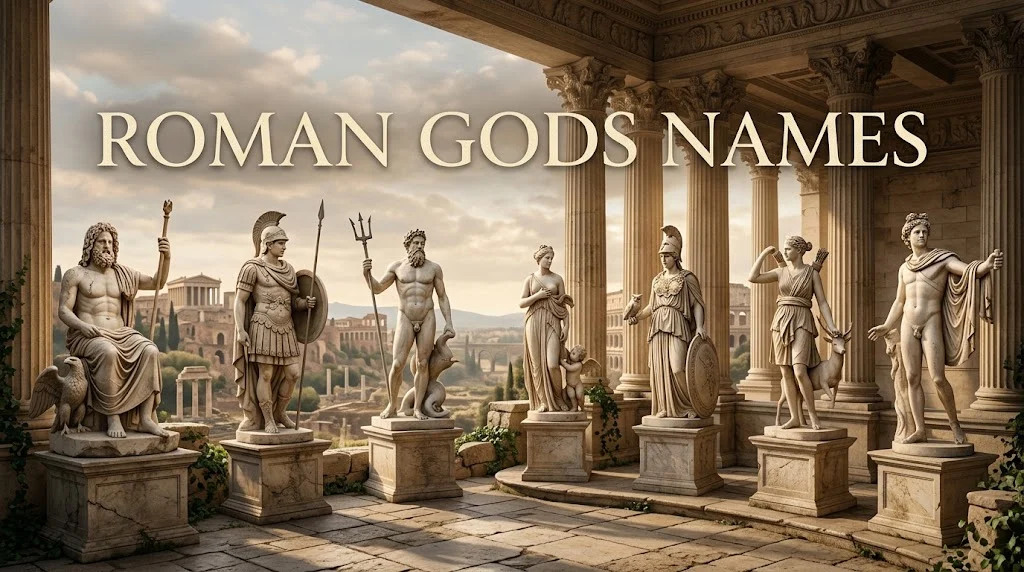
Roman gods names include Jupiter, Mars, Neptune, Mercury, Apollo, Venus, Minerva, Diana, Juno, and Vulcan. These ancient deity names are associated with concepts such as the sky, war, sea, love, wisdom, nature, marriage, and fire.
Ancient Roman mythology is filled with names that still sound powerful thousands of years later. From Jupiter, the chief Roman god, to Venus, the goddess of love and beauty, these names are connected to stories, symbols, natural forces, and important parts of Roman religious life.
The appeal of Roman gods names goes beyond mythology. Their strong sounds and memorable meanings make them popular choices for fictional characters, fantasy worlds, gaming identities, pets, creative projects, and even baby-name inspiration.
Roman mythology also developed through centuries of cultural exchange. Some Roman deities have clear counterparts in Greek mythology, while others have distinctly Roman traditions and histories. Their names can therefore reveal interesting connections between ancient cultures.
In this guide, we explore ten famous Roman gods and goddesses, including their meanings, roles, symbols, personalities, styles, and modern uses. If you want a name that feels powerful, classical, mysterious, or timeless, these ancient choices offer plenty of inspiration.
Jupiter
Meaning: Traditionally connected with the sky and divine authority.
Origin: Latin and ancient Roman religion.
Personality: Jupiter represents authority, power, protection, and leadership. In Roman mythology, he was the chief deity of the Roman state and was associated with the sky, thunder, and lightning.
Style: Powerful, regal, ancient, masculine, commanding.
Best For: Baby boy inspiration, fictional king, fantasy character, gaming character, pet, username.
Popularity: Jupiter remains one of the most recognizable names from Roman mythology. It is also familiar because Jupiter is the largest planet in our solar system.
Emotional Appeal: Jupiter sounds grand and authoritative. It immediately creates an impression of strength and importance, making it appealing for characters who need a commanding presence.
Pop Culture Reference: Jupiter frequently appears in books, films, games, and modern adaptations of classical mythology. The name is also strongly associated with the planet Jupiter.
Similar Names: Jove, Zeus, Saturn, Mars, Apollo.
Why It Still Works Today: Jupiter has an unusually strong connection to both mythology and astronomy. That gives it a timeless quality and makes it recognizable even to people who know little about Roman mythology.
Mars
Meaning: Associated with war, military power, and protection.
Origin: Ancient Roman religion.
Personality: Mars feels bold, courageous, disciplined, competitive, and strong. Unlike some Roman deities whose roles are connected to many areas of life, Mars has a particularly strong association with warfare and Rome’s military tradition.
Style: Strong, masculine, bold, classic, warrior-inspired.
Best For: Baby boy inspiration, warrior character, fantasy hero, pet, gaming username.
Popularity: Mars remains one of the best-known Roman deity names. Its short structure also gives it a modern sound.
Emotional Appeal: Mars represents courage and determination. For fictional characters, the name immediately suggests someone fearless and capable.
Pop Culture Reference: Mars appears frequently in mythology-inspired entertainment. It is also the name of the fourth planet from the Sun, adding a strong astronomical association.
Similar Names: Ares, Jupiter, Vulcan, Romulus, Remus.
Why It Still Works Today: Mars is short, memorable, and powerful. It does not sound overly complicated, which helps it work well as a modern name while preserving its ancient roots.
Neptune
Meaning: God associated with the sea and waters.
Origin: Ancient Roman religion.
Personality: Neptune feels mysterious, powerful, independent, and adventurous. His association with the sea gives the name an expansive and untamed quality.
Style: Mythical, adventurous, elegant, masculine, mysterious.
Best For: Fantasy character, ocean-themed character, pet, username, creative project.
Popularity: Neptune is especially recognizable because it is also the name of a planet. Its mythology connection gives it an additional layer of meaning.
Emotional Appeal: The ocean is naturally associated with mystery, depth, freedom, and strength. Neptune therefore works particularly well for anyone seeking a name with an adventurous atmosphere.
Pop Culture Reference: Neptune appears in mythology-inspired fiction and is also widely recognized as the eighth planet from the Sun.
Similar Names: Poseidon, Oceanus, Triton, Nereus, Jupiter.
Why It Still Works Today: Neptune combines mythology with astronomy. That unusual combination gives it a strong identity and makes it especially appealing for fantasy and creative naming.
Mercury
Meaning: Roman god associated with commerce, communication, travel, and speed.
Origin: Ancient Roman religion.
Personality: Mercury feels clever, quick, adaptable, curious, and energetic. He was associated with travelers, merchants, communication, and movement.
Style: Clever, sleek, energetic, classic, adventurous.
Best For: Fictional character, gaming character, pet, username, creative project.
Popularity: Mercury is highly recognizable because of its mythological role and its connection to the planet closest to the Sun.
Emotional Appeal: The name suggests speed and intelligence. It is a strong choice for a character who is quick-thinking, persuasive, restless, or highly adaptable.
Pop Culture Reference: Mercury appears in mythology-based stories and modern media. The name is also associated with the planet Mercury and the chemical element mercury.
Similar Names: Hermes, Apollo, Mars, Atlas, Janus.
Why It Still Works Today: Mercury has several layers of recognition. It connects ancient mythology, astronomy, science, and modern culture, giving the name unusual versatility.
Apollo
Meaning: A major deity associated with music, poetry, prophecy, healing, and more.
Origin: Greek in origin but adopted into Roman religion under the name Apollo.
Personality: Apollo feels artistic, intelligent, confident, graceful, and inspiring. He is one of the most prominent gods shared between Greek and Roman traditions.
Style: Elegant, artistic, classical, masculine, sophisticated.
Best For: Baby boy inspiration, artist character, fictional hero, pet, username.
Popularity: Apollo remains a familiar mythological name and has strong recognition in modern popular culture.
Emotional Appeal: Apollo combines beauty with power. His associations with music, poetry, prophecy, and healing give the name a creative and intellectual feeling.
Pop Culture Reference: Apollo is frequently featured in novels, films, television, games, and other modern adaptations of mythology.
Similar Names: Helios, Phoebus, Mars, Jupiter, Orpheus.
Why It Still Works Today: Apollo sounds both ancient and modern. Its association with art and creativity makes it particularly attractive for parents, writers, and creators looking for a classical name.
Venus
Meaning: Goddess associated with love, beauty, desire, and fertility.
Origin: Ancient Roman religion.
Personality: Venus feels graceful, beautiful, confident, romantic, and charismatic. She became one of the most famous goddesses in Roman mythology.
Style: Elegant, feminine, romantic, classical, glamorous.
Best For: Baby girl inspiration, fictional heroine, fantasy character, pet, username.
Popularity: Venus remains one of the most recognizable names associated with classical mythology. It is also familiar as the name of the second planet from the Sun.
Emotional Appeal: Beauty and love are universal themes, which gives Venus an enduring appeal. The name sounds elegant without requiring a complicated pronunciation.
Pop Culture Reference: Venus appears throughout art, literature, film, fashion, and popular culture. Classical artworks depicting Venus have also played an important role in Western art history.
Similar Names: Aphrodite, Diana, Juno, Flora, Aurora.
Why It Still Works Today: Venus is short, elegant, and instantly recognizable. Its connections with mythology, beauty, and astronomy give it several meanings beyond its ancient religious context.
Minerva
Meaning: Goddess associated with wisdom, strategic warfare, crafts, and intellectual pursuits.
Origin: Ancient Roman religion.
Personality: Minerva feels intelligent, composed, strategic, creative, and independent. She represents a different kind of strength—one based on knowledge and careful thought.
Style: Elegant, intellectual, strong, classical, feminine.
Best For: Baby girl inspiration, scholar character, fantasy heroine, writer, gamer username.
Popularity: Minerva is less common in everyday naming than Venus or Diana, which can make it appealing to people looking for a distinctive classical name.
Emotional Appeal: Minerva represents the idea that intelligence can be a form of power. Her association with wisdom makes the name especially attractive to readers and writers.
Pop Culture Reference: Minerva appears in literature and modern fantasy, including characters influenced by classical mythology.
Similar Names: Athena, Diana, Juno, Vesta, Bellona.
Why It Still Works Today: Minerva offers an elegant alternative to more familiar mythological names. It feels scholarly and sophisticated while retaining a strong ancient identity.
Diana
Meaning: Goddess associated with the moon, hunting, forests, and wild nature.
Origin: Ancient Roman religion.
Personality: Diana feels independent, graceful, adventurous, protective, and nature-loving. Her mythology connects her with the wilderness and the natural world.
Style: Classic, feminine, elegant, natural, timeless.
Best For: Baby girl inspiration, nature character, fantasy heroine, pet, username.
Popularity: Diana has remained a widely recognized personal name far beyond its mythological origins.
Emotional Appeal: Diana combines softness with independence. The association with forests, hunting, and the moon creates a strong image of freedom and natural beauty.
Pop Culture Reference: Diana is a well-known personal name and has appeared in literature, entertainment, and popular culture. It is also famously associated with Diana, Princess of Wales, although that is separate from the Roman goddess.
Similar Names: Artemis, Luna, Juno, Venus, Minerva.
Why It Still Works Today: Diana is one of the easiest Roman mythology-inspired names to use in everyday life. It sounds familiar while still carrying a rich classical history.
Juno
Meaning: Major Roman goddess associated with marriage, women, childbirth, and the protection of the Roman state.
Origin: Ancient Roman religion.
Personality: Juno feels powerful, protective, dignified, loyal, and confident. She was one of the most important goddesses in Roman religion.
Style: Short, regal, feminine, classical, strong.
Best For: Baby girl inspiration, queen character, fantasy heroine, pet, username.
Popularity: Juno has experienced renewed interest as a short, distinctive classical name.
Emotional Appeal: Juno has a strong protective quality. Its short sound makes it modern, while its ancient background gives it depth.
Pop Culture Reference: Juno is also widely recognized because of the 2007 film Juno, though that modern cultural use is separate from the Roman goddess.
Similar Names: Juno, Diana, Venus, Minerva, Hera.
Why It Still Works Today: Juno is compact and memorable. It has the rare ability to sound contemporary while clearly carrying an ancient mythological connection.
Vulcan
Meaning: God associated with fire, metalworking, volcanoes, and craftsmanship.
Origin: Ancient Roman religion.
Personality: Vulcan feels inventive, strong, practical, skilled, and determined. His role connects destructive fire with the creative power of craftsmanship.
Style: Strong, industrial, masculine, ancient, powerful.
Best For: Fantasy character, inventor character, gaming name, pet, creative project.
Popularity: Vulcan is less commonly used as a personal name, making it especially attractive for fictional worlds and creative naming.
Emotional Appeal: The name combines fire and creation. It can represent someone who transforms raw materials into something useful or powerful.
Pop Culture Reference: Vulcan has a major association with Star Trek, where Vulcans are a fictional species. This modern association is separate from the Roman deity.
Similar Names: Hephaestus, Mars, Jupiter, Saturn, Mercury.
Why It Still Works Today: Vulcan has a powerful sound and strong imagery. It is particularly effective for characters connected with fire, engineering, metal, invention, or strength.
Quick Comparison Table
| Name | Meaning / Role | Style | Best For |
|---|---|---|---|
| Jupiter | Sky, thunder, supreme authority | Regal & powerful | Hero or king character |
| Mars | War and military power | Strong & bold | Warrior character |
| Neptune | Sea and waters | Mysterious & adventurous | Ocean character |
| Mercury | Travel, commerce, communication | Clever & energetic | Quick-thinking character |
| Apollo | Music, prophecy, healing | Artistic & elegant | Creative character |
| Venus | Love and beauty | Romantic & graceful | Female character |
| Minerva | Wisdom and crafts | Intelligent & strong | Scholar character |
| Diana | Hunting, forests, nature | Natural & classic | Nature heroine |
| Juno | Marriage and protection | Regal & feminine | Queen character |
| Vulcan | Fire and metalworking | Powerful & inventive | Inventor character |
How to Choose the Perfect Roman Mythology Name
Choosing a mythology-inspired name becomes easier when you first decide what quality you want the name to represent.
Start with the role.
Do you want a warrior, ruler, artist, explorer, healer, scholar, or nature-loving character? The deity’s role can help narrow your options.
Look at the meaning.
Jupiter suggests authority, Mars suggests warfare, Venus suggests beauty and love, while Minerva suggests wisdom. Choose a meaning that fits your purpose.
Consider the sound.
Short names such as Mars and Juno feel sharp and modern. Longer names such as Jupiter and Minerva have a more formal, classical sound.
Think about the audience.
If the name is for a baby, choose something comfortable for everyday use. If it is for a fantasy character, you can choose a more unusual deity name such as Vulcan.
Check the mythology carefully.
Roman mythology contains complex traditions that changed over time. Some gods were associated with several roles, and some Roman deities have connections with Greek counterparts.
Consider modern associations.
Some ancient names have strong modern meanings. Vulcan, for example, is also closely associated with Star Trek. Make sure the modern association fits your purpose.
Most Popular Roman Mythology Names Today
Some Roman mythology names remain especially recognizable because they have survived through literature, astronomy, art, and popular culture.
- Jupiter
- Mars
- Venus
- Diana
- Apollo
- Mercury
- Neptune
- Minerva
- Juno
- Vulcan
- Saturn
- Pluto
- Cupid
- Vesta
- Janus
Names such as Jupiter, Mars, Venus, and Neptune have an additional advantage: they are also familiar through astronomy. This gives them a modern connection beyond mythology.
Vintage Roman Mythology Names Making a Comeback
Classical names often return when parents and writers become interested in historical and mythological naming.
Some distinctive choices include:
- Juno
- Diana
- Minerva
- Vesta
- Flora
- Aurora
- Ceres
- Diana
- Vesta
- Bellona
These names offer a classical atmosphere without necessarily sounding overly complicated. Juno and Diana, in particular, can work naturally in modern naming contexts.
Modern Roman Mythology Name Trends
Modern interest in Roman mythology often focuses on names that sound strong, recognizable, and easy to pronounce.
Short names are especially appealing. Mars, Juno, and Vesta have compact structures that can feel contemporary. Longer names such as Minerva and Jupiter create a more grand, fantasy-inspired impression.
Astronomy has also helped keep several Roman deity names familiar. Jupiter, Mars, Venus, Neptune, and Mercury are all planetary names, making their mythological origins part of a much wider cultural identity.
Another trend is using mythology as character inspiration rather than copying a deity’s exact personality. A writer might choose Mars for a brave character without making that character literally a Roman god.
This approach gives ancient names a new purpose while preserving their classical atmosphere.
Roman Gods Names for Different Purposes
For a powerful boy name: Jupiter, Mars, Apollo, Mercury, and Vulcan.
For an elegant girl name: Venus, Diana, Juno, and Minerva.
For a warrior character: Mars, Bellona, or Minerva.
For an ocean-themed character: Neptune.
For an intelligent character: Minerva or Mercury.
For a nature-inspired character: Diana, Flora, or Ceres.
For a romantic character: Venus or Cupid.
For a fantasy ruler: Jupiter or Juno.
For a mysterious character: Neptune, Pluto, or Janus.
Roman Gods Names and Their Greek Connections
Roman mythology and Greek mythology are closely connected, but they are not simply identical systems with different names.
Some Roman gods became strongly associated with Greek deities. Jupiter corresponds closely with Zeus, Mars with Ares, Neptune with Poseidon, Venus with Aphrodite, Mercury with Hermes, Diana with Artemis, and Minerva with Athena.
Apollo is an interesting case because the Romans adopted Apollo’s name directly rather than replacing it with a distinct Roman name.
These relationships developed through centuries of cultural contact and religious adaptation. Therefore, when researching a Roman deity, it is useful to consider both the Roman tradition and its Greek connections without assuming they were always exactly the same.
FAQs
Who is the most powerful Roman god?
Jupiter is generally regarded as the chief god of the Roman pantheon. He was associated with the sky, thunder, law, authority, and the protection of the Roman state.
What are the most famous Roman gods names?
Some of the best-known Roman deity names are Jupiter, Mars, Neptune, Mercury, Apollo, Venus, Minerva, Diana, Juno, and Vulcan.
What Roman god is associated with war?
Mars is the Roman god most strongly associated with war and military power. He was an important deity in Roman religion and held a particularly significant place in Rome’s military and civic traditions.
What Roman goddess represents love?
Venus is the Roman goddess most closely associated with love, beauty, desire, and fertility.
What Roman god is associated with the sea?
Neptune is the Roman god associated with the sea and waters. His Greek counterpart is Poseidon.
Conclusion
Roman gods names offer a fascinating mix of history, symbolism, power, and timeless style. Names such as Jupiter, Mars, Neptune, Apollo, Venus, Diana, and Minerva are more than ancient labels. Each connects to a larger story involving nature, warfare, wisdom, love, leadership, craftsmanship, or the world around the Romans.
For a character, baby-name inspiration, pet, username, or creative project, these names can add an instant classical atmosphere. The best choice depends on the quality you want to express and how closely you want to connect with the original mythology.
Take time to explore the deity behind the name rather than choosing only because it sounds powerful. Pick the Roman mythology name that best matches your story, personality, or purpose and share this guide with anyone who loves ancient mythology and unforgettable names.
Discover More Related Articles:
- Cute Flower Names | Sweet, Pretty & Unique Ideas In 2026
- Girls Names That Start With D | Beautiful & Unique Ideas In 2026