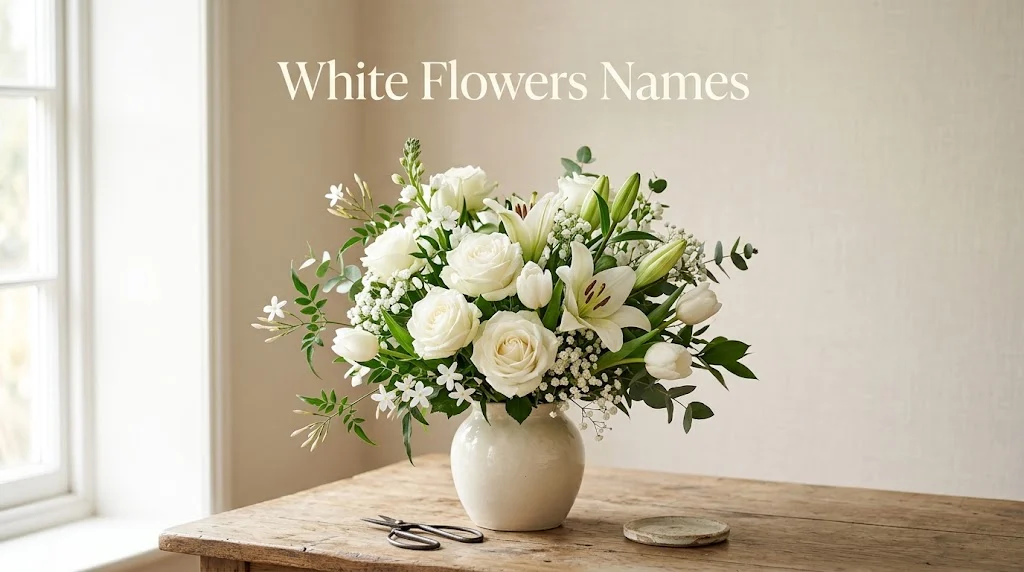
Popular white flowers include white roses, lilies, jasmine, orchids, tulips, daisies, gardenias, magnolias, baby’s breath, and snowdrops. They offer different shapes, fragrances, growing habits, and traditional associations.
White flowers have a special way of making a garden or bouquet feel peaceful, graceful, and timeless. Their soft petals work beautifully with almost every other color, from blush pink and lavender to deep green and golden yellow. Whether arranged in a wedding bouquet or planted along a garden path, they can make ordinary spaces feel more elegant.
Exploring white flowers names is a wonderful starting point if you want to choose blooms for a special occasion, decorate your home, or create a beautiful garden. Some white flowers are known for their delicate fragrance, while others stand out because of their bold petals, unusual shapes, or long blooming seasons.
White flowers also carry traditional meanings. Roses are often associated with sincerity and new beginnings, while snowdrops are commonly linked with hope. These meanings can vary across cultures and traditions, so they are best treated as symbolic associations rather than universal rules.
In this guide, you will discover ten beautiful white flowers, their botanical backgrounds, appearance, style, uses, and traditional symbolism. You will also find helpful tips for choosing the right flowers for your needs.
White Rose
Meaning: Traditionally associated with purity, sincerity, remembrance, and new beginnings.
Origin: Roses belong to the genus Rosa, which includes many species native to regions across the Northern Hemisphere.
Appearance: White roses have layered petals that range from creamy ivory to bright white. Depending on the variety, they may have a classic rounded shape, a romantic full bloom, or a simple open form.
Style: Elegant, romantic, classic, timeless.
Best For: Wedding bouquets, anniversaries, formal arrangements, garden beds, and meaningful gifts.
Popularity: White roses are a longstanding favorite in floristry because their neutral color works with many styles and color palettes.
Emotional Appeal: Their soft appearance makes white roses suitable for expressing respect, affection, and thoughtful appreciation. They can create a romantic arrangement without relying on bright colors.
Symbolism: In traditional Western flower symbolism, white roses are often connected with innocence and sincerity. Their meaning can change according to the occasion and cultural context.
Similar Flowers: White ranunculus, white peonies, gardenias, white tulips.
Why It Still Works Today: White roses fit minimalist, vintage, modern, and traditional arrangements. They can stand alone in a simple vase or become part of a larger bouquet with greenery and colorful flowers.
White Lily
Meaning: Traditionally associated with purity, devotion, and renewal.
Origin: True lilies belong to the genus Lilium and are native to parts of the Northern Hemisphere.
Appearance: White lilies often have large, star-shaped or trumpet-shaped flowers. Some varieties have a noticeable fragrance, while others are more subtle.
Style: Sophisticated, dramatic, graceful, formal.
Best For: Floral arrangements, celebrations, gardens, and formal displays.
Popularity: White lilies remain popular because their large blooms create an immediate visual impact.
Emotional Appeal: Their tall stems and elegant petals make them feel special without requiring many additional flowers. A few lilies can create an impressive arrangement.
Symbolism: White lilies are often associated with purity and devotion in Western floral traditions. Their use at ceremonies and memorials also gives them meanings connected with remembrance.
Similar Flowers: Calla lilies, white amaryllis, white orchids, white gladiolus.
Why It Still Works Today: White lilies suit both modern arrangements and traditional floral designs. Their size makes them useful as focal flowers, although their fragrance may be strong for some indoor spaces.
Helpful Tip: Many true lilies are highly toxic to cats, including their pollen. Choose another flower if cats may come into contact with the arrangement.
White Jasmine
Meaning: Often associated with love, grace, hospitality, and purity in different cultural traditions.
Origin: Jasmine is a common name for plants in the genus Jasminum, which includes species native to tropical and warm temperate regions of Eurasia, Australasia, and Oceania.
Appearance: Many jasmine varieties have small, star-shaped white flowers and green leaves. Some produce a sweet fragrance, particularly in the evening.
Style: Romantic, delicate, natural, fragrant.
Best For: Suitable garden trellises, fragrant outdoor spaces, patios, and decorative arrangements using cut stems where appropriate.
Popularity: Jasmine is widely appreciated for its fragrance and attractive flowers, although flowering times depend on the species and climate.
Emotional Appeal: Its gentle appearance and sweet scent can make a garden feel welcoming. Jasmine is also important in several cultural traditions, where it may be used in ceremonies and celebrations.
Symbolism: Meanings vary by culture. Jasmine may be connected with affection, beauty, hospitality, or spiritual traditions.
Similar Flowers: Gardenia, orange blossom, stephanotis, white honeysuckle.
Why It Still Works Today: Jasmine combines attractive flowers with fragrance, making it appealing to gardeners who want more than visual color. Before planting, check the needs of the particular species because jasmine varieties differ in growth habit and climate tolerance.
White Orchid
Meaning: Traditionally associated with elegance, beauty, refinement, and admiration.
Origin: Orchids belong to the diverse plant family Orchidaceae, which occurs naturally across much of the world.
Appearance: White orchids can have rounded petals, delicate patterns, and distinctive central structures. Popular white-flowering varieties include moth orchids, commonly known as Phalaenopsis.
Style: Modern, luxurious, minimalist, sophisticated.
Best For: Indoor decoration, gifts, special events, contemporary wedding arrangements, and bright indoor spaces with suitable light.
Popularity: White orchids are popular ornamental plants because their flowers can last for weeks under suitable conditions.
Emotional Appeal: Their unusual shapes and clean color make orchids feel refined. A single flowering plant can become a decorative feature without the need for a large bouquet.
Symbolism: Orchids are often associated with beauty, refinement, and admiration, although specific meanings vary between cultures and traditions.
Similar Flowers: White anthuriums, calla lilies, gardenias, white camellias.
Why It Still Works Today: White orchids complement modern interiors and traditional décor. Many moth orchids can rebloom with suitable care, making them a lasting alternative to short-lived cut flowers.
White Tulip
Meaning: Often associated with forgiveness, sincerity, peace, and fresh beginnings.
Origin: Tulips belong to the genus Tulipa. Many species originated across parts of Central Asia, with additional diversity extending into surrounding regions.
Appearance: White tulips have smooth, cup-shaped flowers held on upright stems. Their clean lines give them a simple yet striking appearance.
Style: Modern, fresh, minimal, elegant.
Best For: Spring bouquets, weddings, table decorations, garden borders, and thoughtful gifts.
Popularity: Tulips are widely grown ornamental flowers, and white varieties are valued for their versatility.
Emotional Appeal: Their uncomplicated shape creates a calm, uncluttered look. White tulips also pair naturally with pink, purple, yellow, and green flowers.
Symbolism: In some Western floral traditions, white tulips are associated with forgiveness and fresh starts. The interpretation depends on the occasion and the person receiving them.
Similar Flowers: White daffodils, white roses, white crocuses, white hyacinths.
Why It Still Works Today: White tulips look beautiful in both casual and formal arrangements. Their simple shape makes them especially suitable for contemporary floral designs.
White Daisy
Meaning: Commonly associated with innocence, simplicity, cheerfulness, and freshness.
Origin: The common daisy, Bellis perennis, is native to Europe and parts of western Asia and has become established in many other regions.
Appearance: Common white daisies have white ray petals surrounding a yellow center. Other daisy-like garden flowers, including Shasta daisies, may grow larger and have a more substantial appearance.
Style: Cheerful, natural, cottage-inspired, casual.
Best For: Informal bouquets, garden borders, flower beds, containers, and simple home arrangements.
Popularity: Daisies are familiar flowers because of their recognizable shape and friendly appearance.
Emotional Appeal: Their uncomplicated form gives them a relaxed, welcoming feel. Daisies can brighten a garden without making the overall design look too formal.
Symbolism: Daisies are often associated with innocence and simplicity in Western floral symbolism.
Similar Flowers: Shasta daisies, white asters, feverfew, chamomile.
Why It Still Works Today: Daisies suit cottage gardens and modern naturalistic planting schemes. They also combine well with grasses and other small flowers for an informal, meadow-like effect.
Gardenia
Meaning: Traditionally associated with purity, admiration, grace, and secret affection.
Origin: Gardenias belong to the genus Gardenia, within the coffee family, Rubiaceae. Many popular ornamental species originate in tropical and subtropical regions of Africa and Asia.
Appearance: Gardenias are known for creamy-white flowers, glossy green leaves, and a rich fragrance. Their blooms can have a layered, rose-like appearance.
Style: Romantic, luxurious, classic, fragrant.
Best For: Warm-climate gardens, patios, sheltered outdoor spaces, and floral arrangements.
Popularity: Gardenias are popular among people who want fragrant flowers and glossy evergreen foliage.
Emotional Appeal: Their strong fragrance and soft white petals give gardenias a memorable presence. Even a small number of blooms can make a room or garden feel special.
Symbolism: Gardenias are often associated with admiration and affection in traditional flower symbolism, although these associations are not universal.
Similar Flowers: White jasmine, white roses, stephanotis, white camellias.
Why It Still Works Today: Gardenias combine beauty and fragrance in one plant. They generally prefer warm conditions, acidic soil, and consistent moisture, so checking local growing requirements is important before planting.
Magnolia
Meaning: Often associated with dignity, beauty, perseverance, and nobility.
Origin: Magnolias belong to the genus Magnolia, a group of flowering trees and shrubs native to parts of Asia and the Americas.
Appearance: White magnolia flowers can be large and cup-shaped, with thick petals and a striking form. Depending on the species, flowers may appear before or alongside the leaves.
Style: Elegant, architectural, natural, dramatic.
Best For: Gardens, landscape planting, flowering trees, statement arrangements where suitable blooms are available.
Popularity: Magnolias are valued as ornamental trees and shrubs because their large flowers make a strong visual impression.
Emotional Appeal: A magnolia blossom can look sculptural and graceful. The flowers are especially striking against branches or dark green foliage.
Symbolism: Magnolia flowers are associated with dignity and beauty in several modern floral interpretations, but the symbolism varies between cultures.
Similar Flowers: White camellias, white peonies, gardenias, white roses.
Why It Still Works Today: Magnolias offer more than a short-lived floral display. Many varieties provide attractive foliage and a distinctive garden structure throughout the year, although their mature size and growing needs differ.
Baby’s Breath
Meaning: Commonly associated with innocence, lasting affection, purity, and gentle beauty.
Origin: Baby’s breath is the common name for plants in the genus Gypsophila. Several species originate in Europe, Asia, and surrounding regions.
Appearance: Baby’s breath produces clusters of tiny white flowers on fine, branching stems. The overall effect resembles a light cloud of blossoms.
Style: Delicate, airy, romantic, minimalist.
Best For: Wedding bouquets, floral arrangements, table decorations, dried flowers, and decorative displays.
Popularity: Baby’s breath is a familiar florist’s flower because it adds texture and volume without visually overwhelming larger blooms.
Emotional Appeal: Its tiny flowers create a soft, dreamy appearance. It can make a bouquet feel fuller while allowing roses, tulips, or other focal flowers to stand out.
Symbolism: Baby’s breath is often linked with innocence and enduring affection in contemporary floral symbolism.
Similar Flowers: White statice, white waxflower, feverfew, small white asters.
Why It Still Works Today: Baby’s breath works in rustic, modern, and traditional arrangements. It can also be used on its own for a simple, airy display. Choose suitable florist-grade material and keep it away from young children and pets who may chew decorative plants.
Snowdrop
Meaning: Traditionally associated with hope, renewal, and the arrival of spring.
Origin: Snowdrops belong to the genus Galanthus, a group of bulbous plants native to parts of Europe and the Middle East.
Appearance: Snowdrops have small, nodding white flowers that hang from slender stems. Their petals often include delicate green markings.
Style: Delicate, woodland-inspired, natural, understated.
Best For: Woodland gardens, shaded garden areas, naturalistic planting, and early-season displays.
Popularity: Snowdrops are beloved by gardeners in climates where they bloom in late winter or early spring.
Emotional Appeal: Their appearance can feel especially uplifting because they bloom when many other garden plants are still dormant.
Symbolism: Snowdrops are often associated with hope and renewal, reflecting their early flowering season.
Similar Flowers: White crocuses, snowflakes (Leucojum), white wood anemones, white hellebores.
Why It Still Works Today: Snowdrops provide seasonal interest at a time when gardens may look bare. They are especially suitable for naturalistic planting beneath deciduous trees, provided the local climate and soil conditions suit the species.
Quick Comparison Table
| Flower Name | Traditional Meaning | Style | Best For |
|---|---|---|---|
| White Rose | Sincerity, new beginnings | Romantic | Weddings and gifts |
| White Lily | Purity, devotion | Elegant | Formal arrangements |
| White Jasmine | Love, grace | Fragrant | Gardens and patios |
| White Orchid | Beauty, refinement | Modern | Indoor décor |
| White Tulip | Forgiveness, fresh starts | Minimal | Spring bouquets |
| White Daisy | Innocence, simplicity | Cheerful | Garden borders |
| Gardenia | Admiration, affection | Luxurious | Fragrant gardens |
| Magnolia | Dignity, beauty | Dramatic | Landscape planting |
| Baby’s Breath | Innocence, affection | Delicate | Bouquets |
| Snowdrop | Hope, renewal | Natural | Early spring gardens |
How to Choose the Perfect White Flower
Choosing a white flower becomes easier when you consider its purpose, appearance, fragrance, and growing needs.
Think about the occasion. White roses and tulips can suit weddings, while orchids make elegant gifts. Snowdrops are particularly meaningful for someone who enjoys early spring gardens.
Consider the fragrance. Jasmine and gardenia are known for their fragrance. White roses and orchids vary by cultivar, so check the specific variety if scent matters to you.
Choose flowers that suit your climate. A plant that thrives in a cool garden may struggle in a hot, humid location. Check temperature, sunlight, soil, and watering needs before buying a plant.
Look at the size. Baby’s breath works well as a light filler flower, while lilies and magnolias create a larger visual impact. Match the flower to the space or arrangement.
Explore the meaning. If you are buying flowers as a gift, consider the traditional symbolism, but remember that meanings vary across cultures. The recipient’s preferences are just as important.
Think about maintenance. Some flowers need careful watering, suitable soil, or particular light conditions. Choose a plant you can realistically care for.
Check pet safety. Some ornamental flowers can be harmful to pets. True lilies are particularly dangerous to cats, so always check plant safety before bringing flowers into a home with animals.
Most Popular White Flowers Today
Some white flowers remain favorites because they are versatile, easy to recognize, or widely available through florists and garden centers.
- White roses for romantic and formal arrangements.
- White lilies for large, elegant blooms.
- White tulips for simple, modern bouquets.
- White orchids for indoor decoration.
- White jasmine for fragrant garden spaces.
- White daisies for cheerful, informal displays.
- Gardenias for glossy foliage and fragrant flowers.
- Baby’s breath for soft, airy arrangements.
- Magnolias for ornamental trees and shrubs.
- Snowdrops for early-season garden interest.
Availability depends on location, growing conditions, and season. A florist may have access to cut flowers that are not currently flowering outdoors in your area.
Vintage White Flowers Making a Comeback
Classic flowers often return to popularity because their shapes and colors suit many design styles. White blooms are especially adaptable to vintage-inspired arrangements.
- White garden roses: Full petals and a romantic, old-fashioned appearance.
- White sweet peas: Delicate blooms with a soft, cottage-garden feel.
- White carnations: Ruffled petals and long-lasting cut flowers.
- White camellias: Elegant flowers with glossy evergreen leaves.
- White stock: Fragrant flower spikes that suit traditional bouquets.
- White peonies: Large, layered blooms with a romantic look.
- White lilacs: Fragrant clusters that suit spring gardens.
- White hydrangeas: Full flower clusters for gardens and arrangements.
These flowers do not all have the same growing requirements. Some are shrubs, some are perennials, and others are grown mainly as seasonal cut flowers. Check the variety and climate before selecting plants for your garden.
Modern White Flower Trends
White flowers fit many contemporary design styles because their neutral color works with natural materials, muted colors, and clean spaces.
Minimalist arrangements: A few white tulips, orchids, or roses in a simple vase create a refined look without extra decoration.
White-and-green bouquets: White flowers paired with leafy greenery create a fresh, natural appearance that works for weddings, events, and home décor.
Cottage-garden planting: White daisies, baby’s breath, and suitable white-flowering perennials can create a relaxed garden with a soft, meadow-inspired feel.
Fragrant outdoor spaces: Jasmine and gardenia are popular choices for gardeners who want fragrance as well as flowers. Their success depends on climate and plant care.
Moon gardens: White or pale flowers can remain visually noticeable in low evening light. Snowdrops, white jasmine, and suitable white-flowering shrubs can contribute to this effect when planted in appropriate conditions.
Seasonal flower choices: Many people now select flowers according to what is naturally available locally. Seasonal blooms can be fresher and may reduce the need for long-distance transportation.
The best design is not necessarily the most expensive one. A thoughtful combination of a few suitable flowers can look beautiful and feel personal.
What Do White Flowers Symbolize?
White flowers are often associated with purity, peace, innocence, sincerity, sympathy, and new beginnings. However, their meaning is not fixed. It can depend on the type of flower, local customs, religion, and the occasion.
For example, white roses are commonly linked with sincerity and innocence in Western floral traditions. Snowdrops are often associated with hope because they bloom early in the year. White lilies may represent purity or devotion in some settings, while also appearing in memorial arrangements.
The tradition of assigning messages to flowers is sometimes called the language of flowers, or floriography. Many familiar associations became especially popular in Europe and America during the nineteenth century. Historical flower dictionaries do not represent a single universal system, so symbolic meanings should be treated as cultural interpretations rather than botanical facts.
For a thoughtful gift, consider both the flower’s traditional meaning and the recipient’s personal preferences.
FAQs
What are the most popular white flower names?
Popular white flower names include white rose, white lily, jasmine, orchid, tulip, daisy, gardenia, magnolia, baby’s breath, and snowdrop.
Which white flowers are best for weddings?
White roses, tulips, orchids, baby’s breath, and suitable lilies are common choices for wedding arrangements.
What do white flowers mean?
White flowers are often associated with purity, sincerity, peace, innocence, and new beginnings.
Which white flowers have a strong fragrance?
Jasmine and gardenia are well known for their fragrance, while some white lilies and roses also have noticeable scents
What are the best small white flowers for a garden?
Baby’s breath, snowdrops, common daisies, and some white asters can be suitable for smaller garden displays.
Conclusion
White flowers offer a beautiful mix of elegance, simplicity, fragrance, and traditional symbolism. From the classic white rose and graceful lily to the fragrant jasmine, striking magnolia, and delicate snowdrop, each flower brings something different to a garden or arrangement.
When exploring white flowers names, consider more than color alone. Think about the flower’s shape, fragrance, growing conditions, traditional meaning, and the occasion for which you need it. A garden may benefit from seasonal blooms, while a wedding bouquet might call for a mixture of roses, tulips, orchids, or baby’s breath.
Remember that flower meanings can vary between cultures, and plant care requirements differ by species. Choose blooms that suit your needs and the environment where they will grow.
Which white flower is your favorite? Share this guide with a flower lover and leave a comment with the bloom you would most like to grow or receive.
Discover More Related Articles:
- Cool Car Names | Unique, Funny & Stylish Ideas In 2026
- Snow Names | Beautiful Ideas With Meanings In 2026