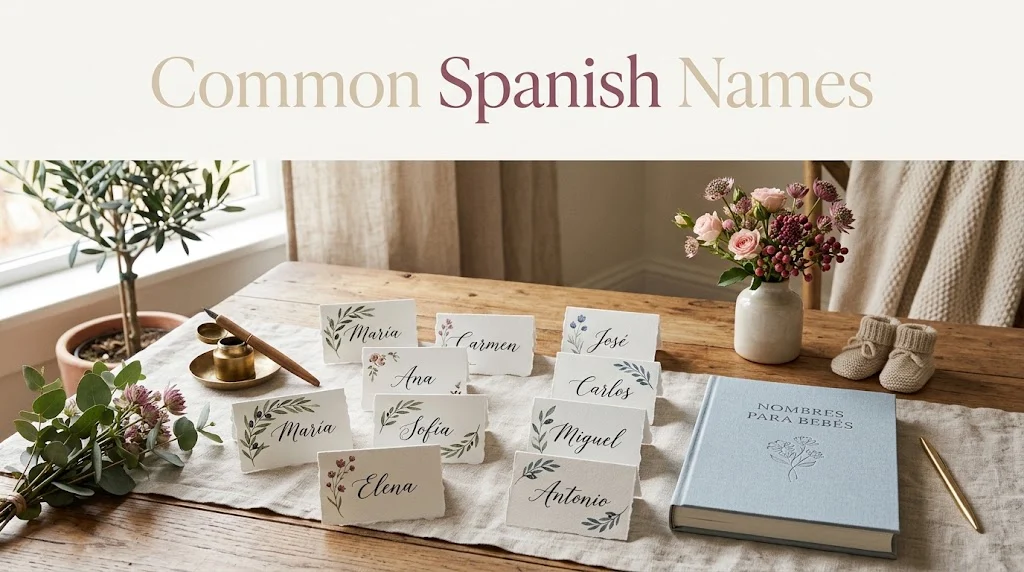
Common Spanish names include familiar choices such as María, Carmen, Ana, Sofía, José, Juan, Carlos, Miguel, and Antonio. Many have Spanish, Latin, Hebrew, or Christian historical roots and remain widely recognized across Spanish-speaking communities.
A familiar name can feel special because it connects generations. Common Spanish names are a great example. Names such as María, Carmen, José, Juan, Ana, and Carlos have been used across generations and remain recognizable in Spain and many Spanish-speaking communities around the world.
Spanish names come from several historical and linguistic influences. Some have Latin roots, while others entered Spanish through Hebrew, Greek, Germanic, or Christian traditions. Over time, these names became deeply established in Spanish-speaking cultures.
A common name does not necessarily mean an ordinary name. Familiar names often have beautiful meanings, rich histories, and affectionate nickname forms. A classic name can also be easy to pronounce, spell, and recognize in different countries.
Whether you are choosing a baby name, creating a fictional character, researching Spanish culture, or simply collecting name ideas, this guide explores ten well-known Spanish names and what makes each one appealing.
María
Meaning: Beloved, wished-for child, or traditionally associated with Mary; the exact etymology is debated.
Origin: Spanish form of Maria, ultimately connected with the Hebrew name Miriam.
Personality: María feels graceful, warm, traditional, caring, and timeless.
Style: Classic, feminine, elegant, traditional.
Best For: Baby girls, daughters, characters, and anyone looking for a timeless Spanish name.
Popularity: María has a long history of use across Spain and Spanish-speaking communities. It is one of the most recognizable feminine names in the Spanish-speaking world.
Emotional Appeal: María has a gentle sound and strong cultural familiarity. Its long association with Christian traditions also gives it historical significance for many families.
Pop Culture Reference: María appears frequently in Spanish-language literature, music, film, and television, making it highly recognizable.
Similar Names: Maribel, Marisol, Mariela, Mariana, Marisa.
Why It Still Works Today: María has survived changing naming trends because it is simple, recognizable, and deeply established across generations.
Carmen
Meaning: Often associated with “song” or “garden,” depending on the interpretation and linguistic tradition.
Origin: Spanish; strongly associated with the Marian title Nuestra Señora del Carmen.
Personality: Carmen feels confident, graceful, artistic, and strong.
Style: Classic, elegant, vintage, sophisticated.
Best For: Baby girls, daughters, characters, and people who love traditional names.
Popularity: Carmen has a long-standing presence in Spanish naming culture and is also recognized internationally.
Emotional Appeal: Carmen has a memorable two-syllable rhythm and a sophisticated sound. It feels traditional without becoming difficult to pronounce.
Pop Culture Reference: Carmen is famous internationally through works such as the opera Carmen by Georges Bizet, which helped make the name widely recognizable.
Similar Names: Carmela, Carmela, Carmina, Carolina, Catalina.
Why It Still Works Today: Carmen has a vintage charm that continues to appeal to families looking for a name with personality and history.
Ana
Meaning: Grace or favor.
Origin: Spanish form of Anna, from Hebrew Hannah.
Personality: Ana feels gentle, friendly, graceful, and dependable.
Style: Simple, classic, elegant, minimalist.
Best For: Baby girls, daughters, characters, and anyone seeking a short traditional name.
Popularity: Ana is widely used across Spanish-speaking countries and is also familiar internationally.
Emotional Appeal: Its short structure makes Ana easy to remember, while its traditional meaning gives it depth.
Pop Culture Reference: Ana is a common name across literature, television, film, and music in many countries.
Similar Names: Anita, Anabel, Analia, Anaís, Adriana.
Why It Still Works Today: Ana is simple enough to fit modern naming preferences while retaining a classic identity.
Sofía
Meaning: Wisdom.
Origin: Greek, adopted widely into Spanish and many other European languages.
Personality: Sofía suggests intelligence, grace, curiosity, and calm confidence.
Style: Elegant, modern, classic, international.
Best For: Baby girls, daughters, characters, and parents seeking a name that works across cultures.
Popularity: Sofía has become a highly recognizable modern name in Spain and many Spanish-speaking countries.
Emotional Appeal: The meaning “wisdom” gives Sofía an especially positive quality. It also has a soft, elegant sound.
Pop Culture Reference: Sofia is widely represented in international entertainment and literature.
Similar Names: Sofi, Sonia, Susana, Silvia, Sara.
Why It Still Works Today: Sofía combines an ancient meaning with a modern sound, making it suitable for both traditional and contemporary families.
José
Meaning: God will add or God will increase.
Origin: Spanish form of Joseph, ultimately from Hebrew Yosef.
Personality: José feels dependable, traditional, calm, and strong.
Style: Classic, masculine, religious, timeless.
Best For: Baby boys, sons, characters, and families looking for a traditional Spanish name.
Popularity: José has been one of the most recognizable masculine names throughout Spanish-speaking communities.
Emotional Appeal: Its long history gives José a strong sense of family and tradition. It also has many familiar nickname forms.
Pop Culture Reference: José is common among Spanish-speaking athletes, artists, writers, musicians, and public figures.
Similar Names: Pepe, Joselito, Josemi, Josef, Josué.
Why It Still Works Today: José has a straightforward pronunciation, deep historical roots, and strong cultural recognition.
Juan
Meaning: God is gracious.
Origin: Spanish form of John, from Hebrew Yohanan.
Personality: Juan feels friendly, dependable, confident, and traditional.
Style: Classic, strong, simple, timeless.
Best For: Baby boys, sons, fictional characters, and traditional naming.
Popularity: Juan has been widely used throughout Spain and Latin America for generations.
Emotional Appeal: Juan is short and familiar while carrying a meaningful traditional background.
Pop Culture Reference: Juan appears frequently in Spanish-language literature and popular culture. The phrase “Don Juan” also became an influential literary archetype, although that cultural reference is separate from the everyday meaning of the name.
Similar Names: Juanito, Juancho, Juanma, Johan, Julio.
Why It Still Works Today: Juan is easy to remember and strongly connected with Spanish-speaking identity. Its simplicity helps it remain recognizable across generations.
Carlos
Meaning: Traditionally associated with “free man” or “man.”
Origin: Spanish form of Charles, with Germanic roots.
Personality: Carlos feels confident, friendly, dependable, and energetic.
Style: Classic, masculine, strong, international.
Best For: Baby boys, sons, characters, and anyone seeking a familiar Spanish masculine name.
Popularity: Carlos has a long history of use in Spain and throughout Latin America.
Emotional Appeal: The name has a strong sound while remaining approachable. Its international equivalents also make it easy to recognize in different cultures.
Pop Culture Reference: Carlos is common among Spanish-speaking entertainers, athletes, writers, and historical figures.
Similar Names: Carlitos, Carl, Charlie, Carlo, Cristian.
Why It Still Works Today: Carlos balances tradition and international familiarity. It can sound equally natural on a child, teenager, or adult.
Miguel
Meaning: Who is like God?
Origin: Spanish form of Michael, from Hebrew.
Personality: Miguel feels strong, thoughtful, confident, and dependable.
Style: Traditional, religious, masculine, timeless.
Best For: Baby boys, sons, characters, and traditional Spanish families.
Popularity: Miguel has remained a familiar Spanish-language name for generations.
Emotional Appeal: Miguel has a warm and strong sound. Its religious meaning also gives it significance for families who appreciate biblical names.
Pop Culture Reference: Miguel is used by numerous Spanish-speaking public figures and fictional characters. It is also the name of the protagonist in Pixar’s Coco.
Similar Names: Migue, Miguelito, Miki, Michael, Manuel.
Why It Still Works Today: Miguel is familiar without being overly complicated. Its traditional roots and international recognition give it lasting appeal.
Antonio
Meaning: Traditionally associated with the Roman family name Antonius; the exact original meaning is uncertain.
Origin: Spanish form of Antonius.
Personality: Antonio feels mature, dependable, traditional, and dignified.
Style: Classic, sophisticated, masculine, vintage.
Best For: Baby boys, characters, family names, and lovers of traditional choices.
Popularity: Antonio has a long history of use in Spain and other Spanish-speaking communities.
Emotional Appeal: Antonio has a warm, polished sound. Its nickname forms can also make it feel more casual and affectionate.
Pop Culture Reference: Antonio appears frequently in literature, film, music, and among Spanish-speaking public figures.
Similar Names: Toni, Toño, Anton, Antón, Antonio José.
Why It Still Works Today: Antonio has the kind of classic structure that can move easily between generations. It sounds formal in full and friendly when shortened.
Elena
Meaning: Often associated with torch, bright light, or shining one.
Origin: Spanish form of Helen, ultimately from Greek.
Personality: Elena feels graceful, intelligent, warm, and elegant.
Style: Feminine, classic, sophisticated, romantic.
Best For: Baby girls, daughters, characters, and people looking for an elegant Spanish name.
Popularity: Elena has a long history in Spanish-speaking naming traditions and remains internationally familiar.
Emotional Appeal: Its association with light gives Elena a positive and uplifting image.
Pop Culture Reference: Elena is a widely used name in international literature, television, film, and mythology-inspired storytelling.
Similar Names: Elena, Lena, Elenita, Helena, Elisa.
Why It Still Works Today: Elena combines a classic history with a modern, polished sound. It is recognizable without feeling overly complicated.
Quick Comparison Table
| Name | Meaning | Style | Best For |
|---|---|---|---|
| María | Traditional meaning associated with Mary | Classic, elegant | Girls |
| Carmen | Traditionally linked with song or garden | Vintage, sophisticated | Girls |
| Ana | Grace or favor | Simple, classic | Girls |
| Sofía | Wisdom | Modern, elegant | Girls |
| José | God will add | Traditional, strong | Boys |
| Juan | God is gracious | Classic, simple | Boys |
| Carlos | Traditionally linked with a free man | Strong, international | Boys |
| Miguel | Who is like God? | Traditional, timeless | Boys |
| Antonio | Roman family name | Classic, sophisticated | Boys |
| Elena | Often linked with light | Elegant, feminine | Girls |
How to Choose the Perfect Common Spanish Name
Start by thinking about the meaning. A name can become more meaningful when its definition connects with your family’s values or the qualities you hope a child will embody.
Next, consider pronunciation. Spanish pronunciation may differ from English pronunciation, so say the name aloud several times. If the name will be used internationally, consider how it sounds in both languages.
Think about nicknames too. Names such as José, Carlos, Miguel, and Antonio can have affectionate shortened forms. A formal name with a casual nickname can give you more flexibility.
You should also consider cultural context. Spanish is spoken across many countries, and naming traditions are not identical everywhere. A name that is particularly common in Spain may have a different popularity level in Mexico, Argentina, Colombia, or another Spanish-speaking country.
Finally, choose a name you genuinely enjoy saying. Trends change, but a name that feels meaningful to your family can remain special for decades.
Most Popular Common Spanish Names
Some names remain familiar because they have been passed through generations. Examples include:
- María
- Ana
- Carmen
- Sofía
- José
- Juan
- Carlos
- Miguel
- Antonio
- Elena
Popularity can vary considerably by country and generation, so “common” should not be treated as a single worldwide ranking.
Vintage Spanish Names Making a Comeback
Classic names often return because parents appreciate their history and timeless sound.
Some traditional choices worth exploring include:
- Carmen
- Antonio
- Dolores
- Francisco
- Teresa
- José
- Manuel
- Isabel
- Ramón
- Catalina
These names can feel especially appealing when paired with a modern middle name or family name.
Modern Spanish Naming Trends
Modern Spanish naming often includes both traditional names and internationally familiar choices.
Names such as Sofía show how a name with ancient roots can remain highly relevant today. Short names are also attractive because they are easy to pronounce and remember.
Another noticeable pattern is the continued use of traditional names alongside newer international choices. Families may choose a name that works naturally in Spanish while also being recognizable in English or another language.
Compound given names are also part of Spanish naming culture. Names such as José Luis, Juan Carlos, and María José demonstrate how two familiar names can create a distinctive full name.
FAQs
What Are the Most Common Spanish Names?
Some widely recognized traditional Spanish names include María, Ana, Carmen, José, Juan, Carlos, Miguel, and Antonio.
Are Spanish Names Usually Religious?
Many traditional Spanish names have Christian or biblical connections, but Spanish naming is not limited to religious names.
What Are Common Spanish Girl Names?
Common and widely recognized Spanish girl names include María, Ana, Carmen, Sofía, Elena, Isabel, Laura, and Teresa.
What Are Common Spanish Boy Names?
Common Spanish boy names include José, Juan, Carlos, Miguel, Antonio, Francisco, Manuel, and Javier.
Are Spanish Names Different in Spain and Latin America?
Yes. Spanish-speaking countries share many names, but naming preferences vary by country, region, generation, and cultural background.
Conclusion
Common Spanish names offer a wonderful balance of familiarity, history, and meaning. Names such as María, Carmen, Ana, Sofía, José, Juan, Carlos, Miguel, Antonio, and Elena have strong cultural recognition and remain useful across generations.
When choosing a Spanish name, look beyond popularity. Think about its meaning, pronunciation, cultural background, nickname possibilities, and how it sounds with the family name. A traditional choice can feel just as fresh today when it has a meaningful story behind it.
You are choosing a baby name, developing a character, researching Spanish culture, or simply collecting beautiful names, these classics provide plenty of inspiration. Pick the name that feels right for your purpose, share this guide with another name lover, and explore more Spanish naming ideas for your next list.
Discover More Related Articles:
- Korean Girl Names | That Mean Beautiful In 2026
- Icelandic Last Names | That Sound Strong & Unique In 2026