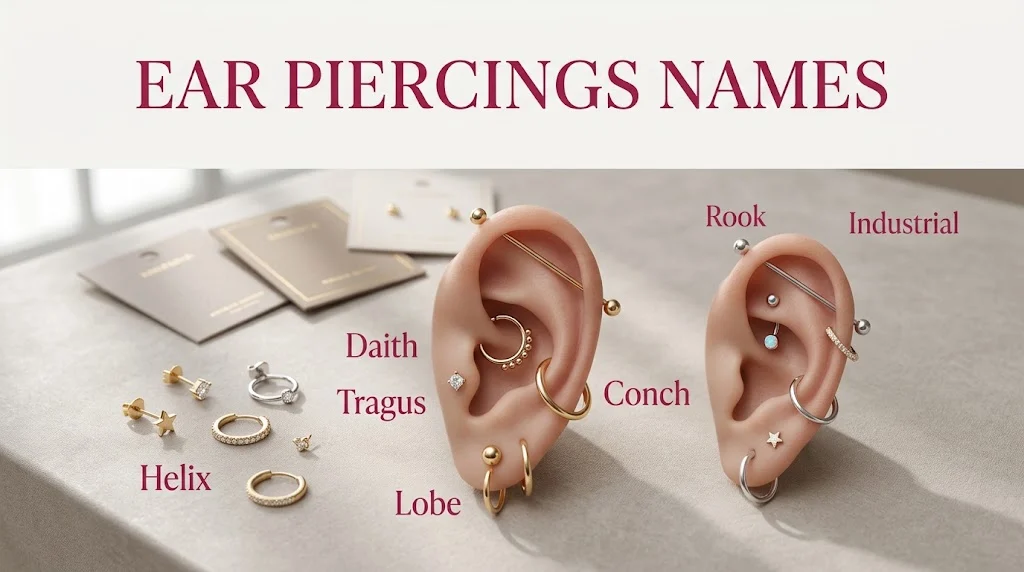
Common ear piercing names include lobe, upper lobe, helix, forward helix, flat, tragus, anti-tragus, conch, daith, rook, snug, and industrial piercings. Each name refers to a different location or combination of locations on the ear.
Ear piercings can look simple at first, but there are many different placements, and each one has its own name. If you have ever looked at a piercing photo and wondered, “What is that piercing called?” you are not alone. Learning the ear piercings names makes it much easier to understand different styles and describe what you like.
Some piercings sit on the soft earlobe, while others pass through different areas of ear cartilage. You may have heard names such as helix, tragus, conch, daith, or rook without knowing exactly where they are located.
This guide breaks down the most common ear piercing names in a simple way. You will learn where each piercing is placed, what style it has, what jewelry is commonly associated with it, and what makes it visually different.
Whether you are researching piercing ideas, creating a style guide, writing about body jewelry, or simply trying to identify a piercing, this list gives you a clear starting point.
Lobe Piercing
Meaning: A piercing through the soft lower earlobe.
Origin: The traditional earlobe piercing is one of the most familiar forms of ear piercing worldwide.
Personality: Lobe piercings have a classic, simple, and versatile feel.
Style: Classic, minimal, cute, elegant.
Best For: People who want a traditional ear piercing or a foundation for multiple earrings.
Popularity: Extremely common and widely recognized.
Emotional Appeal: The lobe piercing is often associated with a first piercing and can be easy to style with different types of earrings.
Jewelry: Studs, small hoops, drop earrings, and other earring styles can be used depending on the piercing and jewelry fit.
Similar Piercings: Upper lobe, stacked lobe, helix, and double lobe.
Why It Still Works Today: Its simplicity makes it adaptable. A single lobe piercing can look understated, while multiple lobe piercings can create a more layered appearance.
Upper Lobe Piercing
Meaning: A piercing positioned higher on the earlobe.
Origin: It developed as part of the wider trend toward multiple ear piercings and layered jewelry.
Personality: Upper lobe piercings feel playful, stylish, and customizable.
Style: Modern, cute, minimalist, trendy.
Best For: People who want multiple earrings without immediately moving into cartilage placements.
Popularity: A popular choice for creating a stacked-earring look.
Emotional Appeal: The placement gives people more room to create combinations with different studs and small hoops.
Jewelry: Small studs and delicate hoops are commonly associated with this style.
Similar Piercings: Lobe, stacked lobe, helix, and forward helix.
Why It Still Works Today: It offers an easy way to build a layered ear look while keeping the piercing relatively close to the traditional lobe area.
Helix Piercing
Meaning: A piercing through the outer upper cartilage of the ear.
Origin: The name comes from the anatomical term referring to the outer rim of the ear.
Personality: Helix piercings often have a bold yet refined appearance.
Style: Edgy, elegant, modern, minimalist.
Best For: People interested in cartilage jewelry and layered ear styling.
Popularity: One of the most recognizable cartilage piercing styles.
Emotional Appeal: A helix piercing adds visual interest without occupying the central part of the ear.
Jewelry: Studs and rings are commonly seen in helix placements, depending on anatomy and professional advice.
Similar Piercings: Forward helix, flat, industrial, and upper lobe.
Why It Still Works Today: Its position on the outer ear makes it easy to incorporate into many jewelry combinations.
Forward Helix Piercing
Meaning: A piercing placed on the front portion of the upper ear cartilage, close to where the ear meets the head.
Origin: The name describes its location on the forward section of the helix.
Personality: Forward helix piercings feel delicate, detailed, and contemporary.
Style: Minimalist, elegant, trendy, refined.
Best For: People who enjoy small, carefully placed cartilage jewelry.
Popularity: Popular among people creating detailed ear-piercing combinations.
Emotional Appeal: Its relatively small placement can create a subtle detail that becomes noticeable when viewed closely.
Jewelry: Small studs are commonly associated with this placement.
Similar Piercings: Helix, flat, and upper lobe.
Why It Still Works Today: Its understated appearance works particularly well with minimalist jewelry arrangements.
Flat Piercing
Meaning: A piercing placed through the relatively flat upper cartilage area of the ear.
Origin: The name comes from the flatter area where the piercing is positioned.
Personality: Flat piercings can feel clean, creative, and modern.
Style: Minimalist, contemporary, artistic, elegant.
Best For: People who like decorative cartilage jewelry.
Popularity: A recognizable option for customized ear-piercing arrangements.
Emotional Appeal: The flatter surface can provide an attractive space for a carefully chosen stud.
Jewelry: Flat-back studs and decorative cartilage jewelry are commonly associated with this placement.
Similar Piercings: Helix, forward helix, and conch.
Why It Still Works Today: It provides another placement for creating a personalized ear stack without relying entirely on the lobe or outer rim.
Tragus Piercing
Meaning: A piercing through the small cartilage flap in front of the ear canal.
Origin: The name comes from the anatomical name of this part of the ear.
Personality: Tragus piercings have a distinctive and slightly edgy character.
Style: Edgy, modern, subtle, alternative.
Best For: People interested in less conventional cartilage placements.
Popularity: A well-known cartilage piercing that remains popular among people exploring different ear styles.
Emotional Appeal: Its small location makes it a subtle detail while still giving the ear a different visual point of interest.
Jewelry: Small studs are commonly associated with tragus piercings.
Similar Piercings: Anti-tragus, conch, daith, and rook.
Why It Still Works Today: The tragus offers a recognizable alternative to the more common lobe and helix placements.
Conch Piercing
Meaning: A piercing through the broad inner cartilage area of the ear.
Origin: The name refers to the ear’s conch, which resembles the shape of a seashell.
Personality: Conch piercings often feel bold, stylish, and artistic.
Style: Modern, bold, elegant, alternative.
Best For: People who want a noticeable cartilage placement with plenty of styling possibilities.
Popularity: A popular choice among modern ear-piercing styles.
Emotional Appeal: Its central placement can become a strong focal point within an ear jewelry arrangement.
Jewelry: Studs and rings are commonly associated with conch placements, depending on anatomy and professional guidance.
Similar Piercings: Daith, tragus, rook, and helix.
Why It Still Works Today: A conch piercing can work as a standalone statement or as part of a carefully coordinated ear stack.
Daith Piercing
Meaning: A piercing through a fold of cartilage in the inner ear.
Origin: The modern piercing name refers to this particular inner-ear placement.
Personality: Daith piercings often have a mysterious, distinctive, and alternative feel.
Style: Alternative, edgy, unique, modern.
Best For: People interested in less common cartilage placements.
Popularity: Recognizable within modern piercing culture.
Emotional Appeal: Because of its less obvious placement, the daith can feel more personal and understated than a visible lobe piercing.
Jewelry: Small curved rings are commonly associated with this placement.
Similar Piercings: Rook, conch, tragus, and snug.
Why It Still Works Today: Its unusual placement gives it a distinctive look that stands apart from more traditional ear piercings.
Rook Piercing
Meaning: A piercing through a fold of cartilage in the upper inner ear.
Origin: The term refers to the specific anatomical ridge where the piercing is placed.
Personality: Rook piercings feel distinctive, confident, and unconventional.
Style: Alternative, edgy, unique, modern.
Best For: People interested in less common cartilage placements.
Popularity: The rook is well known among enthusiasts of multiple cartilage piercings.
Emotional Appeal: Its hidden position gives it a subtle sense of individuality.
Jewelry: Small curved jewelry is commonly associated with this placement.
Similar Piercings: Daith, snug, conch, and tragus.
Why It Still Works Today: The rook offers something different from the more familiar outer-ear placements and can add variety to an ear-piercing collection.
Industrial Piercing
Meaning: A piercing arrangement connecting two cartilage points with one piece of jewelry.
Origin: The name describes the distinctive bar-style jewelry commonly used with this piercing.
Personality: Industrial piercings have a bold, confident, and alternative appearance.
Style: Edgy, bold, modern, statement-making.
Best For: People who want a noticeable cartilage style and whose ear anatomy is suitable for the placement.
Popularity: A recognizable and visually striking piercing style.
Emotional Appeal: The long bar creates a strong visual line across the upper ear.
Jewelry: A straight barbell is commonly associated with the traditional industrial style.
Similar Piercings: Helix, flat, and scaffold-style cartilage arrangements.
Why It Still Works Today: Its strong geometric appearance makes it one of the easiest ear piercing styles to recognize.
Anti-Tragus Piercing
Meaning: A piercing through the small cartilage ridge opposite the tragus.
Origin: The name describes its position relative to the tragus.
Personality: Anti-tragus piercings feel unusual, bold, and alternative.
Style: Edgy, unique, unconventional.
Best For: People who want a less common cartilage placement.
Popularity: Less common than lobe, helix, or tragus piercings.
Emotional Appeal: Its unusual position gives the ear a distinctive look.
Jewelry: Small studs or suitable curved jewelry may be used depending on anatomy and professional recommendations.
Similar Piercings: Tragus, daith, rook, and conch.
Why It Still Works Today: It is an interesting choice for people who want their ear styling to look less conventional.
Quick Comparison Table
| Ear Piercing | Location | Style | Common Jewelry |
|---|---|---|---|
| Lobe | Lower earlobe | Classic | Studs, hoops |
| Upper Lobe | Upper earlobe | Cute, modern | Studs, small hoops |
| Helix | Outer upper cartilage | Edgy, elegant | Studs, rings |
| Forward Helix | Front upper cartilage | Delicate | Small studs |
| Flat | Flat upper cartilage | Modern | Flat-back studs |
| Tragus | Cartilage near ear canal | Subtle, edgy | Small studs |
| Conch | Inner ear cartilage | Bold, artistic | Studs, rings |
| Daith | Inner cartilage fold | Alternative | Small rings |
| Rook | Upper inner cartilage | Unique | Curved jewelry |
| Industrial | Two upper cartilage points | Bold | Straight barbell |
| Anti-Tragus | Cartilage opposite tragus | Unconventional | Small studs |
How to Choose the Right Ear Piercing
Start by identifying the look you want. If you prefer a classic appearance, a lobe piercing is a simple option. If you want something more noticeable, cartilage placements such as the helix or conch may provide a different aesthetic.
Your ear anatomy also matters. Not every piercing placement is suitable for every ear. A professional piercer should examine the ear and explain which placements are appropriate.
Think about jewelry too. Some placements work naturally with certain jewelry shapes, while others may have more limited options.
Consider your lifestyle. Jewelry can interact with headphones, helmets, hair, sports equipment, or other everyday items. A professional can explain practical considerations before you decide.
Finally, avoid choosing a piercing based only on appearance. Healing requirements, anatomy, jewelry material, and aftercare are important parts of the decision.
Most Popular Ear Piercing Names
Some of the most commonly recognized ear piercing names include:
- Lobe
- Upper lobe
- Helix
- Forward helix
- Tragus
- Conch
- Daith
- Rook
- Flat
- Industrial
The popularity of individual styles can vary by location, fashion trends, personal preference, and piercing communities.
Unique Ear Piercing Styles
If you want something less conventional, you might explore:
- Rook
- Daith
- Anti-tragus
- Forward helix
- Snug
- Conch
- Flat
- Industrial
Unique does not necessarily mean better or more suitable. The right placement depends on your anatomy, lifestyle, and professional assessment.
Modern Ear Piercing Trends
Modern ear styling often focuses on creating a coordinated collection of small pieces rather than relying on one dramatic earring.
Layered lobe piercings can create a clean and organized appearance. Small cartilage studs can add detail without overwhelming the ear. Some people also combine different jewelry shapes and sizes to create contrast.
Minimalist jewelry is another popular aesthetic. Tiny studs, delicate hoops, and simple metals can create an understated look.
At the same time, statement placements such as industrial piercings continue to appeal to people who prefer a bolder style.
The most important trend, however, is personalization. There is no single correct ear stack. A professional piercer can help create a combination that works with your individual anatomy.
FAQs
What Are the Main Ear Piercing Names?
The main ear piercing names include lobe, upper lobe, helix, forward helix, flat, tragus, conch, daith, rook, anti-tragus, snug, and industrial.
Which Ear Piercing Is the Most Common?
The traditional lobe piercing is one of the most common and widely recognized ear piercings.
What Are Cartilage Ear Piercings Called?
Cartilage ear piercings include styles such as helix, forward helix, flat, tragus, conch, daith, rook, snug, and anti-tragus. The exact placement determines the name.
What Is the Upper Ear Piercing Called?
Several piercings can be described as upper-ear piercings. The helix is one of the best-known, while forward helix and flat piercings are other upper-ear options.
What Is the Piercing on the Inner Ear Called?
Several inner-ear placements have different names. Daith and rook piercings are examples of inner cartilage piercings, while the conch occupies another area of the inner ear.
Conclusion
Learning the different ear piercings names makes it much easier to understand ear jewelry, compare styles, and explain the placement you like. From the familiar lobe piercing to cartilage styles such as the helix, conch, tragus, daith, and rook, each placement creates a different look.
Your choice should be based on more than appearance. Consider your ear anatomy, lifestyle, jewelry preferences, and the advice of a qualified professional piercer. Some placements may not be suitable for every person, and proper professional guidance is important.
Whether you prefer a simple lobe piercing, a delicate cartilage accent, or a bold industrial style, there are many ways to create a look that feels personal. Save this guide for reference, share it with someone researching piercings, and explore the styles that catch your eye.
Discover More Related Articles:
- Cereal Names | Fun, Popular & Creative Ideas In 2026
- Names for Groups of Animals | Common, Rare & Funny Terms In 2026