Quick Answer:
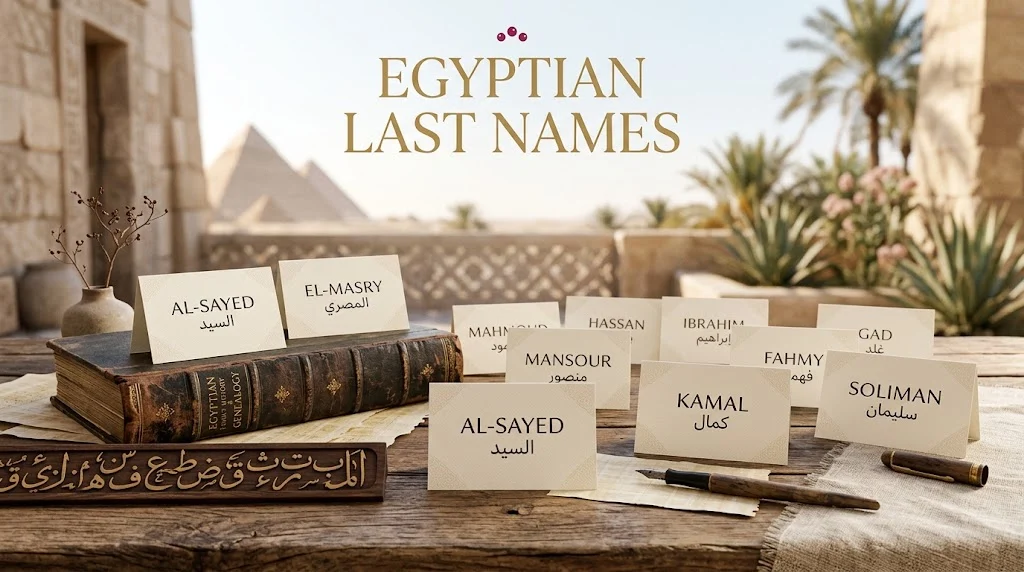
Egyptian last names often reflect family heritage, ancestry, occupations, locations, or Islamic and Arabic traditions. Popular examples include Hassan, Mahmoud, Ibrahim, El-Sayed, Abdelrahman, Fahmy, and Mansour.
A last name can carry more than a family label. It can preserve a connection to parents, grandparents, a hometown, a profession, a religious tradition, or a community. This makes Egyptian last names especially interesting for anyone exploring Egyptian culture and family naming traditions.
Egypt has a long and complex history shaped by ancient civilizations, Arabic culture, Islamic traditions, Christianity, migration, trade, and regional communities. As a result, Egyptian surnames come from many different linguistic and cultural sources.
Some Egyptian family names are based on given names, while others developed from occupations, places, titles, religious expressions, or ancestral connections. You may also encounter surnames beginning with El- or Al-, reflecting the Arabic definite article.
In this guide, you’ll discover a selection of Egyptian surnames along with their meanings, cultural associations, styles, and potential uses. Because surname histories can vary between families, the explanations below focus on commonly recognized linguistic or cultural associations rather than assuming that every family with the same surname shares one origin.
🏛️ Hassan
Meaning: Good, handsome, excellent
Origin: Arabic
Personality: Hassan has a warm, dignified, and traditional character. It sounds familiar and established while carrying positive associations with goodness and beauty.
Style: Classic, traditional, Arabic, strong
Best For: Family name, fictional Egyptian character, historical character, cultural naming inspiration
Popularity: Hassan is a widely recognized Arabic personal and family name and is found in Egypt as well as many other parts of the Arabic-speaking world.
Emotional Appeal: The positive meaning gives Hassan an appealing quality. It is straightforward, memorable, and deeply established within Arabic naming traditions.
Cultural Reference: Hassan is also a well-established given name in Islamic history and Arabic-speaking communities.
Similar Names: Hussein, Hasan, Hamdan, Hamid, Harun
Why It Still Works Today: Hassan has the advantage of being recognizable without feeling tied to a particular modern trend. Its traditional character makes it suitable for both historical and contemporary contexts.
🌿 Mahmoud
Meaning: Praiseworthy
Origin: Arabic
Personality: Mahmoud feels respectable, mature, thoughtful, and traditional. It has a formal quality that works particularly well in family-name contexts.
Style: Classic, dignified, traditional, Arabic
Best For: Egyptian family name, character surname, historical fiction, cultural research
Popularity: Mahmoud is a widely established Arabic name and is familiar throughout Egypt.
Emotional Appeal: Its meaning, “praiseworthy,” gives the name a positive and honorable association.
Cultural Reference: Mahmoud is a common Arabic personal name that has also become part of family naming traditions.
Similar Names: Hamoud, Hamid, Mahdi, Muhammad, Ahmad
Why It Still Works Today: Mahmoud sounds traditional without being obscure. Its strong Arabic identity makes it a useful surname choice for characters or families connected with Egyptian culture.
🌍 Ibrahim
Meaning: Traditionally associated with Abraham
Origin: Semitic; Arabic form of Abraham
Personality: Ibrahim feels serious, respected, spiritual, and timeless.
Style: Biblical, Islamic, traditional, international
Best For: Egyptian family name, historical character, religiously influenced naming
Popularity: Ibrahim is widely used throughout Egypt and the broader Middle East and Muslim world.
Emotional Appeal: The name has deep religious and historical associations, giving it a sense of continuity across generations.
Cultural Reference: Ibrahim is the Arabic form of Abraham and is an important figure in Islamic tradition as well as Judaism and Christianity.
Similar Names: Ismail, Isḥaq, Yusuf, Younis, Adam
Why It Still Works Today: Ibrahim crosses cultural and linguistic boundaries. It feels ancient but remains familiar in contemporary Egyptian society.
🕌 Abdelrahman
Meaning: Servant of the Most Merciful
Origin: Arabic
Personality: Abdelrahman has a deeply traditional and respectful character. It can suggest faith, humility, family heritage, and cultural continuity.
Style: Religious, traditional, formal, Arabic
Best For: Egyptian family name, character name, cultural storytelling
Popularity: Names beginning with Abdel- or Abd al- are widely established in Arabic-speaking communities, including Egypt.
Emotional Appeal: The name has a strong spiritual meaning and is closely connected with Arabic naming traditions.
Cultural Reference: The structure comes from ʿAbd al-, meaning “servant of,” followed by one of the traditional names or attributes associated with God.
Similar Names: Abdelrahim, Abdelaziz, Abdelhadi, Abdelkader, Abdelwahab
Why It Still Works Today: Abdelrahman preserves a traditional Arabic naming structure while remaining recognizable to modern audiences.
🌸 Fawzy
Meaning: Victorious or successful
Origin: Arabic
Personality: Fawzy feels energetic, optimistic, and confident. Its meaning gives it an especially positive character.
Style: Traditional, warm, distinctive, Arabic
Best For: Egyptian surname, character creation, cultural storytelling
Popularity: Fawzy is a familiar Egyptian family name and can also appear as a personal name.
Emotional Appeal: The association with success and victory makes Fawzy feel uplifting.
Cultural Reference: The surname is part of the broader tradition of Arabic names derived from positive qualities or achievements.
Similar Names: Fawzi, Faiz, Farid, Farouk, Faisal
Why It Still Works Today: Fawzy has an unmistakably Arabic character while remaining short and easy to remember.
🪶 Farouk
Meaning: One who distinguishes between truth and falsehood
Origin: Arabic
Personality: Farouk feels confident, intelligent, authoritative, and dignified.
Style: Classic, regal, traditional, strong
Best For: Egyptian surname, historical character, literary character
Popularity: Farouk is a recognized Arabic name in Egypt and elsewhere in the region.
Emotional Appeal: Its meaning suggests discernment, fairness, and the ability to recognize differences clearly.
Cultural Reference: The title al-Faruq has historical significance in Islamic tradition and is famously associated with Umar ibn al-Khattab.
Similar Names: Faisal, Fadel, Fathi, Farid, Fahmy
Why It Still Works Today: Farouk has a distinctive sound and a strong historical identity. It can work particularly well when a name needs to communicate dignity.
🏺 El-Sayed
Meaning: The master, lord, or respected person
Origin: Arabic
Personality: El-Sayed has a formal, respectful, and traditional sound.
Style: Egyptian, Arabic, classic, formal
Best For: Egyptian family name, fictional character, cultural research
Popularity: El-Sayed is a recognizable Egyptian surname and naming element.
Emotional Appeal: The name carries an association with respect and status, making it feel dignified.
Cultural Reference: Arabic surnames and names beginning with El- are common in Egypt. Spellings can vary when Arabic names are transliterated into Latin letters.
Similar Names: Elsayed, El-Sayed, Sayed, El-Saied, Sayyid
Why It Still Works Today: El-Sayed strongly evokes Egyptian and Arabic naming conventions and is especially useful when authentic cultural atmosphere matters.
🌺 Mahmoudi
Meaning: Connected with Mahmoud; generally understood as “of Mahmoud” or belonging to Mahmoud
Origin: Arabic
Personality: Mahmoudi feels familial, traditional, and established.
Style: Traditional, Arabic, family-oriented
Best For: Character surname, family-name research, cultural storytelling
Popularity: Variants of Mahmoudi can occur in Arabic-speaking and neighboring regions, although surname usage varies by family and location.
Emotional Appeal: The surname demonstrates how family names can develop from an ancestor’s personal name.
Cultural Reference: Arabic surnames can be formed from personal names to indicate ancestry or family connection.
Similar Names: Mahmoud, Hamoudi, Ahmadi, Muhammadi, Hassani
Why It Still Works Today: Mahmoudi has a clear family-name quality and can be useful when creating a character whose surname reflects ancestral naming traditions.
🌾 Hassani
Meaning: Of or related to Hassan
Origin: Arabic
Personality: Hassani feels traditional, connected, and heritage-focused.
Style: Classic, Arabic, ancestral, formal
Best For: Egyptian-inspired character, historical writing, genealogy research
Popularity: Hassani is found in different parts of the Arabic-speaking world, although the exact family history behind the surname can vary.
Emotional Appeal: The surname illustrates the connection between personal names and family identity.
Cultural Reference: Surnames ending in -i can sometimes indicate association or connection with a person, place, or group in Arabic naming traditions.
Similar Names: Hassan, Hassanein, Hussaini, Hashemi, Hamidi
Why It Still Works Today: Hassani sounds distinctly traditional while highlighting the relationship between a family surname and an ancestral name.
🐪 Ahmed
Meaning: Most praiseworthy or highly praised
Origin: Arabic
Personality: Ahmed feels familiar, respectful, approachable, and traditional.
Style: Classic, international, Arabic, timeless
Best For: Egyptian family name, character name, historical or contemporary storytelling
Popularity: Ahmed is one of the most recognizable Arabic names and is widely used in Egypt.
Emotional Appeal: Its positive meaning and long history give it a dependable, dignified quality.
Cultural Reference: Ahmed is closely related linguistically to Ahmad and is associated with Arabic and Islamic naming traditions.
Similar Names: Ahmad, Hamid, Mahmoud, Hassan, Hamdan
Why It Still Works Today: Ahmed is simple, recognizable, and culturally significant. Its international familiarity also makes it easy for readers from different backgrounds to pronounce.
📋 Quick Comparison Table
| Last Name | Meaning | Style | Best For |
|---|---|---|---|
| Hassan | Good, handsome, excellent | Classic | Family or character |
| Mahmoud | Praiseworthy | Traditional | Family or character |
| Ibrahim | Associated with Abraham | Timeless | Family or historical character |
| Abdelrahman | Servant of the Most Merciful | Religious | Traditional character |
| Fawzy | Victorious, successful | Distinctive | Egyptian character |
| Farouk | One who distinguishes truth from falsehood | Strong | Historical character |
| El-Sayed | Master or respected person | Formal | Egyptian character |
| Mahmoudi | Connected with Mahmoud | Familial | Character or genealogy |
| Hassani | Related to Hassan | Ancestral | Heritage-inspired character |
| Ahmed | Highly praised | Classic | Family or character |
🌟 50+ Egyptian Last Names to Explore
If you are looking beyond the featured examples, these surnames and family-name forms can provide additional inspiration:
- Ahmed
- Hassan
- Mahmoud
- Ibrahim
- Mohamed
- Ali
- Omar
- Youssef
- Mostafa
- Hamdy
- Fawzy
- Farouk
- El-Sayed
- El-Sherif
- El-Masry
- El-Gamal
- El-Hadary
- El-Shazly
- El-Sayed
- El-Sharif
- Abdelrahman
- Abdelaziz
- Abdelhadi
- Abdelwahab
- Abdelkader
- Abdelalim
- Abdelhamid
- Abdelmageed
- Hassani
- Mahmoudi
- Hamdi
- Farid
- Fathi
- Fahmy
- Nassar
- Salem
- Mansour
- Soliman
- Ismail
- Zakaria
- Amin
- Khalil
- Habib
- Samir
- Tawfik
- Younis
- Ramadan
- Saad
- Saeed
- Zaki
- Shaker
- Galal
- Hegazy
- Mansour
- Kamel
- Ragab
🧭 How Egyptian Last Names Are Formed
Egyptian surnames do not all come from one naming system. Family names can reflect different historical and linguistic influences.
Some are derived from personal names. For example, a surname may indicate a connection to an ancestor named Hassan, Mahmoud, Ahmed, or another widely used given name.
Others contain forms such as El-, which corresponds to the Arabic definite article. Romanization can produce different spellings, so the same Arabic name may appear differently in English.
Some surnames can also relate to occupations, locations, nicknames, physical characteristics, religious associations, or ancestral relationships.
This variety is one reason Egyptian family names can be so interesting for genealogy and cultural research.
🏺 Are Egyptian Last Names Ancient Egyptian?
Not necessarily.
Modern Egyptian surnames should not automatically be described as direct descendants of ancient Egyptian personal names. Contemporary Egyptian naming practices have been influenced by Arabic, Islamic, Coptic, Ottoman, regional, and other historical traditions.
Ancient Egyptian civilization is an important part of Egypt’s heritage, but a modern Egyptian surname having an Egyptian connection does not by itself prove an ancient pharaonic origin.
For genealogy or historical research, individual family records and reliable historical sources are more useful than assuming an origin from the surname alone.
🌍 What Makes Egyptian Surnames Different?
Egyptian surnames are interesting because Egypt sits at the meeting point of Africa, the Middle East, and the Mediterranean.
The country’s long history has created a rich naming environment. Arabic is central to modern Egyptian naming, while religious, regional, historical, and family traditions also influence names.
You may see surnames that sound familiar throughout the Arab world alongside names that have a particularly Egyptian flavor.
Spelling can also vary considerably in English. A single Arabic surname may have multiple Latin spellings because Arabic-to-English transliteration does not follow one universal system.
✍️ How to Choose an Egyptian Last Name for a Character
If you are creating an Egyptian character, avoid choosing a surname based only on how unusual it sounds.
First, consider the character’s background. Is the story contemporary, historical, rural, urban, religious, or fictional?
Next, research how the surname is actually used. Some names may be common given names, while others are more strongly established as family names.
Pronunciation matters, too. If your readers are unfamiliar with Arabic names, providing a natural introduction can make the character easier to remember.
Most importantly, treat Egyptian culture with respect. A realistic character should have more than a surname. Their family background, language, setting, relationships, and personal history should also feel thoughtfully developed.
🔤 Egyptian Last Names Beginning With El
Names beginning with El- are particularly recognizable in Egyptian and Arabic contexts.
Examples include:
- El-Sayed
- El-Sherif
- El-Gamal
- El-Masry
- El-Hadary
- El-Shazly
- El-Sharif
- El-Husseini
- El-Naggar
- El-Sayed
The spelling may change when names are written in English. For example, El-Sayed, Elsayed, and other variants can represent closely related Arabic spellings.
When researching a real family, the original Arabic spelling is usually the most reliable way to distinguish between transliteration variants.
🕰️ Traditional Egyptian Family Names
Traditional naming styles often have strong connections with personal names, religious terminology, ancestry, and family identity.
Some examples include:
- Hassan
- Mahmoud
- Ibrahim
- Ahmed
- Mohamed
- Mostafa
- Abdelrahman
- Abdelaziz
- Ismail
- Soliman
- Khalil
- Amin
- Nassar
- Mansour
- Fawzy
These names can work especially well in historical fiction, genealogy projects, cultural writing, or character development.
✨ Unique Egyptian Last Names
If you want a surname that feels less predictable, consider researching names such as:
- Delshad
- Hegazy
- El-Shazly
- Fawzy
- Farouk
- Nassar
- Tawfik
- Galal
- Hegazy
- Naggar
However, “unique” does not necessarily mean rare. A surname may be distinctive to an international audience while still being familiar within Egypt.
❤️ Why Egyptian Last Names Matter
Family names can provide clues about identity, ancestry, and community, but they should not be treated as complete genealogical evidence.
A surname may have changed spelling over time. Families may have adopted names for different reasons. Migration can also introduce the same surname to different regions.
This is why researching the story behind an individual family is more reliable than assigning one universal explanation to everyone who shares a surname.
For writers and name enthusiasts, however, these variations make Egyptian surnames especially fascinating.
❓ FAQs
What are common Egyptian last names?
Common Egyptian family names and name forms include Hassan, Mahmoud, Ahmed, Ibrahim, Mohamed, Mostafa, Abdelrahman, Fawzy, Farouk, and various El- surnames.
What do Egyptian last names mean?
Egyptian surnames can have many meanings. Some come from personal names, while others may refer to occupations, locations, religious expressions, family relationships, or descriptive terms.
Do Egyptian surnames use El-?
Yes. Surnames beginning with El- are common in Egyptian naming. El- represents the Arabic definite article, often transliterated as “al-” or “el-.”
Are Egyptian last names Arabic?
Many modern Egyptian surnames have Arabic linguistic origins, but Egypt’s history is culturally diverse. Egyptian naming traditions have been influenced by Arabic, Islamic, Coptic, Ottoman, regional, and other historical traditions.
Are Egyptian last names connected to ancient Egypt?
Some families may have historical or regional traditions connected to Egypt’s ancient past, but a modern surname should not automatically be labeled “ancient Egyptian.”
Conclusion
Egyptian surnames offer a fascinating window into family identity, language, history, and cultural tradition. From familiar names such as Hassan, Ahmed, and Mahmoud to distinctive forms such as Farouk, Fawzy, and El-Sayed, there is tremendous variety to explore.
It is important to remember that the meaning or origin of a surname can differ between families. Transliteration can also create multiple English spellings for the same Arabic name.
Whether you are researching your heritage, creating an Egyptian character, exploring Arabic naming traditions, or simply looking for a meaningful family name, take time to investigate the individual history behind the surname.
The most interesting family names are often not just the ones that sound beautiful. They are the ones connected to a story, a place, or generations of people.
Discover More Related Articles
- 145+ Boy and Girl Names | With Cute Nicknames In 2026
- 100+ Old Fashioned Names | From a Bygone Era In 2026