Quick Answer:
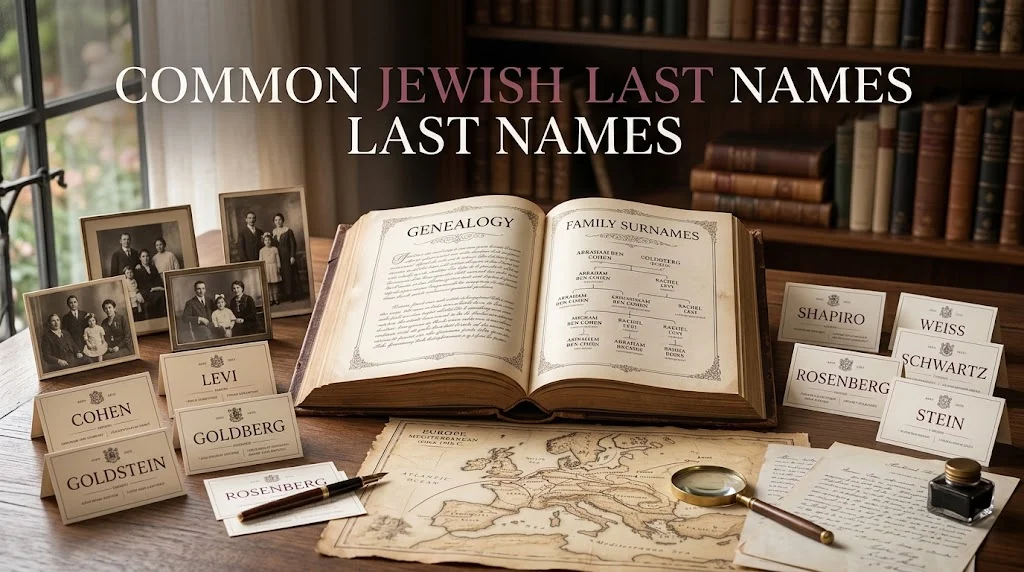
Common Jewish last names include Cohen, Levy, Katz, Friedman, Goldberg, Rosenberg, Goldstein, Weiss, Shapiro, and Levin. Many Jewish surnames have Hebrew, Yiddish, German, Slavic, or place-based origins.
Family names can preserve fascinating clues about language, geography, occupation, ancestry, and family history. When researching common Jewish last names, you quickly discover that there is no single Jewish surname tradition.
Jewish communities developed across many regions over centuries. Ashkenazi Jewish families historically lived throughout Central and Eastern Europe, while Sephardi Jewish communities developed in the Iberian Peninsula and later across the Mediterranean, North Africa, the Middle East, and other regions. Mizrahi Jewish communities also developed throughout parts of the Middle East and North Africa.
As a result, Jewish surnames can come from Hebrew, Yiddish, German, Slavic languages, Spanish, Portuguese, Arabic, and many other linguistic traditions.
Some names, such as Cohen and Levi, have strong connections to traditional Jewish religious lineages. Others, such as Goldstein, Rosenberg, and Friedman, reflect European naming patterns. This guide explores well-known surnames, their commonly cited meanings, cultural associations, and historical context.
✡️ Cohen
Meaning: Priest
Origin: Hebrew
Personality: Cohen has a traditional, distinguished, and strongly historical feel.
Style: Traditional, biblical, heritage, classic
Best For: Genealogy research, historical writing, family-history exploration
Popularity: Cohen is one of the best-known Jewish-associated surnames and is also used as a first name in contemporary naming.
Emotional Appeal: The surname has a particularly strong connection to Jewish heritage because kohen refers to a priestly lineage in traditional Judaism.
Pop Culture Reference: Cohen appears as a surname in literature, entertainment, music, and public life.
Similar Surnames: Kohn, Cohn, Kahn, Katz, Levi
Why It Still Works Today: Cohen is short, recognizable, and historically significant. However, spelling variations and different family histories mean that not every person with a similar surname shares the same ancestry.
🕎 Levi
Meaning: Associated with the biblical crew of Levi
Origin: Hebrew
Personality: Levi feels traditional, concise, and strongly connected to biblical history.
Style: Biblical, classic, simple, heritage
Best For: Genealogy, historical contexts, family-history research
Popularity: Levi is both a surname and a widely used given name in modern naming.
Emotional Appeal: The name carries a strong biblical association and connects with the traditional Levite lineage.
Pop Culture Reference: Levi is widely recognizable as both a first and last name.
Similar Surnames: Levy, Levine, Levin, Lewin, Levitt
Why It Still Works Today: Its short form makes it easy to remember, while its biblical history gives it considerable cultural depth.
🌿 Katz
Meaning: Traditionally interpreted as an acronym formed from Hebrew words meaning “priest of righteousness”
Origin: Hebrew; traditionally associated with Ashkenazi Jewish communities
Personality: Katz feels concise, distinctive, and heritage-rich.
Style: Traditional, compact, Ashkenazi
Best For: Genealogy, family-history research, historical characters
Popularity: Katz is a well-known Jewish-associated surname, particularly within Ashkenazi contexts.
Emotional Appeal: Its compact form makes it memorable, while its traditional interpretation connects it with priestly heritage.
Pop Culture Reference: Katz is found as a surname in numerous countries and cultural settings.
Similar Surnames: Kohn, Cohen, Cohn, Kaplan, Katzman
Why It Still Works Today: Katz demonstrates how some Jewish surnames developed through abbreviations and traditional Hebrew expressions rather than ordinary descriptive words.
🏛️ Kaplan
Meaning: Historically connected with the word for chaplain or priest in several European linguistic traditions
Origin: Germanic and Slavic European usage; Jewish surname in Ashkenazi communities
Personality: Kaplan feels established, professional, and traditional.
Style: Classic, European, formal
Best For: Family-history research, historical fiction, genealogy
Popularity: Kaplan is widely recognized as a Jewish-associated surname but is not exclusive to Jewish families.
Emotional Appeal: The surname has an established European sound and a long history of use among different populations.
Pop Culture Reference: Kaplan appears frequently in literature, entertainment, academia, and public life.
Similar Surnames: Cohen, Kohn, Kaufman, Katz, Levin
Why It Still Works Today: Kaplan is recognizable, easy to pronounce, and historically interesting. Its exact family origin should be researched rather than assumed from the surname alone.
💰 Goldstein
Meaning: “Gold stone”
Origin: German/Yiddish
Personality: Goldstein feels warm, traditional, and distinctly European.
Style: Ashkenazi, Germanic, classic, heritage
Best For: Genealogy, historical characters, surname research
Popularity: Goldstein is a familiar Jewish-associated surname, particularly within Ashkenazi Jewish communities.
Emotional Appeal: The combination of “gold” and “stone” gives the surname a memorable, almost symbolic quality.
Pop Culture Reference: Goldstein has appeared in many books, films, television programs, and real-world public contexts.
Similar Surnames: Goldberg, Goldmann, Goldfarb, Silberstein, Bernstein
Why It Still Works Today: Goldstein clearly reflects the compound surname style found in many Central and Eastern European naming traditions.
🏔️ Goldberg
Meaning: “Gold mountain”
Origin: German/Yiddish
Personality: Goldberg feels established, strong, and traditional.
Style: Ashkenazi, European, classic
Best For: Genealogy, historical fiction, family-history research
Popularity: Goldberg is a widely recognized Jewish-associated surname, although surnames themselves do not establish religious identity.
Emotional Appeal: The imagery of gold and a mountain gives the name a memorable and substantial quality.
Pop Culture Reference: Goldberg is frequently encountered in entertainment and public life.
Similar Surnames: Goldstein, Rosenberg, Greenberg, Silverberg, Bergman
Why It Still Works Today: Its recognizable structure makes Goldberg easy to identify as a traditional Central or Eastern European surname.
🌹 Rosenberg
Meaning: “Rose mountain”
Origin: German/Yiddish
Personality: Rosenberg sounds sophisticated, traditional, and romantic without being overly delicate.
Style: European, Ashkenazi, elegant, classic
Best For: Genealogy, historical fiction, family-history research
Popularity: Rosenberg is a well-established surname found among Jewish families as well as people from other backgrounds.
Emotional Appeal: The combination of “rose” and “mountain” creates a striking contrast between softness and strength.
Pop Culture Reference: Rosenberg is found in literature, television, film, academia, and public life.
Similar Surnames: Rosen, Rosenfeld, Rosenbaum, Rosenblatt, Rosenstein
Why It Still Works Today: Rosenberg has an elegant sound and demonstrates the compound surname patterns common in European Jewish naming history.
🌾 Friedman
Meaning: “Peaceful person” or “man of peace”
Origin: German/Yiddish
Personality: Friedman feels calm, traditional, dependable, and familiar.
Style: Classic, European, Ashkenazi
Best For: Genealogy, historical writing, family-history research
Popularity: Friedman is a common surname in several countries and has strong associations with Ashkenazi Jewish communities.
Emotional Appeal: Its meaning connects the surname with peace and harmony.
Pop Culture Reference: Friedman is found among writers, academics, artists, athletes, and other public figures.
Similar Surnames: Fried, Friedmann, Feldman, Kaufman, Goldman
Why It Still Works Today: Friedman has a straightforward pronunciation and a meaning that remains positive and universally understandable.
❄️ Weiss
Meaning: “White”
Origin: German/Yiddish
Personality: Weiss feels clean, simple, sophisticated, and traditional.
Style: Minimalist, European, classic, Ashkenazi
Best For: Genealogy, historical characters, surname research
Popularity: Weiss is a familiar surname across Central Europe and is also associated with Ashkenazi Jewish communities.
Emotional Appeal: Its simple meaning makes the surname easy to understand and remember.
Pop Culture Reference: Weiss appears in many international cultural and professional settings.
Similar Surnames: Weissman, Weissberg, Weissler, Schwarz, Stein
Why It Still Works Today: Short surnames have a timeless quality, and Weiss remains recognizable across different regions and languages.
🖤 Schwartz
Meaning: “Black” or “dark”
Origin: German/Yiddish
Personality: Schwartz has a strong, distinctive, and traditional sound.
Style: European, Ashkenazi, classic, bold
Best For: Genealogy, historical fiction, surname research
Popularity: Schwartz is a widely recognized surname and is particularly associated with German-speaking and Ashkenazi Jewish naming traditions.
Emotional Appeal: Its straightforward descriptive origin gives it a fascinating glimpse into historical European surname formation.
Pop Culture Reference: Schwartz appears frequently in entertainment, literature, business, and public life.
Similar Surnames: Schwarz, Weiss, Stein, Klein, Gross
Why It Still Works Today: Schwartz has a memorable sound and remains one of the most recognizable surnames associated with Central European Jewish heritage.
📜 Shapiro
Meaning: Often connected with the town of Speyer in Germany; exact surname development can vary
Origin: German/Yiddish; traditionally associated with Ashkenazi Jewish communities
Personality: Shapiro feels polished, distinctive, and strongly connected to European Jewish history.
Style: Ashkenazi, European, traditional
Best For: Genealogy, family-history research, historical writing
Popularity: Shapiro is a recognizable Jewish-associated surname, especially in Ashkenazi contexts.
Emotional Appeal: Its history demonstrates how place names could become family names.
Pop Culture Reference: Shapiro is a surname found among public figures in different professional fields.
Similar Surnames: Speyer, Shapira, Spira, Spierer, Schapiro
Why It Still Works Today: Shapiro is a good example of how spelling and pronunciation can change as families move between languages and countries.
🪨 Stein
Meaning: “Stone”
Origin: German/Yiddish
Personality: Stein feels strong, concise, traditional, and straightforward.
Style: Classic, European, minimalist, Ashkenazi
Best For: Genealogy, historical contexts, family-history research
Popularity: Stein is a common surname in several European traditions and is also strongly represented among Jewish families.
Emotional Appeal: Its simple meaning gives the surname a solid and enduring quality.
Pop Culture Reference: Stein appears across literature, academia, entertainment, and public life.
Similar Surnames: Steinberg, Steinman, Steinmetz, Goldstein, Silberstein
Why It Still Works Today: Stein is short, memorable, and easy to pronounce while carrying a long European linguistic history.
📊 Quick Comparison Table
| Surname | Commonly Associated Meaning | Style | Historical Association |
|---|---|---|---|
| Cohen | Priest | Biblical, traditional | Jewish priestly lineage |
| Levi | cohort of Levi | Biblical, classic | Levite lineage |
| Katz | Traditional Hebrew acronym | Traditional | Ashkenazi Jewish |
| Kaplan | Chaplain/priest-related | European, classic | Ashkenazi Jewish |
| Goldstein | Gold stone | European, traditional | Ashkenazi Jewish |
| Goldberg | Gold mountain | European, classic | Ashkenazi Jewish |
| Rosenberg | Rose mountain | Elegant, European | Ashkenazi Jewish |
| Friedman | Peaceful person | Classic, European | Ashkenazi Jewish |
| Weiss | White | Minimalist, classic | German/Ashkenazi |
| Schwartz | Black/dark | Bold, traditional | German/Ashkenazi |
| Shapiro | Place-name association | European, traditional | Ashkenazi Jewish |
| Stein | Stone | Classic, concise | German/Ashkenazi |
🧭 How to Research a Jewish Last Name
A surname can be an excellent starting point for genealogy, but it should not be treated as proof of ancestry by itself.
Begin by documenting the earliest known relatives who used the surname. Record birthplaces, immigration records, marriage documents, cemetery records, and other family documents where available.
Next, pay attention to spelling variations. Families who moved between countries often had their surnames written differently by officials using another language or alphabet.
For example, related surname forms may differ because of transliteration, pronunciation, or regional spelling conventions.
It is also helpful to research the geographic history of the family. Knowing whether relatives came from Poland, Germany, Lithuania, Spain, Morocco, Iraq, or another region can provide useful context.
Most importantly, distinguish between a surname’s possible origin and a particular family’s documented history.
🌍 Ashkenazi Jewish Last Names
Ashkenazi Jewish communities historically developed across Central and Eastern Europe. Many surnames associated with Ashkenazi families reflect German, Yiddish, Slavic, Hebrew, or local linguistic influences.
Examples include:
- Goldstein
- Goldberg
- Rosenberg
- Friedman
- Weiss
- Schwartz
- Stein
- Shapiro
- Katz
- Kaplan
Not every person with these surnames is Jewish, and not every Jewish person has an Ashkenazi surname. Migration, marriage, language changes, and legal naming practices all influenced family names.
🌿 Sephardi Jewish Last Names
Sephardi Jewish history is connected particularly with Jewish communities originating in the Iberian Peninsula and later communities across the Mediterranean, North Africa, the Middle East, and other regions.
Sephardi surnames can reflect Spanish, Portuguese, Hebrew, Arabic, and other linguistic influences.
Examples often encountered in Sephardi or broader Mediterranean Jewish contexts include:
- Toledano
- Benveniste
- Abulafia
- Abarbanel
- Sasson
- Alfandari
- Cardozo
- Franco
- Pinto
- Mizrahi
Surname history can be complex, so individual family records are important when establishing a specific family’s background.
🏺 Hebrew and Biblical Jewish Surnames
Some Jewish surnames have strong connections with biblical names, Hebrew words, or traditional religious roles.
Examples include:
- Cohen
- Levi
- Ben-David
- Ben-Ami
- Ben-Zion
- Mizrahi
- Shalom
- Baruch
Some of these forms can also occur outside Jewish communities or have multiple cultural uses. The historical context of the specific family remains important.
🔤 Jewish Last Names by Style
If you are searching for surnames based on how they sound, different names create very different impressions.
Traditional: Cohen, Levi, Katz, Kaplan
Elegant: Rosenberg, Shapiro, Delmar, Benveniste
Strong: Stein, Schwartz, Goldberg
Classic: Friedman, Weiss, Cohen, Levi
Distinctive: Abulafia, Toledano, Benveniste
Short: Katz, Levi, Stein, Weiss
This type of categorization describes naming style rather than a person’s personality or identity.
🧬 Can a Last Name Prove Jewish Ancestry?
No. A surname alone cannot reliably prove that someone is Jewish or has Jewish ancestry.
Many surnames are shared by Jewish and non-Jewish families. In addition, surnames can change because of marriage, immigration, adoption, translation, spelling changes, or government registration.
For genealogy, a surname becomes much more useful when combined with records such as birth certificates, marriage documents, immigration records, cemetery records, synagogue records, and historical archives.
📚 Why Do So Many Jewish Surnames Have European Meanings?
Many Jewish families historically lived in European societies where surnames were formed or officially recorded using the languages spoken around them.
This is one reason Jewish surnames can contain German, Yiddish, Slavic, Hungarian, Romanian, or other linguistic elements.
Names based on colors, occupations, places, nature, and descriptive words are not unusual. Some surnames were also inherited from earlier family names, while others became standardized during periods when governments required hereditary surnames.
The exact story differs from one family to another.
✨ Most Popular-Looking Jewish Surname Ideas
For readers interested in familiar, traditional-sounding options, these are some recognizable examples:
- Cohen
- Levi
- Katz
- Kaplan
- Goldstein
- Goldberg
- Rosenberg
- Friedman
- Weiss
- Schwartz
- Shapiro
- Stein
If you are writing fiction, it is best to choose a surname based on the character’s historical setting and geographic background rather than assuming every Jewish surname fits every Jewish community.
🕰️ Traditional Jewish Last Names
Traditional Jewish-associated surnames can reflect religious lineage, Hebrew terminology, geography, occupation, or European naming practices.
Some recognizable examples include:
- Cohen
- Levi
- Katz
- Shapiro
- Stein
- Weiss
- Rosenberg
- Goldstein
- Friedman
- Kaplan
Their histories are not identical, and some have several proposed etymologies or spelling variants.
🌎 Jewish Last Names Across Different Regions
Jewish surnames vary considerably by geography.
An Ashkenazi family from Poland may have a surname influenced by Yiddish, German, Polish, or Hebrew. A Sephardi family may have a surname connected with Spanish or Portuguese history. Jewish families from the Middle East and North Africa may have surnames reflecting Arabic, Hebrew, Persian, Berber, Turkish, or other regional languages.
This diversity is one of the most interesting features of Jewish surname history.
❓ FAQs
What are the most common Jewish last names?
Some of the best-known Jewish-associated surnames include Cohen, Levi, Katz, Kaplan, Goldstein, Goldberg, Rosenberg, Friedman, Weiss, Schwartz, Shapiro, and Stein.
What is the most famous Jewish surname?
Cohen is one of the most recognizable Jewish-associated surnames because of its connection with the Hebrew term kohen, traditionally referring to a priestly lineage.
What Jewish last names are of Hebrew origin?
Cohen and Levi have particularly strong Hebrew and biblical associations. Other surnames may contain Hebrew elements, including Ben-David, Ben-Ami, and Ben-Zion.
Are Goldstein and Goldberg Jewish last names?
Goldstein and Goldberg are strongly associated with Ashkenazi Jewish communities, but they are not exclusively Jewish surnames.
What are common Ashkenazi Jewish surnames?
Well-known Ashkenazi-associated surnames include Goldstein, Goldberg, Rosenberg, Friedman, Weiss, Schwartz, Stein, Shapiro, Katz, and Kaplan.
Conclusion
The history of common Jewish last names reflects the remarkable geographic and cultural diversity of Jewish communities. Names such as Cohen and Levi connect strongly with traditional Jewish history, while surnames such as Goldstein, Goldberg, Rosenberg, Weiss, and Stein demonstrate the influence of European languages and naming traditions.
At the same time, Jewish surname history extends far beyond the familiar Ashkenazi examples. Sephardi, Mizrahi, and other Jewish communities have their own rich naming traditions shaped by the languages and regions in which families lived.
If you are researching your own family name, remember that a surname is a starting point rather than definitive proof of ancestry. Explore historical records, spelling variations, geographic connections, and family documents to build a more accurate picture.
Share this guide with anyone interested in Jewish genealogy, surname meanings, or family history.
Discover More Related Articles: