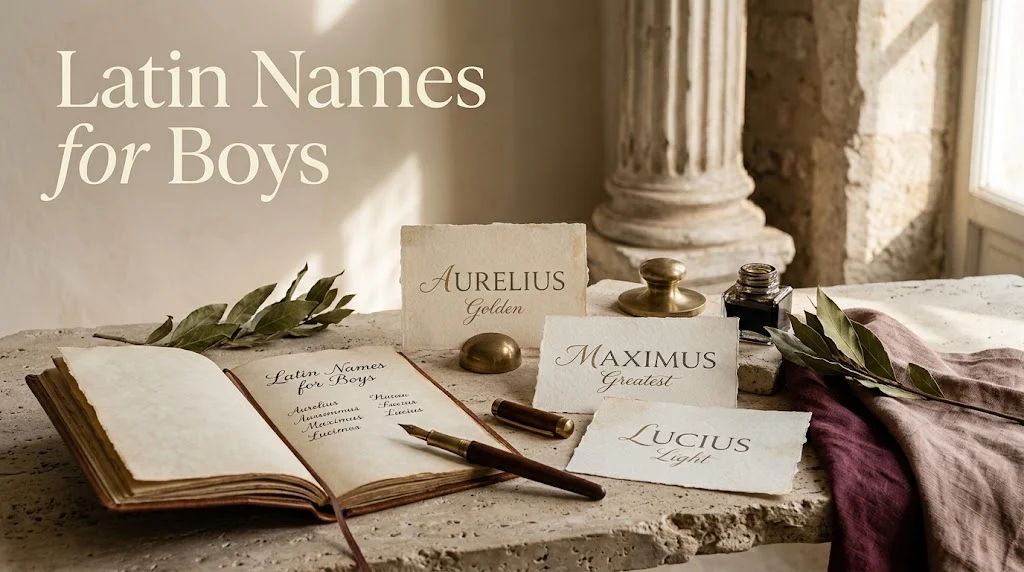
Latin names for boys include classic choices such as Felix, Victor, Marcus, Julius, and Lucius. Their meanings and origins connect them with happiness, victory, Roman history, and the rich heritage of the Latin language.
A great name can give a child a connection to history while still feeling fresh and meaningful today. That is one reason Latin names for boys remain appealing to parents, writers, and anyone searching for a name with character.
Latin was the language of ancient Rome and later became an important language of scholarship, religion, law, and science. Its influence can still be seen in many modern names, including familiar choices such as Marcus, Felix, and Victor. Some Latin names express positive qualities, while others come from ancient Roman family names or words connected to nature, courage, and achievement.
Whether you prefer a short, modern-sounding name or a classic name with centuries of history, Latin offers plenty of inspiration. You can choose a name that feels bold and powerful, gentle and thoughtful, or elegant and timeless.
In this guide, you will discover ten Latin and Latin-origin boy names, their meanings, cultural backgrounds, styles, and related ideas. You will also find practical tips to help you choose a name that fits your family, your character, or your creative project.
Felix
Meaning: Happy, fortunate, or successful.
Origin: Latin.
Personality: Felix feels cheerful, friendly, optimistic, and confident. It suits a name that expresses a positive outlook and a hopeful future.
Style: Classic, charming, bright, and timeless.
Best For: Baby boys, fictional characters, usernames, and families seeking a name with an uplifting meaning.
Popularity: Felix has a long history of use across Europe and remains familiar in many countries. Its traditional roots give it lasting appeal.
Emotional Appeal: The meaning of Felix makes it a lovely choice for a much-loved child. It expresses a wish for happiness and good fortune without sounding overly formal.
Pop Culture Reference: Felix the Cat is a well-known animated character that has helped keep the name recognizable across generations.
Similar Names: Felician, Felicio, Feliks, Benedict, Fortunatus.
Why It Still Works Today: Felix is short, easy to remember, and internationally recognizable. It combines a cheerful meaning with a polished sound, making it suitable for both childhood and adulthood.
Victor
Meaning: Conqueror or winner.
Origin: Latin, from victor, meaning a person who conquers or wins.
Personality: Victor suggests determination, confidence, resilience, and ambition. It is a strong choice for parents who appreciate names with a clear and powerful meaning.
Style: Bold, classic, formal, and timeless.
Best For: Baby boys, historical characters, story heroes, and families who prefer traditional names.
Popularity: Victor has been used for centuries in many languages and cultures. It remains a familiar international name.
Emotional Appeal: The name celebrates perseverance and achievement. For some families, it represents overcoming challenges and working toward meaningful goals.
Pop Culture Reference: Victor Frankenstein is the central scientist in Mary Shelley’s classic novel Frankenstein, although the character’s story is much more complex than the name’s positive meaning.
Similar Names: Vincent, Viktor, Valerius, Maximus, Victorinus.
Why It Still Works Today: Victor is direct and memorable. Its established history and clear meaning help it feel strong without depending on passing trends.
Marcus
Meaning: Traditionally associated with Mars, the Roman god of war.
Origin: Ancient Roman name, commonly connected with the Latin name of Mars.
Personality: Marcus feels confident, dependable, thoughtful, and grounded. Its historical background gives it a serious and distinguished character.
Style: Traditional, masculine, sophisticated, and enduring.
Best For: Baby boys, historical fiction, academic characters, and parents who appreciate classical names.
Popularity: Marcus has remained familiar in many English-speaking and European communities for generations.
Emotional Appeal: Marcus offers a connection to ancient Rome while still sounding natural in modern conversation. It feels established without being difficult to pronounce.
Pop Culture Reference: Marcus Aurelius, the Roman emperor and Stoic philosopher, is one of the most notable historical bearers of the name.
Similar Names: Mark, Marcellus, Martin, Marius, Marcian.
Why It Still Works Today: Marcus bridges ancient history and modern life. It works well across different ages and offers a classic alternative to more fashionable names.
Lucius
Meaning: Traditionally associated with light; commonly explained through the Latin word lux, meaning light.
Origin: Ancient Roman personal name.
Personality: Lucius feels intelligent, composed, elegant, and a little mysterious. It suits someone drawn to literary, historical, or classical styles.
Style: Refined, vintage, literary, and distinctive.
Best For: Baby boys, historical characters, fantasy stories, and families looking for a less common classical name.
Popularity: Lucius has a long Roman history and is also familiar to modern audiences through literature and entertainment.
Emotional Appeal: Its connection with light gives the name an appealing symbolic quality. Its smooth sound also creates a graceful impression.
Pop Culture Reference: Lucius Malfoy is a character in the Harry Potter series, giving the name recognition among fans of the books and films.
Similar Names: Lucian, Lucius, Lucio, Luca, Lucien.
Why It Still Works Today: Lucius combines classical history with a distinctive sound. It can suit parents who want something traditional but less common than Lucas or Luke.
Julius
Meaning: An ancient Roman family name; its deeper original meaning is uncertain.
Origin: Roman, associated with the Julian family and Julius Caesar.
Personality: Julius feels intelligent, confident, cultured, and ambitious. It has a dignified quality that can suit a thoughtful or adventurous character.
Style: Historical, elegant, classic, and distinguished.
Best For: Baby boys, history lovers, literary characters, and parents drawn to ancient Roman names.
Popularity: Julius has been used across different European languages and continues to appeal to families who appreciate classical names.
Emotional Appeal: The name brings to mind ancient history, leadership, and lasting influence. Its recognizable sound makes it accessible despite its historical roots.
Pop Culture Reference: Julius Caesar, the Roman general and statesman, is its best-known historical association.
Similar Names: Julian, Jules, Julien, Julius, Julianus.
Why It Still Works Today: Julius feels both historic and wearable. It offers a strong connection to the classical world without sounding like a name limited to ancient history.
Maximus
Meaning: Greatest.
Origin: Latin, from maximus, the superlative form of magnus, meaning great or large.
Personality: Maximus suggests confidence, ambition, courage, and determination. It has a commanding sound and a meaning associated with greatness.
Style: Powerful, dramatic, bold, and classical.
Best For: Baby boys, fictional heroes, gaming characters, and parents who like strong names.
Popularity: Maximus became especially recognizable internationally through popular entertainment, while its roots remain firmly Latin.
Emotional Appeal: The meaning conveys a wish for a life filled with purpose and achievement. Families may appreciate its energetic sound and positive symbolism.
Pop Culture Reference: Maximus Decimus Meridius is the fictional Roman general portrayed by Russell Crowe in the film Gladiator.
Similar Names: Max, Maximilian, Magnus, Maxentius, Maxim.
Why It Still Works Today: Maximus has a memorable sound and a powerful meaning. The shorter nickname Max also gives families a relaxed everyday alternative.
Adrian
Meaning: From Hadria or Adria, an ancient place name in Italy.
Origin: Latin, through the Roman name Hadrianus.
Personality: Adrian feels calm, intelligent, adaptable, and approachable. It can suit someone who wants a name that feels refined without being overly formal.
Style: Modern classic, elegant, international, and versatile.
Best For: Baby boys, professional characters, creative projects, and families who prefer familiar names with historical roots.
Popularity: Adrian is widely used across several countries and languages. Its long history has helped it remain recognizable over time.
Emotional Appeal: Adrian balances tradition and simplicity. It sounds polished in formal settings but also feels friendly in everyday life.
Pop Culture Reference: The Roman emperor Hadrian is a notable historical figure associated with the name’s Latin origin.
Similar Names: Hadrian, Adrien, Adriano, Aidan, Julian.
Why It Still Works Today: Adrian is easy to use across many stages of life. Its international familiarity makes it a practical choice for families seeking a classical name with a contemporary feel.
Roman
Meaning: Roman or a person associated with Rome.
Origin: Latin, from Romanus, meaning Roman.
Personality: Roman feels confident, adventurous, composed, and independent. It can suggest a strong connection to history and cultural identity.
Style: Modern, bold, clean, and classic.
Best For: Baby boys, historical characters, story heroes, and families who like place-inspired names.
Popularity: Roman is used in various countries and languages. Its clear pronunciation and strong sound have helped it maintain broad appeal.
Emotional Appeal: Roman offers a direct connection to the history of Rome. It can also appeal to parents who want a name that feels short, distinctive, and confident.
Pop Culture Reference: Roman is a common name in literature and entertainment, but its most important connection here is the historical identity of Rome itself.
Similar Names: Romulus, Remus, Rowan, Ronan, Romano.
Why It Still Works Today: Roman feels current while remaining rooted in an ancient language. It is easy to spell in many languages and carries a clear historical association.
Silvanus
Meaning: Of the woods or associated with forests.
Origin: Latin, related to silva, meaning forest or woodland.
Personality: Silvanus suggests a thoughtful, peaceful, nature-loving, and imaginative personality.
Style: Rare, natural, ancient, and literary.
Best For: Baby boys, fantasy characters, nature-inspired stories, and families looking for an uncommon classical name.
Popularity: Silvanus is less familiar than names such as Felix or Marcus. Its rarity gives it a distinctive, old-world quality.
Emotional Appeal: The woodland connection creates a sense of calm and closeness to nature. It may appeal to families who prefer meaningful names over fashionable ones.
Pop Culture Reference: Silvanus is also the name of an ancient Roman deity associated with woods and uncultivated land.
Similar Names: Silvan, Silvio, Sylvan, Silvester, Silvius.
Why It Still Works Today: Nature-inspired names remain appealing to many families. Silvanus offers a rare option with historical depth and a gentle connection to the natural world.
Aurelius
Meaning: Golden or associated with gold.
Origin: Latin, related to aureus, meaning golden.
Personality: Aurelius feels wise, dignified, reflective, and confident. It is a fitting choice for someone drawn to thoughtful and distinguished names.
Style: Elegant, ancient, scholarly, and luxurious.
Best For: Baby boys, historical characters, literary figures, and families seeking an unusual classical name.
Popularity: Aurelius is a recognizable historical name, though it is less common than many short Latin-derived choices.
Emotional Appeal: Gold can symbolize value, warmth, and something treasured. The name also carries a strong connection to Roman history and philosophy.
Pop Culture Reference: Marcus Aurelius, the Roman emperor and Stoic philosopher, is a notable historical association.
Similar Names: Aurelio, Aurelian, Aurelie, August, Augustus.
Why It Still Works Today: Aurelius has a distinctive sound and a rich historical background. It suits parents who want a name that feels thoughtful, memorable, and connected to classical culture.
Quick Comparison Table
| Name | Meaning | Style | Best For |
|---|---|---|---|
| Felix | Happy, fortunate | Cheerful, classic | Babies, characters |
| Victor | Conqueror, winner | Strong, timeless | Boys, heroes |
| Marcus | Associated with Mars | Traditional, distinguished | Babies, historical characters |
| Lucius | Associated with light | Elegant, literary | Babies, fantasy characters |
| Julius | Ancient Roman family name | Classic, historic | Babies, history lovers |
| Maximus | Greatest | Bold, powerful | Boys, heroes |
| Adrian | From Hadria | Modern classic | Babies, everyday use |
| Roman | Associated with Rome | Strong, modern | Babies, characters |
| Silvanus | Of the woods | Natural, rare | Babies, fantasy characters |
| Aurelius | Golden | Elegant, scholarly | Babies, historical characters |
How to Choose the Perfect Latin Name for a Boy
Choosing a name is easier when you know what matters most to you. These practical tips can help you narrow your options.
Start with the meaning. Think about the quality you want the name to represent. Felix works well for a joyful meaning, Victor suggests victory, and Aurelius has a connection to gold.
Explore the historical background. Some names come from ordinary Latin words, while others developed as Roman personal or family names. Understanding the difference helps you choose a name with a history you appreciate.
Say the name aloud. Try the full name with your family name. Consider whether it sounds natural when spoken by relatives, teachers, and friends.
Think about everyday use. A long classical name may offer a shorter nickname. Maximus can become Max, while Adrian already has a simple, familiar sound.
Consider cultural connections. Latin-origin names are used in many countries and cultures today. If you are choosing one for a particular cultural or historical setting, research how the name was used in that context.
Check the spelling and meaning. Online name lists sometimes simplify or overstate etymologies. Use reputable dictionaries and historical references when you want to confirm a name’s original meaning.
Choose a name that grows with the child. A name should feel comfortable for a baby, a teenager, and an adult. Classic choices often work well because they do not depend on one short-lived trend.
Most Popular Latin Names for Boys
The following names are widely recognizable or have enduring classical appeal. Their popularity varies by country and year, so this is a curated list rather than a universal ranking.
- Felix: A cheerful name meaning happy or fortunate.
- Victor: A strong classic associated with victory.
- Marcus: A traditional Roman name.
- Adrian: A versatile name with Roman roots.
- Julian: A Latin-derived name linked to the Julian family.
- Roman: A name connected directly with Rome.
- Maximus: A bold name meaning greatest.
- Augustus: A distinguished Roman name associated with the title meaning revered or venerable.
- Lucius: A traditional Roman name associated with light.
- Vincent: A Latin-derived name meaning conquering or prevailing.
These choices suit parents who want a recognizable name with a clear classical connection. For current popularity rankings, check official baby-name statistics for your country.
Vintage Latin Names Making a Comeback
Vintage names appeal to families who want something established rather than newly invented. Latin and Roman history offer plenty of choices with this character.
- Aurelius: Elegant and scholarly.
- Julius: Historic and distinguished.
- Augustus: Grand and traditional.
- Cassius: A recognizable ancient Roman family name.
- Caius: A traditional Roman personal name, also commonly spelled Gaius.
- Lucius: Literary and classic.
- Titus: Short and historically grounded.
- Marcellus: A refined Roman name.
- Florian: A Latin-derived name associated with flowers.
- Silvanus: An uncommon name connected with woodland imagery.
Vintage names can work especially well when paired with simple middle names or modern family names. Before choosing a rare option, check its pronunciation and historical context.
Modern Latin Name Trends
Latin-origin names continue to offer inspiration for modern naming because many of them are easy to recognize and have clear meanings.
Short and simple names: Felix, Max, and Roman are memorable choices that can work well across languages.
Names with positive meanings: Victor, Felix, and Valerius appeal to people who like names associated with victory, good fortune, or strength.
Classical names with modern sounds: Adrian, Julian, and Lucian connect with Latin history while fitting comfortably into contemporary life.
Nature-inspired choices: Silvanus and Silvan have woodland associations, while Florian has a connection with flowers.
Names with historical depth: Aurelius, Julius, and Augustus may appeal to parents who enjoy ancient Roman history and philosophy.
Trends differ across countries, so a name that feels modern in one place may feel traditional in another. Choose the name for its meaning and suitability rather than relying on trend labels alone.
FAQs
What Do Latin Names for Boys Usually Mean?
Latin boy names can refer to positive qualities, nature, family heritage, personal characteristics, or ancient Roman history.
Are Latin Names for Boys Still Popular?
Many Latin-origin names remain familiar today, including Adrian, Julian, Felix, and Vincent. Their popularity varies by country and year.
What Is a Strong Latin Name for a Boy?
Victor and Maximus are good choices if you want a name associated with victory or greatness. Marcus also has a strong historical connection.
What Are Rare Latin Names for Boys?
Silvanus, Aurelius, Marcellus, and Valerius may appeal to parents who want less familiar classical names.
Which Latin Boy Names Mean Light?
Lucius is traditionally associated with light through its connection with Latin lux. Related names include Lucian and Lucius-derived forms in several languages.
Conclusion
Choosing a name is a personal decision, and Latin offers many options with history, character, and meaning. From the cheerful sound of Felix to the strength of Victor and the elegance of Aurelius, these names show how the classical world continues to influence modern naming.
When comparing Latin names for boys, consider more than their appearance on a list. Look at the original meaning, historical background, pronunciation, and how the name sounds with your family name. A familiar choice such as Adrian may feel practical and timeless, while a rarer option such as Silvanus can offer a distinctive connection to nature.
Take your time, say your favorites aloud, and choose the name that feels right for your family or creative project. If this guide helped you discover a favorite, share it with someone searching for name inspiration and leave a comment with the name you love most.
Discover More Related Articles:
- Orange Flowers Names | Beautiful Varieties In 2026
- Cute Names to Call Your Crush | Sweet & Flirty Ideas In 2026