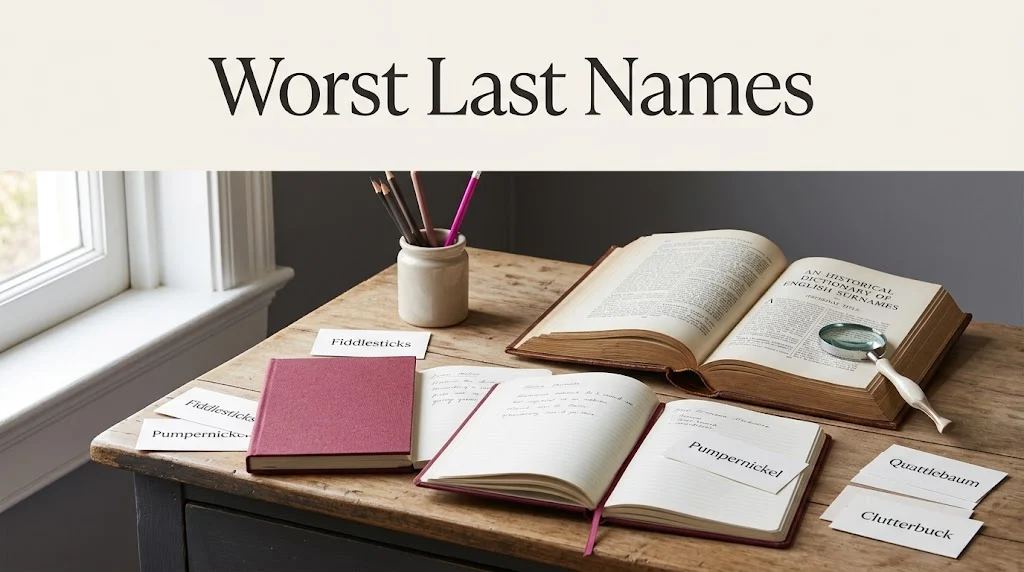
The worst last names are usually surnames that sound awkward, have unexpected meanings, or create funny word combinations. What makes a surname unusual or amusing depends on pronunciation, language, culture, and personal interpretation.
Have you ever heard a last name that made you stop for a second and smile? Some surnames sound unusual, some create unexpected word combinations, and others have meanings that seem funny in everyday conversation. That is what makes exploring the worst last names so entertaining.
A surname that sounds awkward to one person might be completely ordinary to another. Many family names come from old occupations, places, physical descriptions, nicknames, or words that have changed meaning over time. A name that sounds funny in modern English may have a perfectly respectable history in another language.
This guide explores funny-sounding surnames, unusual name combinations, and awkward words that can make family names memorable. You will also find ideas for fictional characters, tips for choosing humorous surnames for stories, and explanations of why certain names stand out.
Remember that a surname is part of someone’s identity and family history. The goal here is to enjoy language and wordplay, not to embarrass real people. With that in mind, let’s explore some unusual surnames and discover what makes them so memorable.
Worst Last Names That Sound Funny
Some surnames sound funny because they resemble familiar English words. Their owners may have perfectly ordinary family histories, but modern readers can notice amusing meanings or unexpected associations.
Bottom
Meaning: Often associated with a lower part or the base of something in modern English.
Origin: English surname with historical uses connected to geographical features and locations.
Personality and Style: Bottom sounds playful to English speakers because it is also an everyday word.
Best For: Fictional comedy characters, humorous writing, and wordplay examples.
Popularity: It is an established surname rather than a name invented for comedy.
Emotional Appeal: Its familiar sound makes it easy to recognize, while its everyday meaning creates an unexpected association.
Pop Culture Reference: Nick Bottom is a character in William Shakespeare’s A Midsummer Night’s Dream.
Similar Surnames: Underwood, Wood, Hill, Field.
Why It Still Works Today: Bottom is a useful example of how ordinary words can become amusing surnames. Its historical use gives it more depth than its modern comic association might suggest.
Small
Meaning: Associated with the idea of being little or modest in size.
Origin: English and Scottish surname, with historical forms and origins that can vary by family.
Personality and Style: Small is simple, familiar, and potentially amusing when used in unexpected contexts.
Best For: Fictional characters, lighthearted stories, and examples of descriptive surnames.
Popularity: It is a recognizable family name with established historical use.
Emotional Appeal: The surname is easy to remember because it is also a common descriptive word.
Pop Culture Reference: The word appears in countless literary and entertainment contexts, but no single reference defines the surname.
Similar Surnames: Little, Short, Young, Long.
Why It Still Works Today: Small demonstrates how a straightforward English word can function as a surname. Its humor depends on context rather than any negative quality associated with the family.
Strange
Meaning: Unusual, unfamiliar, or unexpected in modern English.
Origin: English surname. The precise history can differ between family lines.
Personality and Style: Strange has a mysterious, dramatic, and memorable sound.
Best For: Fictional detectives, fantasy characters, mystery stories, and creative writing.
Popularity: It is an established surname, although its everyday English meaning makes it especially noticeable.
Emotional Appeal: The word naturally creates curiosity, making the name useful for characters who are mysterious or unconventional.
Pop Culture Reference: Doctor Strange is a well-known Marvel Comics character.
Similar Surnames: Odd, Stark, Black, Shadow.
Why It Still Works Today: Strange combines a recognizable surname with a strong descriptive meaning. It can sound funny in one setting and intriguing in another.
Fierce
Meaning: Historically associated with someone wild or untamed; modern usage carries different connotations depending on context.
Origin: English and French-influenced surname traditions, with individual family histories varying.
Personality and Style: Strong, bold, dramatic, and sometimes humorous.
Best For: Fictional villains, action characters, fantasy stories, and memorable character names.
Popularity: Fierce is an established surname and is also used as an English descriptive word.
Emotional Appeal: The name has a forceful sound and a strong association with intensity.
Pop Culture Reference: The surname appears among numerous public figures and fictional characters.
Similar Surnames: Hunter, Wolf, Steele, Storm.
Why It Still Works Today: Fierce shows how a surname can sound powerful, intimidating, or funny depending on the person and situation. Its meaning should not be used to judge anyone who carries it.
Moody
Meaning: Connected to a changeable or emotional state in modern English.
Origin: English surname with historical variations in spelling and family history.
Personality and Style: Memorable, expressive, slightly quirky, and familiar.
Best For: Fictional characters, comedy writing, mystery stories, and playful word associations.
Popularity: Moody is a recognized surname and also an ordinary English adjective.
Emotional Appeal: People recognize the word immediately, so the surname can suggest a personality before a character even speaks.
Pop Culture Reference: Alastor Moody is a character in the Harry Potter series.
Similar Surnames: Merry, Joy, Hardy, Noble.
Why It Still Works Today: Moody is easy to pronounce and remember. Its everyday meaning makes it a strong example of a surname that can create a humorous first impression without being inherently bad.
Worst Last Names With Unexpected Meanings
Some surnames seem unfortunate because their modern meanings are different from the words or descriptions that originally inspired them. These examples show why surname history matters.
Bacon
Meaning: Associated with bacon, a familiar food in English.
Origin: English surname with historical occupational and nickname-related explanations; the exact origin depends on the family line.
Personality and Style: Friendly, memorable, and often humorous to English speakers.
Best For: Fictional characters, comedy scripts, and playful writing.
Popularity: Bacon is a well-established surname, not merely a joke name.
Emotional Appeal: The food association makes it instantly recognizable and easy to remember.
Pop Culture Reference: Actor Kevin Bacon is a prominent example of someone with this surname.
Similar Surnames: Baker, Cook, Butcher, Brewer.
Why It Still Works Today: Bacon illustrates how surnames can overlap with everyday objects or foods. That connection can create humor without telling us anything about the person or family’s character.
Pickle
Meaning: A pickled food in modern English.
Origin: The surname’s history may vary by family and location. Do not assume every family named Pickle shares one origin.
Personality and Style: Quirky, playful, and unusual.
Best For: Fictional comedy characters, children’s stories, and lighthearted creative writing.
Popularity: Pickle is much less common than many traditional English surnames, making it stand out in humorous lists.
Emotional Appeal: Its association with a familiar food creates an amusing mental image.
Pop Culture Reference: Pickle is also used as a nickname and character name in various forms of entertainment.
Similar Surnames: Pepper, Berry, Apple, Bean.
Why It Still Works Today: Pickle is memorable because it turns an everyday word into a family name. It is best enjoyed as a language curiosity rather than a reason to mock someone.
Death
Meaning: The end of life in modern English.
Origin: The surname has historical forms and possible origins that require family-specific research; its present-day English meaning should not be treated as a complete explanation of its history.
Personality and Style: Dark, dramatic, mysterious, and striking.
Best For: Gothic fiction, fantasy stories, mysteries, and fictional characters.
Popularity: It is an uncommon and highly noticeable surname in English-language contexts.
Emotional Appeal: The word has a strong emotional association, which makes it memorable in fiction.
Pop Culture Reference: Similar words and names frequently appear in gothic literature and fantasy storytelling.
Similar Surnames: Graves, Black, Night, Crow.
Why It Still Works Today: Death is an example of a surname whose modern meaning can feel dramatic. A real family’s history, however, should never be reduced to that association.
Doolittle
Meaning: Commonly interpreted through its English word components as “do little,” though the surname’s actual history may be more complex.
Origin: English surname with historical family-specific origins.
Personality and Style: Playful, old-fashioned, and memorable.
Best For: Fictional characters, wordplay, comedy, and literary naming.
Popularity: Doolittle is an established surname with a distinctive sound.
Emotional Appeal: English speakers may notice the phrase “do little,” creating a humorous association.
Pop Culture Reference: Doctor Dolittle, the fictional character created by Hugh Lofting, has a similar-sounding name, though the spellings differ.
Similar Surnames: Little, Goodenough, Merryweather, Drinkwater.
Why It Still Works Today: Doolittle is a great reminder that surname humor often comes from how a name sounds when read as an ordinary phrase.
Awkward Last Names That Create Funny Combinations
A surname may sound perfectly ordinary on its own but become amusing when paired with a first name. For fictional writing, the combination is often more important than the surname itself.
Long
Meaning: Extended in length or duration.
Origin: English surname, with different historical origins possible among families.
Personality and Style: Simple, classic, and easy to remember.
Best For: Fictional characters, name-combination examples, and lighthearted writing.
Popularity: Long is an established surname found in English-speaking communities and elsewhere.
Emotional Appeal: Its short spelling and familiar meaning make it recognizable immediately.
Pop Culture Reference: The surname appears among many real people and fictional characters.
Similar Surnames: Short, Small, Tall, Strong.
Why It Still Works Today: Long can create amusing combinations with first names or titles. The humor comes from the language, not from any actual trait of the person who carries it.
Hardman
Meaning: A surname whose modern English components suggest toughness or strength.
Origin: English surname; exact origins depend on the family history.
Personality and Style: Bold, traditional, sturdy, and slightly comic in some contexts.
Best For: Fictional action heroes, comedy characters, and stories with descriptive names.
Popularity: Hardman is an established surname with a strong sound.
Emotional Appeal: The word suggests a tough personality, which can create a funny contrast if a fictional character is gentle or shy.
Pop Culture Reference: It may be used in character writing because of its immediately understandable meaning, rather than being tied to one defining reference.
Similar Surnames: Strong, Hardy, Steele, Armstrong.
Why It Still Works Today: Hardman is an example of a surname that communicates a clear impression. Writers can use that impression seriously or humorously, depending on the character.
Goodenough
Meaning: Resembles the phrase “good enough” in modern English.
Origin: English surname, with a historical background that should be checked against reliable genealogical sources for a particular family.
Personality and Style: Quirky, memorable, and gently humorous.
Best For: Fictional characters, wordplay, comedy writing, and illustrative surname lists.
Popularity: It is an established but relatively distinctive surname.
Emotional Appeal: Its resemblance to a familiar phrase makes it easy to recognize and remember.
Pop Culture Reference: The phrase itself appears frequently in everyday speech, though that does not establish a particular pop-culture origin for the surname.
Similar Surnames: Doolittle, Fairchild, Goodwin, Merryweather.
Why It Still Works Today: Goodenough demonstrates how familiar phrases can make surnames stand out. It can even suggest a character who is content with simple achievements.
Quick Comparison Table
| Last Name | Modern Association | Style | Best For |
|---|---|---|---|
| Bottom | Everyday body-related word | Playful | Comedy writing |
| Small | Little in size | Simple | Fictional characters |
| Strange | Unusual or mysterious | Dramatic | Mystery stories |
| Fierce | Wild or untamed | Bold | Action fiction |
| Moody | Changeable mood | Quirky | Character writing |
| Bacon | Familiar food | Funny | Comedy characters |
| Pickle | Pickled food | Playful | Children’s fiction |
| Death | End of life | Dark | Gothic fiction |
| Doolittle | “Do little” wordplay | Old-fashioned | Comedy writing |
| Long | Extended length | Classic | Name combinations |
| Hardman | Toughness | Strong | Action characters |
| Goodenough | “Good enough” phrase | Quirky | Wordplay |
How to Choose a Funny or Unusual Last Name
Choosing a funny surname for a fictional character is easier when you focus on sound, meaning, and context.
Think about the character. A mysterious detective might suit a surname like Strange, while a friendly comic character could have a name like Bacon or Pickle.
Try saying the full name aloud. A surname that looks funny on paper may sound ordinary when spoken. Pair it with different first names to see which combinations work naturally.
Use wordplay carefully. Names that resemble everyday phrases can be memorable, but too much wordplay can make a character feel unrealistic.
Consider the setting. A modern comedy may support an obvious joke name. A serious historical novel may need a surname that feels more natural for its time and place.
Check cultural context. A surname that seems funny in English may have a meaningful or ordinary origin in another language. Research before making assumptions.
Avoid mocking real people. A person’s surname is often inherited and may be deeply connected to family history. Keep the humor focused on language and fictional situations rather than a real person’s identity.
Verify historical claims. Surname origins can differ between families with the same spelling. Use reliable historical or genealogical references before claiming a definitive origin.
Most Popular Types of Funny Last Names
Funny-sounding surnames generally fit several broad categories.
- Everyday-word surnames: Names such as Small or Long overlap with familiar English vocabulary.
- Food-related surnames: Bacon and Pickle stand out because they resemble common foods.
- Descriptive surnames: Moody and Fierce have meanings that can suggest a personality.
- Phrase-like surnames: Doolittle and Goodenough sound like expressions in everyday English.
- Dark or dramatic surnames: Death can seem especially striking in gothic or fantasy settings.
- Unexpected combinations: A surname can become funnier when paired with a particular first name.
These categories are useful for understanding why a name stands out. They do not mean that a surname is objectively bad or that everyone with that name experiences it the same way.
Unusual Surnames With Old-Fashioned Charm
Some surnames seem funny today because their wording feels old-fashioned or resembles expressions that are less common in modern speech.
Names such as Goodenough and Doolittle can sound like phrases. Others, such as Hardman and Long, retain familiar meanings that are easy to recognize.
Old-fashioned surnames can be useful in historical fiction because they may give a character a distinctive identity. However, a writer should check whether a surname fits the character’s time period and cultural background.
It is also important to remember that an unusual-sounding name may have a long family history. What feels odd to a modern reader may once have been a normal occupational, descriptive, or local surname.
Modern Trends in Funny Last Names
Today, unusual surnames are often discussed in social posts, character-name lists, comedy writing, and online naming communities. People enjoy them because they are easy to remember and can create unexpected word associations.
Writers also use descriptive surnames to communicate a character’s role or personality quickly. A name such as Strange may suggest mystery, while a name such as Hardman may suggest strength. This technique works best when the character has depth beyond the name.
Another popular approach is using ordinary words as fictional surnames. Food, weather, colors, and everyday phrases can provide creative inspiration.
The most successful humorous names usually balance originality with believability. A name should be memorable without making the character feel like a joke in every scene.
FAQs
What Makes a Last Name One of the Worst?
A last name may be described as one of the worst because it sounds awkward, resembles an embarrassing word, or creates an unintended meaning when paired with a first name.
Are Funny Last Names Real?
Yes. Many surnames that sound funny in modern English are genuine family names. Their histories may involve locations, occupations, nicknames, older words, or language changes.
Can a Last Name Have a Bad Meaning?
Some surnames resemble words with negative meanings in a particular language. However, surname meanings can be more complex than their modern appearance suggests.
Are Unusual Last Names Good for Fictional Characters?
Yes. An unusual surname can help a character stand out, especially in comedy, fantasy, or mystery stories.
Why Do Some Last Names Sound Funny?
Surnames may sound funny because they resemble everyday words, create unexpected phrases, have unusual sounds, or contrast with a person’s first name.
Conclusion
Exploring the worst last names is really an exploration of language, history, and the surprising ways words change meaning. Surnames such as Bottom, Strange, Bacon, Pickle, and Goodenough can create amusing associations, while names such as Moody and Fierce show how descriptive words can become memorable family names.
Still, no surname is automatically bad. Many unusual names have long histories, and their meanings may differ from what modern English speakers assume. If you are choosing a surname for a fictional character, focus on its sound, meaning, and suitability for the story.
Use these examples as inspiration for creative writing, comedy, or name research, and always treat real family names with respect. Which surname surprised you the most? Share this article with a fellow name enthusiast and leave a comment with your favorite unusual surname.
Discover More Related Articles:
- T Names for Boys | Strong & Stylish Ideas In 2026
- Mexican Soup Names | Delicious Ideas & Meanings In 2026