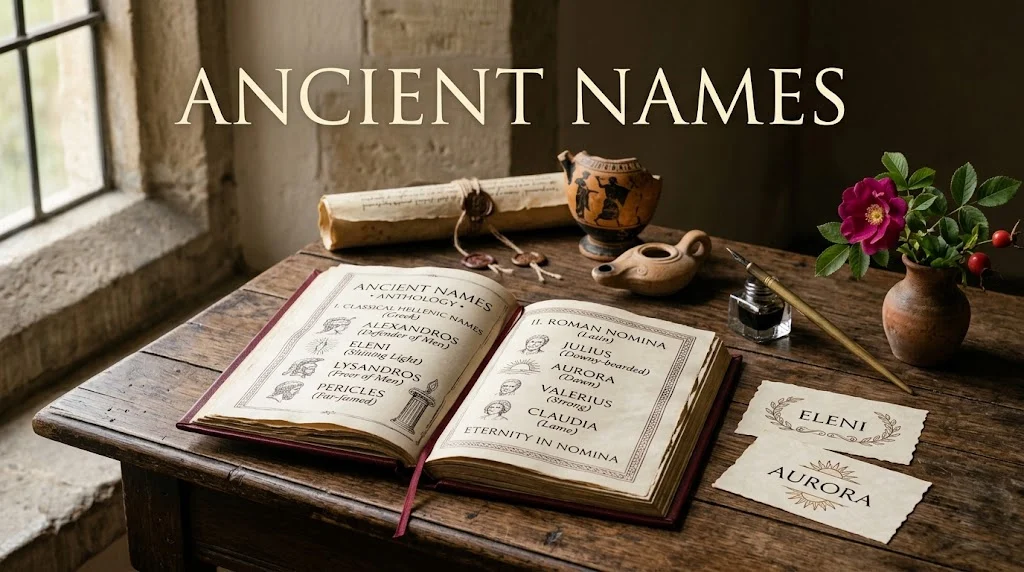
Ancient names are names that come from historical languages, cultures, civilizations, mythology, and early written traditions. They can offer distinctive meanings and a timeless connection to history, heritage, and storytelling.
Some names feel like they belong to a particular moment in time. Others seem to travel through centuries without losing their charm. Ancient names belong to the second group. They can remind us of forgotten kingdoms, legendary heroes, powerful queens, philosophers, gods, poets, and civilizations that shaped the world.
An ancient name can also feel surprisingly fresh today. While modern naming trends often change quickly, historical names have a different kind of appeal. Their stories give them personality before you even learn who carries them.
Ancient naming traditions come from many parts of the world, including Greece, Rome, Egypt, Mesopotamia, Persia, India, Celtic regions, and other early cultures. Each tradition has its own languages, beliefs, naming customs, and historical context.
Whether you are choosing a baby name, writing a novel, creating a fantasy character, or simply searching for something rare and meaningful, these names offer plenty of inspiration. Below are ten memorable choices with fascinating histories, styles, and meanings.
Aurelia
Meaning: Golden or gilded.
Origin: Latin; associated with ancient Roman naming traditions.
Personality: Aurelia feels elegant, bright, graceful, and confident. It suggests someone with warmth and natural charm.
Style: Elegant, vintage, classic, feminine.
Best For: Baby girls, characters, writers, and anyone looking for an old-world name.
Popularity: Aurelia has experienced renewed interest in modern naming, partly because vintage and classical names have become popular again.
Emotional Appeal: The connection to gold gives Aurelia a warm and precious quality. It sounds refined without feeling overly complicated.
Pop Culture Reference: Aurelia appears in historical and literary contexts and has also been used by fictional characters.
Similar Names: Aurelia, Aurora, Aurea, Claudia, Livia.
Why It Still Works Today: Aurelia combines historical depth with a graceful sound. It feels ancient enough to have a story but polished enough for modern use.
Cassia
Meaning: Often associated with cinnamon or cassia, a fragrant spice.
Origin: Latin and Greek traditions; related forms appear in ancient naming history.
Personality: Cassia feels warm, intelligent, graceful, and slightly mysterious.
Style: Botanical, elegant, vintage, feminine.
Best For: Baby girls, fictional characters, writers, and nature-inspired naming.
Popularity: Cassia remains less common than many mainstream classical names, giving it a distinctive quality.
Emotional Appeal: Its connection to a fragrant spice gives the name warmth and sensory appeal. It also has a soft, sophisticated sound.
Pop Culture Reference: Cassia has appeared in modern literature and fiction, although its historical roots are much older.
Similar Names: Cassia, Cassius, Claudia, Cora, Celia.
Why It Still Works Today: Cassia is unusual without being difficult to pronounce. It offers historical character while fitting comfortably into modern naming styles.
Livia
Meaning: Traditionally connected with the ancient Roman family name Livius.
Origin: Ancient Rome.
Personality: Livia feels composed, intelligent, elegant, and strong.
Style: Roman, classic, refined, timeless.
Best For: Baby girls, historical characters, literary characters, and sophisticated naming.
Popularity: Livia remains recognizable in several countries and benefits from the continuing interest in short classical names.
Emotional Appeal: Livia is simple but carries considerable historical depth. It feels polished without needing elaborate decoration.
Pop Culture Reference: Livia is strongly associated with Roman history, including Livia Drusilla, the wife of Emperor Augustus.
Similar Names: Lydia, Olivia, Liv, Lucia, Julia.
Why It Still Works Today: Livia demonstrates how an ancient name can sound modern. Its short structure makes it easy to remember while its Roman history gives it depth.
Darius
Meaning: The name is traditionally connected with an ancient Persian royal name, often interpreted through Old Persian roots associated with possessing or maintaining goodness.
Origin: Ancient Persian.
Personality: Darius feels commanding, intelligent, confident, and regal.
Style: Royal, historical, strong, classic.
Best For: Baby boys, historical characters, fantasy characters, and literary names.
Popularity: Darius has remained recognizable well beyond its ancient Persian origins.
Emotional Appeal: The name carries a strong historical atmosphere because several Persian kings bore the name.
Pop Culture Reference: Darius is associated with several historical Persian rulers, particularly Darius I of the Achaemenid Empire.
Similar Names: Cyrus, Xerxes, Artaxerxes, Damian, Adrian.
Why It Still Works Today: Darius has a strong sound and an unmistakable historical identity. It works especially well for someone who wants a name that feels powerful without sounding overly unusual.
Helena
Meaning: Often associated with brightness, shining, or torch-related interpretations, though the exact ancient etymology is debated.
Origin: Ancient Greek.
Personality: Helena feels graceful, intelligent, romantic, and dignified.
Style: Classical, elegant, literary, timeless.
Best For: Baby girls, historical characters, literary characters, and elegant naming.
Popularity: Helena has remained in use across generations and languages.
Emotional Appeal: Helena has a beautiful combination of softness and strength. Its ancient history also gives it a strong storytelling quality.
Pop Culture Reference: Helen of Troy is one of the most famous figures associated with the name in Greek mythology and literature.
Similar Names: Helen, Elena, Eleni, Selene, Lena.
Why It Still Works Today: Helena is recognizable, graceful, and deeply connected with classical tradition. It has survived for centuries without losing its appeal.
Cyrus
Meaning: The exact ancient meaning is debated, with several interpretations proposed.
Origin: Ancient Persian.
Personality: Cyrus feels adventurous, intelligent, confident, and strong.
Style: Royal, historical, concise, masculine.
Best For: Baby boys, historical characters, fantasy characters, and strong traditional names.
Popularity: Cyrus has remained recognizable as a historical and modern personal name.
Emotional Appeal: The name has a powerful historical association because of Cyrus the Great, founder of the Achaemenid Empire.
Pop Culture Reference: Cyrus the Great is one of the best-known rulers associated with the ancient Persian world.
Similar Names: Darius, Xerxes, Leon, Titus, Cassius.
Why It Still Works Today: Cyrus is short and easy to remember, yet it carries an impressive historical background. That combination makes it appealing for modern families and writers.
Octavia
Meaning: Eighth.
Origin: Latin and ancient Roman naming tradition.
Personality: Octavia feels strong, intelligent, dignified, and independent.
Style: Roman, regal, vintage, sophisticated.
Best For: Baby girls, historical characters, fantasy characters, and literary names.
Popularity: Octavia has gained renewed attention as parents rediscover traditional Roman names.
Emotional Appeal: Its connection to Roman history gives Octavia an unmistakable sense of age and character.
Pop Culture Reference: Octavia appears in Roman history and has also been used for characters in modern entertainment.
Similar Names: Olivia, Aurelia, Livia, Claudia, Valeria.
Why It Still Works Today: Octavia feels distinctive while still being familiar. Its strong rhythm gives it presence, and its Roman history makes it especially attractive to history lovers.
Marcus
Meaning: Traditionally associated with Mars, the Roman god of war.
Origin: Ancient Rome.
Personality: Marcus feels strong, disciplined, confident, and traditional.
Style: Roman, classic, masculine, timeless.
Best For: Baby boys, historical characters, literary characters, and traditional naming.
Popularity: Marcus has remained in use across many generations and languages.
Emotional Appeal: Its connection to ancient Rome gives the name a powerful historical atmosphere.
Pop Culture Reference: Marcus was a common Roman personal name and was borne by numerous historical figures, including Marcus Aurelius.
Similar Names: Martin, Marcel, Marius, Julius, Titus.
Why It Still Works Today: Marcus is a great example of an ancient name that does not feel outdated. Its familiar pronunciation and historical depth make it easy to use today.
Cleopatra
Meaning: Traditionally interpreted from Greek elements associated with glory and the father.
Origin: Ancient Greek.
Personality: Cleopatra feels bold, intelligent, charismatic, and regal.
Style: Royal, dramatic, historical, feminine.
Best For: Historical characters, fictional queens, creative projects, and people seeking a dramatic ancient name.
Popularity: Cleopatra is widely recognized because of its powerful historical association.
Emotional Appeal: The name immediately evokes ancient Egypt, royalty, political history, and one of history’s most famous queens.
Pop Culture Reference: Cleopatra VII was the final active ruler of the Ptolemaic Kingdom of Egypt and remains a major figure in historical and artistic works.
Similar Names: Antonia, Octavia, Olympia, Athena, Selene.
Why It Still Works Today: Cleopatra is memorable and unmistakable. It is especially useful when you want a name with strong historical identity and dramatic presence.
Orion
Meaning: A hunter in Greek mythology.
Origin: Ancient Greek mythology.
Personality: Orion feels adventurous, bold, independent, and mysterious.
Style: Mythological, celestial, strong, poetic.
Best For: Baby boys, gender-neutral creative use, fantasy characters, usernames, and astronomy lovers.
Popularity: Orion has gained modern attention as a mythological and celestial name.
Emotional Appeal: The name connects mythology with the night sky because Orion is also the name of a prominent constellation.
Pop Culture Reference: Orion appears in Greek mythology and is represented in the night sky as the constellation Orion.
Similar Names: Atlas, Apollo, Leo, Phoenix, Atlas.
Why It Still Works Today: Orion combines ancient mythology with a modern interest in space and celestial names. It feels both historical and contemporary.
Quick Comparison Table
| Name | Meaning | Style | Best For |
|---|---|---|---|
| Aurelia | Golden | Elegant, vintage | Girls |
| Cassia | Fragrant spice | Botanical, classic | Girls |
| Livia | Roman family name | Refined, classical | Girls |
| Darius | Ancient Persian royal name | Strong, regal | Boys |
| Helena | Bright or shining | Elegant, timeless | Girls |
| Cyrus | Ancient Persian royal name | Strong, classic | Boys |
| Octavia | Eighth | Roman, regal | Girls |
| Marcus | Associated with Mars | Strong, traditional | Boys |
| Cleopatra | Glory of the father | Royal, dramatic | Girls |
| Orion | Mythological hunter | Celestial, adventurous | Boys |
How to Choose the Perfect Ancient Name
Choosing an ancient name becomes easier when you decide what kind of history you want it to represent.
Start with the civilization. Do you prefer ancient Greek, Roman, Egyptian, Persian, Celtic, Mesopotamian, or another historical tradition? Narrowing the cultural background can quickly reduce your options.
Research the meaning. Ancient name meanings are sometimes debated. Old languages can have uncertain etymologies, and later traditions may reinterpret earlier names. Look for reliable sources before treating one explanation as certain.
Consider pronunciation. Some ancient names have multiple modern pronunciations. Choose a version that feels comfortable for your intended audience.
Think about historical associations. A name may be connected to a famous ruler, mythological figure, philosopher, warrior, or literary character. Decide whether that association adds to the name or distracts from it.
Match the personality. A dramatic historical name may be perfect for a fictional queen but less suitable if you want something subtle. Think about the feeling you want the name to create.
Look at modern usability. Some ancient names fit easily into everyday life, while others have a strongly historical or mythological atmosphere.
Check the cultural context. Ancient names belong to real cultures and histories. Understanding their background helps you use them respectfully and accurately.
Most Popular Ancient Name Styles Today
Ancient names can be grouped into several popular styles.
Classical names come from Greek and Roman traditions. Names such as Helena, Marcus, Livia, and Octavia have remained recognizable because of their long history.
Mythological names draw from gods, heroes, creatures, and legendary figures. Orion, Athena, Apollo, and similar names appeal to people who enjoy mythology.
Royal names are connected with historical rulers and dynasties. Darius, Cyrus, Cleopatra, and other royal names can give a strong sense of history.
Nature-inspired ancient names connect historical naming with the natural world. These can be especially appealing to modern families who like names associated with stars, flowers, animals, or landscapes.
Vintage classical names have also become popular because they can sound both traditional and fresh. Many parents enjoy names that have existed for centuries but are less common than today’s most popular choices.
Vintage Ancient Names Making a Comeback
Ancient names often return to fashion because they offer something modern trends cannot easily reproduce: history.
Names such as Aurelia, Octavia, Livia, Helena, Marcus, and Cyrus can feel vintage without being completely unfamiliar.
Their appeal comes from their ability to work across generations. A name with hundreds or thousands of years of history can feel established rather than temporary.
For parents, this can be a way to choose something distinctive without creating a completely new name. For writers, historical names can instantly establish atmosphere and character.
Modern Ancient Name Trends
Today’s interest in ancient names often focuses on names that are distinctive but still easy to use.
Short classical names are especially appealing because they are memorable and simple to pronounce. Mythological names are also popular among people interested in astronomy, fantasy, literature, and ancient stories.
Another trend is choosing names with powerful meanings. Parents and writers may look for names associated with courage, wisdom, beauty, royalty, nature, or strength.
There is also growing interest in names from cultures beyond the most familiar Greek and Roman traditions. Exploring Persian, Egyptian, Mesopotamian, Celtic, Indian, and other historical naming traditions can uncover many lesser-known choices.
FAQs
What Are Ancient Names?
Ancient names are names that originate from historical languages, civilizations, cultures, religious traditions, mythology, or early written records.
Why Are Ancient Names Popular?
Ancient names appeal to people because they often have distinctive sounds, fascinating meanings, and strong historical connections.
Are Ancient Names Good for Babies?
Yes. Many ancient names remain practical today, especially those with simple spelling and pronunciation.
What Are Some Strong Ancient Names?
Darius, Cyrus, Marcus, Orion, and other names associated with rulers, mythology, or historical traditions can have a strong impression.
What Are Some Beautiful Ancient Girl Names?
Aurelia, Helena, Livia, Octavia, and Cleopatra are examples of ancient or historically rooted feminine names.
Conclusion
Ancient names give us a wonderful way to connect modern naming with the distant past. They can carry stories of rulers, heroes, mythology, nature, philosophy, and civilizations that shaped human history.
Names such as Aurelia and Helena offer elegance, while Darius and Marcus bring a stronger classical feeling. Orion adds mythology and celestial imagery, and Cleopatra immediately creates a sense of royalty and history.
When choosing an ancient name, focus on more than how it sounds. Explore its original language, meaning, historical context, and cultural significance. If the name has a debated origin, check reliable sources rather than accepting a popular internet explanation as fact.
Whether you are naming a baby, character, pet, story, or creative project, an ancient name can give your choice a sense of depth and timelessness. Pick the one that speaks to you, share this guide with another name lover, and let us know which ancient name is your favorite.
Discover More Related Articles: