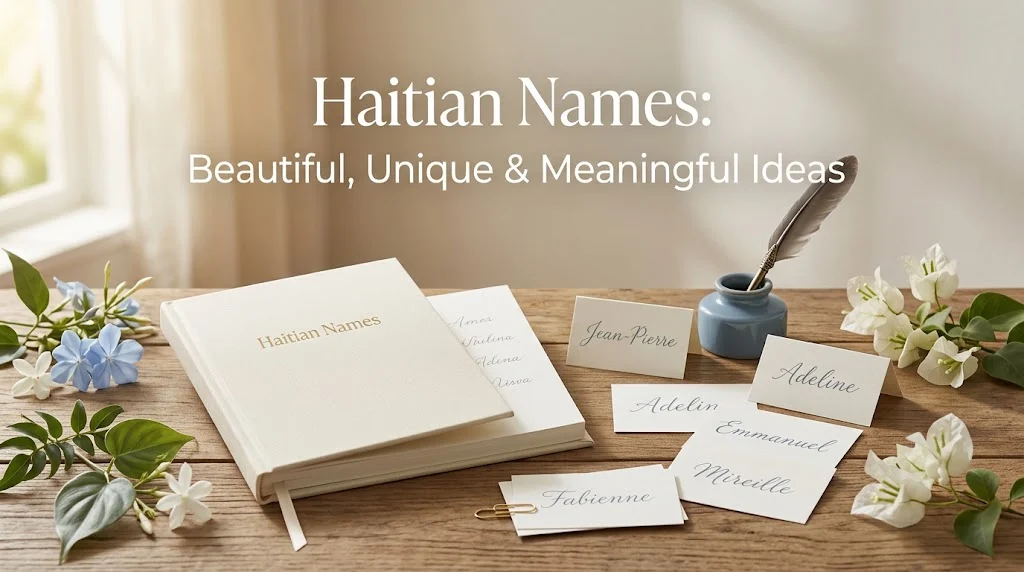
Haitian names reflect a rich blend of French, Haitian Creole, African, Christian, and Caribbean influences. Many families use French-language or biblical names, while personal naming traditions vary according to family history, language, and cultural background.
A name can carry a family’s history, reflect its beliefs, and celebrate the place where its story began. Haitian names offer a fascinating window into the culture of Haiti, a Caribbean nation known for its rich history, vibrant traditions, and distinctive blend of African, French, and Caribbean influences.
Many Haitian families use names with French or biblical roots, while others choose names that reflect personal values, family connections, or individual preferences. Haitian Creole, the language spoken by most Haitians, also plays an important role in everyday cultural identity, even though many personal names have French, Latin, Hebrew, or other origins.
Whether you are choosing a name for a baby, exploring your family heritage, or searching for a meaningful name for a fictional character, there are many possibilities to consider. Some names feel timeless and elegant, while others sound modern, gentle, or strong.
In this guide, you will discover ten name ideas, their commonly accepted meanings or origins, their styles, and the qualities they may evoke. You will also find practical tips for choosing a name that feels meaningful, memorable, and respectful of Haitian culture.
Marie
Meaning: Commonly associated with meanings such as “beloved” or “wished-for child,” although the exact etymology is debated.
Origin: French form of Maria, ultimately derived from the Hebrew name Miriam.
Personality: Marie has a gentle, graceful, and timeless feel. It may appeal to people who value tradition, family, and simplicity.
Style: Classic, elegant, feminine, traditional.
Best For: Baby girls, daughters, fictional characters, and people seeking a traditional French-influenced name.
Popularity: Marie has a long history of use in French-speaking communities, including Haiti. Its familiarity gives it a classic rather than trendy character.
Emotional Appeal: The name feels warm and familiar. It can also honor a relative or reflect a family’s connection to French-language naming traditions.
Pop Culture Reference: Marie appears widely in literature, entertainment, and historical records, so its associations depend on the individual person or character.
Similar Names: Maria, Marielle, Marianne, Marise, Marie-Louise.
Why It Still Works Today: Marie is short, easy to recognize, and adaptable to many naming styles. It also works as part of a compound first name, making it a flexible option for families who value tradition.
Jean
Meaning: “God is gracious.”
Origin: French form of John, derived from the Hebrew name Yohanan.
Personality: Jean often feels dependable, calm, and confident. Its simple sound gives it a grounded, straightforward quality.
Style: Classic, traditional, strong, understated.
Best For: Baby boys, family naming traditions, historical characters, and people looking for a familiar French-language name.
Popularity: Jean has a long history in French-speaking communities and is recognizable in Haiti. It is also used in compound names.
Emotional Appeal: Its traditional roots can make Jean feel connected to family, faith, and generations of naming history.
Pop Culture Reference: Jean appears in many international works and can be a masculine French name or a feminine name in certain other languages.
Similar Names: Jean-Marc, Jean-Luc, Jean-Claude, Jean-Baptiste, Johan.
Why It Still Works Today: Jean is compact and timeless. It combines easily with other names and has a clear cultural connection to French-language naming traditions found in Haiti.
Joseph
Meaning: “He will add” or “may God add,” based on the Hebrew origin.
Origin: Hebrew, through Greek and Latin forms, widely used in French and other languages.
Personality: Joseph can suggest steadiness, kindness, responsibility, and a thoughtful nature.
Style: Traditional, biblical, classic, dignified.
Best For: Baby boys, family names, religious families, and fictional characters.
Popularity: Joseph is a longstanding name across Christian communities worldwide, including Haiti. Its widespread use makes it familiar across generations.
Emotional Appeal: Many families value Joseph because of its biblical associations and the sense of continuity it can bring to family naming.
Pop Culture Reference: Joseph is a major biblical name and appears in countless historical and fictional contexts.
Similar Names: Josué, Joël, Jonas, Jean-Joseph, Joseph-Marc.
Why It Still Works Today: Joseph has a well-established history and a meaning rooted in its Hebrew origin. It can feel traditional without being limited to one generation or style.
Marie-Claire
Meaning: A combination of Marie and Claire; Claire means “clear” or “bright.”
Origin: French compound name.
Personality: Marie-Claire feels graceful, polished, thoughtful, and refined.
Style: Elegant, classic, feminine, sophisticated.
Best For: Baby girls, daughters, literary characters, and families who enjoy traditional compound names.
Popularity: Compound names have a strong place in French-language naming traditions. Marie-Claire has a distinctly classic style, although individual popularity varies by community and generation.
Emotional Appeal: The combination brings together the familiarity of Marie and the bright, clear meaning associated with Claire. It can feel both affectionate and elegant.
Pop Culture Reference: Marie-Claire is also the name of an international fashion and lifestyle magazine, giving the combination a recognizable media association.
Similar Names: Marie-Louise, Marie-France, Marie-Rose, Anne-Claire, Claire-Marie.
Why It Still Works Today: Marie-Claire offers a longer, more distinctive option while keeping familiar name elements. It suits families who appreciate French-language traditions and balanced, elegant sounds.
Jean-Baptiste
Meaning: “John the Baptist,” referring to the biblical figure.
Origin: French compound name based on Jean and Baptiste.
Personality: Jean-Baptiste feels formal, dignified, and rooted in religious tradition.
Style: Traditional, historic, strong, formal.
Best For: Baby boys, family heritage, historical fiction, and characters connected to French-speaking cultures.
Popularity: The name has a long history in French-speaking societies. It may also be encountered in Haitian family and cultural contexts, although popularity varies.
Emotional Appeal: For families with Christian traditions, the name can express faith, continuity, and respect for a significant biblical figure.
Pop Culture Reference: John the Baptist is a central figure in Christian scripture, which gives the name its strongest historical and religious association.
Similar Names: Jean, Jean-Claude, Jean-Marc, Jean-Joseph, Baptiste.
Why It Still Works Today: Jean-Baptiste has a strong historical identity. While its full form feels formal, its individual elements can inspire shorter everyday names.
Rose
Meaning: Rose flower.
Origin: French and English usage, connected to the name of the flower; the flower word ultimately has a long history through Latin and related languages.
Personality: Rose suggests gentleness, beauty, warmth, and affection.
Style: Floral, classic, soft, romantic.
Best For: Baby girls, daughters, characters, and nature-loving families.
Popularity: Rose is a long-established name in many cultures. Its simplicity and floral association have helped it remain recognizable across generations.
Emotional Appeal: Flowers often symbolize love, growth, and beauty. Rose carries these associations without needing a complicated explanation.
Pop Culture Reference: Rose appears in many books, films, and songs as a personal name, so its associations depend on the specific work.
Similar Names: Roseline, Roseline-Marie, Rosette, Rosalie, Marie-Rose.
Why It Still Works Today: Nature-inspired names remain appealing to many families. Rose is easy to spell, familiar internationally, and well suited to both traditional and modern combinations.
Nathalie
Meaning: “Birthday of the Lord,” traditionally associated with the Christian celebration of Christ’s birth.
Origin: French form of Natalia, derived from Latin natalis, meaning “of birth.”
Personality: Nathalie feels warm, thoughtful, poised, and friendly.
Style: Elegant, feminine, classic, international.
Best For: Baby girls, daughters, characters, and people seeking a French-language name with a familiar sound.
Popularity: Nathalie has a long history of use in French-speaking communities and remains recognizable internationally.
Emotional Appeal: Its association with birth and celebration can make Nathalie a meaningful choice for families who value its traditional religious background.
Pop Culture Reference: Nathalie is used by various public figures and fictional characters, but its meaning does not depend on one particular reference.
Similar Names: Natalie, Natalia, Natali, Nathalia, Anaïs.
Why It Still Works Today: Nathalie balances a traditional origin with a sound that is easy to recognize in many languages. It offers a French spelling that distinguishes it from Natalie.
Emmanuel
Meaning: “God is with us.”
Origin: Hebrew, through biblical and French-language traditions.
Personality: Emmanuel feels confident, thoughtful, reassuring, and dignified.
Style: Strong, biblical, classic, meaningful.
Best For: Baby boys, family names, religious families, and characters with a traditional background.
Popularity: Emmanuel is used in many countries and is familiar in French-speaking communities, including parts of the Caribbean.
Emotional Appeal: The meaning can represent faith, comfort, and a sense of divine presence. For some families, it also connects a child’s name to a cherished religious tradition.
Pop Culture Reference: Emmanuel has appeared as the name of many public figures and fictional characters, without being tied to a single cultural reference.
Similar Names: Manuel, Emanuel, Immanuel, Samuel, Gabriel.
Why It Still Works Today: Emmanuel combines a meaningful biblical origin with a strong, recognizable sound. It works across generations and remains suitable for both traditional and contemporary families.
Stéphanie
Meaning: “Crown” or “garland.”
Origin: French form of Stephanie, derived from the Greek name Stephanos.
Personality: Stéphanie feels lively, confident, graceful, and expressive.
Style: Elegant, feminine, classic, polished.
Best For: Baby girls, daughters, fictional characters, and families who appreciate French spelling and pronunciation.
Popularity: Stéphanie has been used widely in French-speaking communities. Its style may feel particularly associated with late twentieth-century naming trends in some regions.
Emotional Appeal: The meaning connected with a crown can suggest honor, achievement, or a special place within a family.
Pop Culture Reference: The name has appeared among public figures and fictional characters in different countries.
Similar Names: Stephanie, Stephania, Estefania, Stefania, Stéphane.
Why It Still Works Today: Stéphanie offers a traditional European origin with a clear meaning and a graceful sound. The accent also reflects its French spelling, though simplified spellings may be more practical in some settings.
Luc
Meaning: Commonly interpreted as “light,” through its connection to the Latin name Lucas.
Origin: French form of Luke, traditionally connected to Latin Lucas.
Personality: Luc feels bright, composed, intelligent, and understated.
Style: Short, classic, modern, minimalist.
Best For: Baby boys, characters, usernames, and people looking for a concise French-language name.
Popularity: Luc is an established French name. Its short form gives it a contemporary feel, even though its roots are longstanding.
Emotional Appeal: The association with light makes Luc appealing to families who want a simple name with a positive image.
Pop Culture Reference: Luc appears in French-language media and international fiction. Specific associations vary by character and setting.
Similar Names: Lucas, Lucien, Lucien-Pierre, Luke, Louis.
Why It Still Works Today: Luc is easy to remember and visually simple. It suits people who prefer a shorter name while retaining a clear connection to French-language traditions.
Quick Comparison Table
| Name | Meaning | Style | Best For |
|---|---|---|---|
| Marie | Etymology debated; traditional associations | Classic, elegant | Baby girls |
| Jean | God is gracious | Strong, timeless | Baby boys |
| Joseph | He will add | Biblical, traditional | Baby boys |
| Marie-Claire | Marie + clear or bright | Refined, feminine | Baby girls |
| Jean-Baptiste | John the Baptist | Historic, formal | Baby boys |
| Rose | Rose flower | Soft, floral | Baby girls |
| Nathalie | Traditionally linked to Christ’s birth | Elegant, classic | Baby girls |
| Emmanuel | God is with us | Strong, meaningful | Baby boys |
| Stéphanie | Crown or garland | Polished, feminine | Baby girls |
| Luc | Commonly associated with light | Short, modern | Baby boys |
How to Choose the Perfect Haitian Name
Choosing a name is personal, especially when cultural heritage is part of the decision. These tips can help you find one that feels right.
Start with the meaning. Decide whether you want a name associated with faith, nature, love, strength, light, or family. Then research names that match your preference.
Explore family history. Ask relatives about names used by grandparents and earlier generations. A family name may have special meaning that a general baby-name list cannot provide.
Consider language and pronunciation. Haiti’s linguistic environment includes Haitian Creole and French. Think about how the name is written and pronounced in the languages your family uses.
Understand the cultural background. A name commonly used in Haiti may have French, Hebrew, Greek, Latin, African, or another origin. Haitian use does not automatically mean that the name originated in Haiti.
Think about the full name. Say the first name alongside the family name. Check the spelling, pronunciation, initials, and rhythm before making a final decision.
Consider everyday use. Some formal names have shorter versions or affectionate family nicknames. Decide whether you want a name that works equally well in formal and casual settings.
Verify the meaning. Online lists sometimes assign inaccurate meanings to names. Check reliable dictionaries and linguistic references, especially if a name has several possible origins.
Choose with respect. If you are selecting a name outside your own cultural background, learn about its usage and pronunciation instead of choosing it solely because it sounds unusual.
Most Popular Haitian Name Styles Today
There is no single naming style shared by every Haitian family. Personal choices vary by generation, region, religion, family history, and individual preference.
French-influenced names include familiar choices such as Marie, Jean, Luc, and Nathalie. These names have longstanding histories in French-speaking communities.
Biblical names include Joseph, Emmanuel, Gabriel, and Samuel. Their appeal often comes from religious significance and traditions passed down through families.
Compound names combine two elements, as in Marie-Claire and Jean-Baptiste. These combinations can honor relatives, express religious beliefs, or preserve family customs.
International names are also common choices for families who want a name that travels comfortably between languages and countries. A name may have several spellings or forms depending on the language used.
Rather than assuming a name is popular everywhere in Haiti, check current local records or reliable Haitian sources if popularity rankings are important to your decision.
Vintage Haitian Names Making a Comeback
Traditional names can feel fresh when they are rediscovered by a new generation. Names such as Marie, Joseph, Rose, Jean, and Emmanuel have long histories and can appeal to families who value familiarity and continuity.
Compound names such as Marie-Claire and Jean-Baptiste also have a classic character. They may be especially appealing to families who want to honor relatives or maintain a connection with French-language traditions.
Vintage does not necessarily mean outdated. A name that was common among older generations may feel distinctive when used today, especially when paired with a more contemporary middle name.
If you are interested in an older name, ask family members how it was pronounced and whether it has a particular story in your family. Personal history can make a traditional choice more meaningful than a trend list alone.
Modern Haitian Name Trends
Modern naming is diverse, and families do not all follow the same trends. Some prefer traditional French-language names, while others choose international names, family-inspired combinations, or names with religious significance.
Short names appeal to people who want simple spelling and easy pronunciation. Luc is one example of a short French-language name.
Meaningful names remain attractive to families who want a name connected with faith, light, hope, or family values.
Compound names offer another option. They can preserve a family tradition while allowing a child to have a distinctive full name.
Flexible spellings can help a name work across languages, although changing the spelling may also change its pronunciation or cultural form.
The most important point is that Haitian naming is not one fixed trend. Individual families make choices based on their own preferences, backgrounds, and experiences.
FAQs
What Do Haitian Names Usually Mean?
Haitian names can have meanings connected to faith, family, nature, personal qualities, and historical naming traditions.
Are Haitian Names French?
Some Haitian names have French origins or French spellings, but not all do. Haiti’s naming traditions reflect a wider range of influences, including African heritage, Christianity, and international naming practices.
Are Haitian Names Different From Haitian Creole Names?
The terms are not interchangeable. Haitian names refers broadly to names used by Haitian people, while Haitian Creole names may refer to names or words associated with the Haitian Creole language.
What Are Some Traditional Haitian Names for Boys?
Jean, Joseph, Emmanuel, and Jean-Baptiste are examples of names with established histories in French-speaking and Christian naming traditions that are also used in Haitian contexts. Individual popularity varies by family and generation.
What Are Some Beautiful Haitian Names for Girls?
Marie, Rose, Nathalie, Stéphanie, and Marie-Claire are examples of feminine names used in French-speaking communities, including Haiti.
Conclusion
Exploring Haitian names is a wonderful way to discover meaningful choices shaped by language, family traditions, religion, and cultural history. From Marie and Rose to Jean-Baptiste and Emmanuel, each name has its own character and story.
As you make your shortlist, look beyond the sound of a name. Research its origin, confirm its meaning, consider how it will be pronounced, and think about the traditions you want it to represent. Remember that a name used in Haiti may have roots in another language or culture, and that diversity is part of the country’s rich naming landscape.
Whether you are choosing a baby name, honoring your heritage, or creating a fictional character, the best choice is one that feels meaningful to you. Pick your favorite name, share this guide with someone looking for inspiration, and leave a comment about the Haitian name you love most.
Discover More Related Articles:
- Orange Flowers Names | Beautiful Varieties In 2026
- Cute Names to Call Your Crush | Sweet & Flirty Ideas In 2026






1 thought on “Haitian Names | Beautiful, Unique & Meaningful Ideas In 2026”