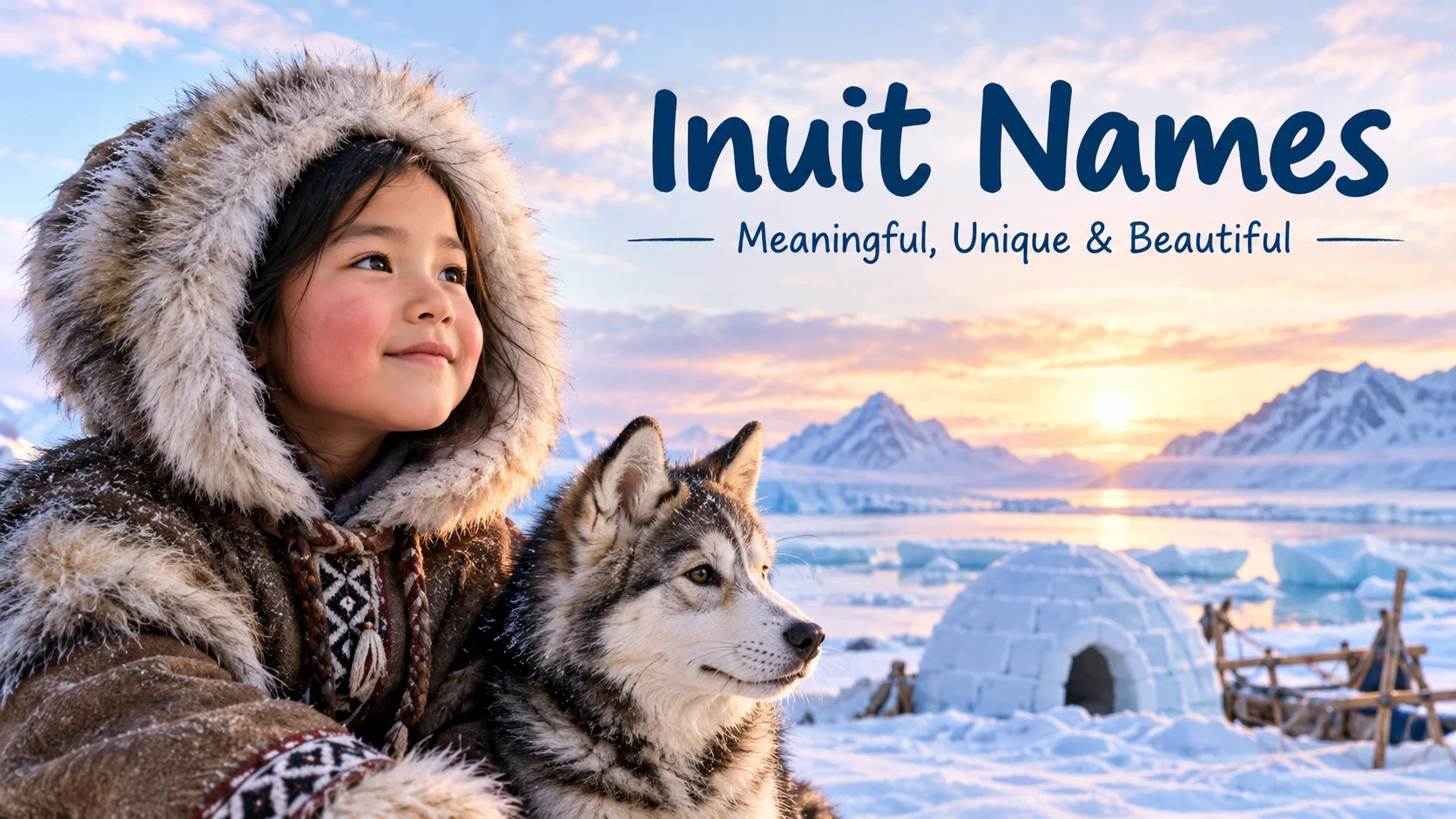
Inuit names come from the languages and naming traditions of Inuit communities across the Arctic. Some documented names have meanings connected to animals, nature, and the world around us, including Nanuq, meaning “polar bear,” and Siqiniq, meaning “sun.”
Some names stand out because of their sound. Others capture our attention because they carry a connection to nature, family, or cultural history. Inuit names offer all these qualities, with many documented examples reflecting the Arctic environment and the languages spoken by Inuit communities.
From Nanuq, meaning “polar bear,” to Siqiniq, meaning “sun,” these names can connect a person with the remarkable landscapes and living traditions of the Arctic. Other names refer to birds, fish, stones, and familiar features of the natural world.
However, Inuit naming traditions mean much more than choosing a name with a beautiful meaning. In many communities, namesakes help connect generations, preserve family relationships, and maintain cultural continuity. These practices vary among communities, so no single description represents every Inuit tradition.
In this guide, you will discover ten documented Inuit names, their recorded meanings, cultural backgrounds, styles, and possible affectionate nicknames. Whether you are researching a baby name or simply learning about Inuit culture, this collection offers a thoughtful place to begin.
Amaruq
Meaning: Wolf.
Origin: Inuktitut, an Inuit language.
Personality: Amaruq has a bold, outdoorsy sound. It may appeal to people who associate wolves with independence, alertness, and resilience. These are personal impressions inspired by the animal, not personality traits guaranteed by the name.
Style: Nature-inspired, distinctive, strong, adventurous.
Best For: Families researching Inuit names for boys, nature-inspired character names, or culturally meaningful naming ideas.
Popularity: Amaruq is a distinctive choice in many English-speaking naming contexts. However, reliable, current popularity rankings are not readily established here, so it is better described as uncommon in those contexts rather than assigned a specific rank.
Emotional Appeal: The name connects directly with the wolf, making it appealing to people who enjoy wildlife-inspired names and the natural world.
Pop Culture Reference: Amaruq is documented in Inuit name references as a name meaning wolf. Its appeal does not depend on a fictional character or celebrity association.
Similar Nicknames: Am, Amaru, Ruq, Roo, Ari. These are suggested affectionate forms, not established traditional Inuit nicknames.
Why It Still Works Today: Amaruq has a distinctive rhythm and a clear connection to the natural world. For families considering it, the most important step is to learn its pronunciation and cultural background rather than choosing it solely for its unusual sound.
Arnaq
Meaning: Woman.
Origin: Inuktitut and Greenlandic usage.
Personality: Arnaq may feel direct, confident, and distinctive to someone encountering it for the first time. Its short form gives it a crisp sound, while its linguistic meaning connects it with womanhood.
Style: Short, culturally rooted, distinctive, traditional.
Best For: Readers researching documented Inuit and Greenlandic names, cultural naming traditions, or names for fictional characters whose backgrounds are thoughtfully researched.
Popularity: Arnaq is documented in name references, but dependable contemporary rankings are not available here. Its familiarity varies by language and community.
Emotional Appeal: Arnaq is interesting because it offers a direct linguistic meaning rather than an elaborate symbolic interpretation. Its cultural context is an important part of its significance.
Pop Culture Reference: Historical records include the name Arnaq in accounts of Inuit encounters with European explorers. Such historical contexts should be approached carefully and not treated as the full story of Inuit identity.
Similar Nicknames: Ar, Arni, Naq, Ari, A. These are modern nickname suggestions rather than verified traditional forms.
Why It Still Works Today: Arnaq is concise and memorable. Anyone considering it should recognize that its meaning and use are culturally specific, and consult Inuit or Greenlandic sources to understand how it is used in context.
Iqaluk
Meaning: Fish.
Origin: Inuktitut. The name is documented as usable for more than one gender.
Personality: Iqaluk may appeal to someone who loves the ocean, rivers, wildlife, and the natural world. Its sound is unusual to many English speakers, giving it a distinctive quality without needing an invented meaning.
Style: Nature-inspired, distinctive, unisex in documented usage, culturally rooted.
Best For: People researching Inuit names, nature-based naming traditions, or fictional characters connected to Arctic settings.
Popularity: Iqaluk is a documented Inuit name, but there is insufficient reliable evidence here to label it a current baby-naming trend.
Emotional Appeal: Fish have important roles in many Arctic environments and communities. The name can prompt curiosity about the relationships between language, land, water, and everyday life.
Pop Culture Reference: No specific major pop culture association is necessary to explain this name; its documented linguistic meaning is the main point of interest.
Similar Nicknames: Iqa, Iqi, Luki, Lu, Iko. These are suggested modern short forms, not traditional nicknames verified by a cultural source.
Why It Still Works Today: Iqaluk offers a direct connection to nature and a documented linguistic background. If you are considering it for a real child, take time to learn the correct pronunciation and ask whether the name is appropriate for your intended cultural context.
Nanuq
Meaning: Polar bear.
Origin: Inuktitut. Nanuq is also found in the spelling variants Nanuk and Nanook.
Personality: Nanuq may suggest strength, calmness, and a close connection with wildlife. These associations come from the polar bear, rather than a fixed cultural belief that everyone with the name shares the same personality.
Style: Nature-inspired, strong, memorable, distinctive.
Best For: People researching Inuit names for boys, Arctic-inspired names, and culturally informed character naming.
Popularity: Nanuq is a recognizable name in Inuit-name references. Nanook is a familiar English-language spelling, partly because of the historical documentary Nanook of the North.
Emotional Appeal: The polar bear is strongly associated with Arctic wildlife. A name meaning polar bear can create a vivid image of the northern environment and its remarkable animals.
Pop Culture Reference: Nanook of the North is a 1922 documentary whose title uses the anglicized form Nanook. The film is also important to discussions about how outsiders represented Inuit people, so it should be understood in its historical context.
Similar Nicknames: Nan, Nanu, Nuq, Nani, Nook. These are creative suggestions rather than verified traditional forms.
Why It Still Works Today: Nanuq is compact, memorable, and connected to a well-documented meaning. Its cultural significance deserves the same attention as its appealing sound.
Nauja
Meaning: Seagull.
Origin: Greenlandic and Inuit usage, with the name documented in Inuktitut-related references.
Personality: Nauja has a light, gentle sound that may remind people of open skies, coastal landscapes, and birds in flight. It may appeal to families who enjoy short names inspired by nature.
Style: Soft, nature-inspired, distinctive, feminine in some naming references.
Best For: Readers exploring Inuit and Greenlandic names, nature-inspired names, or culturally researched fictional characters.
Popularity: Nauja is a documented name, but current popularity data are limited. Its recognition may differ significantly between Greenland, Inuit communities elsewhere, and international audiences.
Emotional Appeal: A seagull connects the name with coastlines, movement, and the natural world. Its simple sound makes it memorable without needing an elaborate explanation.
Pop Culture Reference: Nauja is not included here because of a particular celebrity or fictional character. Its documented linguistic meaning is sufficient to make it interesting.
Similar Nicknames: Nau, Nia, Naja, Nunu, Aya. These are suggested modern short forms, not verified traditional Inuit nicknames.
Why It Still Works Today: Nauja is brief, distinctive, and nature-inspired. If you are drawn to it, explore its Greenlandic and Inuit contexts carefully and confirm its pronunciation with a knowledgeable language source.
Pittiulaaq
Meaning: Black guillemot, a seabird.
Origin: Inuktitut. Pitsiulaaq and Pitseolak are documented related spellings or variants.
Personality: Pittiulaaq has a distinctive, expressive sound. The bird connection may appeal to people who appreciate wildlife, coastal environments, and names with a strong connection to the natural world.
Style: Traditional, nature-inspired, uncommon, culturally specific.
Best For: People researching Inuit names and meanings, bird-inspired naming traditions, or Inuit cultural history.
Popularity: Pittiulaaq is documented in Inuit name references, but reliable contemporary popularity rankings are not available. It is best described as a distinctive choice for readers outside communities where the name is familiar.
Emotional Appeal: The black guillemot is a real seabird associated with northern coastal environments. The name offers a specific connection to Arctic wildlife rather than a broad, invented meaning.
Pop Culture Reference: A related name, Pitseolak, is associated with Inuit artist Pitseolak Ashoona, known for her important contribution to Inuit art. This connection illustrates the presence of Inuit names in contemporary cultural history.
Similar Nicknames: Pitti, Pitsi, Laaq, Pita, Pitti-Lu. These are creative suggestions, not documented traditional short forms.
Why It Still Works Today: Pittiulaaq stands out because of its specific meaning and distinctive sound. Its value is not simply that it is unusual; it offers a chance to learn about Inuktitut and the wildlife of the Arctic.
Qinnuajuaq
Meaning: Rough-legged hawk.
Origin: Inuktitut. Kenojuak is recorded as an anglicized variant in some name references.
Personality: Qinnuajuaq may evoke alertness, independence, and an appreciation for wildlife. Those are associations inspired by the hawk, not traditional personality rules attached to the name.
Style: Distinctive, nature-inspired, traditional, memorable.
Best For: People interested in Inuit names, bird-related meanings, and culturally grounded naming research.
Popularity: Qinnuajuaq is documented in Inuit naming references, but current popularity statistics are limited. It may be unfamiliar to people outside the communities and language traditions in which it is used.
Emotional Appeal: The rough-legged hawk is a real bird found in northern regions. Its connection to the Arctic environment makes this name especially interesting for people who appreciate wildlife and natural history.
Pop Culture Reference: Kenojuak Ashevak was a celebrated Inuit artist whose name is a familiar anglicized form related to Qinnuajuaq in some name references. Her artistic legacy is an important part of Inuit cultural history.
Similar Nicknames: Qinnu, Qina, Juaq, Keno, Keni. These are suggested nickname ideas, not verified traditional forms.
Why It Still Works Today: Qinnuajuaq is memorable because of its length, sound, and specific meaning. It is particularly valuable as a starting point for learning about Inuktitut names, provided its cultural context is treated respectfully.
Siqiniq
Meaning: Sun.
Origin: Inuktitut.
Personality: Siqiniq may feel bright, hopeful, and uplifting to people who connect the sun with warmth and light. These impressions make it appealing to readers who enjoy nature-inspired names with a positive association.
Style: Nature-inspired, distinctive, meaningful, culturally rooted.
Best For: People researching Inuit names for girls, sun-inspired names, or names connected to the Arctic environment.
Popularity: Siqiniq is a documented Inuit name, but reliable current popularity rankings are not available here. It is better described as a culturally specific choice than as a confirmed trend.
Emotional Appeal: The sun has an obvious place in the natural world, and the name offers a direct connection to light. Its appeal comes from its recorded meaning rather than a claimed universal symbolism.
Pop Culture Reference: Siqiniq appears in Inuit naming and cultural references. In some Inuit traditions and stories, the sun is also associated with a female figure, though beliefs and narratives differ between communities.
Similar Nicknames: Siqi, Siki, Qini, Sia, Qiqi. These are creative short-form suggestions, not verified traditional nicknames.
Why It Still Works Today: Siqiniq offers a striking sound and a simple meaning. For someone looking for a name linked to nature, it is an interesting option to research further, especially with attention to accurate pronunciation and cultural background.
Taqqiq
Meaning: Moon.
Origin: Inuktitut. Tarqik is recorded as a variant in some name references.
Personality: Taqqiq may appeal to people who associate the moon with quietness, wonder, and the night sky. These are modern personal impressions rather than a fixed traditional personality meaning.
Style: Celestial, distinctive, nature-inspired, culturally rooted.
Best For: Readers exploring Inuit names, moon-inspired names, or names with a connection to astronomy and the natural world.
Popularity: Taqqiq is a documented name, but there is not enough dependable data here to describe it as a rising or widely popular baby name.
Emotional Appeal: The moon offers an immediate connection to the sky and the changing natural world. Taqqiq is particularly interesting because its recorded meaning is concise and clear.
Pop Culture Reference: Taqqiq appears in Inuit name references and is related in spelling to Tarqik. Some Inuit traditions connect the moon with a male figure, although stories vary across regions and communities.
Similar Nicknames: Taq, Taqi, Qi, Tiki, Qiqi. These are suggested casual forms, not established traditional nicknames.
Why It Still Works Today: Taqqiq offers a distinctive alternative for people researching celestial names. Its appeal is strongest when its meaning, language, and cultural context are understood together rather than treating it as merely an unusual spelling.
Tulugaq
Meaning: Raven.
Origin: Greenlandic and Inuit usage.
Personality: Tulugaq may feel bold, mysterious, and imaginative because of its association with the raven. People who enjoy bird-inspired names may find it memorable and expressive.
Style: Nature-inspired, distinctive, dramatic, culturally rooted.
Best For: Readers exploring Inuit and Greenlandic names, bird-inspired naming ideas, and thoughtfully researched fictional characters.
Popularity: Tulugaq is documented in Inuit name references, but current popularity data are limited. Its familiarity depends on language, location, and community.
Emotional Appeal: The raven is a striking bird found across northern regions. The name gives readers a direct connection to wildlife and the environments where Inuit communities have developed their languages and traditions.
Pop Culture Reference: Ravens appear in many different cultural stories, but those stories should not automatically be attributed to Inuit communities. Tulugaq is included here because of its recorded linguistic meaning, not because all raven symbolism is shared across cultures.
Similar Nicknames: Tulu, Tuga, Lu, Tuli, Gaq. These are suggested affectionate forms, not verified traditional Inuit nicknames.
Why It Still Works Today: Tulugaq combines a distinctive sound with a clear nature-based meaning. It may be an interesting choice for research or creative naming, provided the name is approached with cultural awareness.
Ujaraq
Meaning: Stone.
Origin: Inuktitut.
Personality: Ujaraq may suggest steadiness, simplicity, and a connection with the land. These associations come from the meaning of stone and should be understood as personal impressions rather than universal cultural beliefs.
Style: Earth-inspired, strong, distinctive, traditional.
Best For: People researching Inuit names, earth-inspired names, and names connected to the natural environment.
Popularity: Ujaraq is documented in Inuit name references, but current baby-name statistics are limited. It is best described as a distinctive option in many international naming contexts.
Emotional Appeal: Stone is a tangible part of the landscape. A name with this meaning can inspire thoughts about the natural world, place, and the materials people encounter in everyday life.
Pop Culture Reference: No specific pop culture reference is needed to explain Ujaraq. Its linguistic meaning and connection to the land are the central points of interest.
Similar Nicknames: Uja, Jara, Uji, Ara, Raq. These are modern nickname suggestions, not established traditional short forms.
Why It Still Works Today: Ujaraq offers a short, distinctive connection to nature. Anyone considering it should learn its pronunciation and cultural setting before deciding whether it is appropriate for their intended use.
Quick Comparison Table
| Name | Meaning | Style | Best For |
|---|---|---|---|
| Amaruq | Wolf | Strong, nature-inspired | Name research, character names |
| Arnaq | Woman | Short, distinctive | Inuit and Greenlandic name research |
| Iqaluk | Fish | Nature-inspired, unisex in references | Nature-name research |
| Nanuq | Polar bear | Strong, memorable | Arctic-inspired names |
| Nauja | Seagull | Soft, nature-inspired | Greenlandic and Inuit name research |
| Pittiulaaq | Black guillemot | Distinctive, traditional | Bird-inspired name research |
| Qinnuajuaq | Rough-legged hawk | Uncommon, nature-inspired | Cultural and linguistic research |
| Siqiniq | Sun | Bright, distinctive | Celestial-inspired names |
| Taqqiq | Moon | Celestial, memorable | Moon-inspired names |
| Ujaraq | Stone | Earth-inspired, strong | Nature-inspired name research |
How to Choose the Perfect Inuit Name
Choosing a name from another culture deserves thought, curiosity, and respect. Here are practical steps to help you research your options.
Start with the verified meaning. Look for a trustworthy linguistic reference instead of relying on a name list that offers no sources. Even a seemingly simple translation may need context.
Learn the language. Inuit communities speak several related but distinct languages and dialects, including varieties of Inuktitut and Inuvialuktun. A spelling or pronunciation may differ across regions.
Understand the cultural background. In many Inuit communities, namesakes connect people across generations. Naming can express relationships and continuity, not just personal preference.
Check pronunciation. Ask a knowledgeable speaker or consult a reputable language resource. Do not assume that a name is pronounced exactly as it looks in English.
Consider whether the name is appropriate to use. A name may have personal, family, or community significance. If you are not Inuit and are considering a name for a child, ask respectful questions and learn from Inuit voices rather than treating cultural names as decorative trends.
Choose nicknames carefully. Short forms such as Nanu, Siqi, or Tulu in this article are creative suggestions. They should not be mistaken for traditional Inuit nicknames unless a reliable source confirms that usage.
Think beyond popularity. A name does not need to be fashionable to be meaningful. Its linguistic accuracy, personal significance, and cultural context matter more than whether it is trending.
Most Popular Inuit Names Today
There is no reliable current popularity ranking established in this article for these ten names. The following are documented Inuit names that may interest readers, rather than a verified list of today’s most popular choices:
- Nanuq — polar bear
- Amaruq — wolf
- Siqiniq — sun
- Taqqiq — moon
- Iqaluk — fish
- Nauja — seagull
- Ujaraq — stone
- Tulugaq — raven
These names are documented in Inuit or Greenlandic name references, but documentation alone does not prove that a name is widely used for newborns today.
For current popularity information, consult local community sources and official birth-name statistics where available.
Vintage Inuit Names Worth Exploring
Traditional Inuit names can carry family memories, cultural knowledge, and connections between generations. Their significance may be much deeper than their literal meanings.
Some documented names worth exploring include:
- Nanuq
- Amaruq
- Arnaq
- Iqaluk
- Tulugaq
- Ujaraq
- Siqiniq
- Taqqiq
These names are not necessarily vintage in the sense of having fallen out of use and returned to fashion. They belong to living cultural and linguistic traditions, and some continue to be used today.
Inuit naming practices can also involve giving a child the name of a namesake, connecting that child with relatives and community members across generations. The details vary among Inuit communities.
Modern Trends in Inuit-Inspired Names
People searching for Inuit names may be drawn to nature-inspired words, short names, and meanings connected to the Arctic. However, popular naming trends outside Inuit communities should not be confused with naming practices within Inuit communities.
Nature-related names: Nanuq, Amaruq, and Ujaraq have recorded meanings connected to a polar bear, wolf, and stone.
Celestial names: Siqiniq and Taqqiq mean sun and moon, respectively.
Bird-related names: Nauja, Pittiulaaq, Qinnuajuaq, and Tulugaq have documented meanings connected to birds.
Short and distinctive names: Arnaq and Iqaluk may appeal to people looking for names that stand out in English-language settings.
These categories can help organize your research, but they do not establish which names are currently fashionable. If you are interested in Inuit culture, learning about community naming practices is more valuable than treating these names as a trend.
What Makes Inuit Naming Traditions Special?
Inuit naming traditions offer an important example of how names can connect individual identity with family and community history.
In many Inuit communities, a child may receive the name of a person who has died or another important namesake. The relationship can carry expectations of respect, affection, and continuity between generations. Naming practices differ between communities, and the significance of a name cannot always be understood from a dictionary definition alone.
Inuit languages also reflect close relationships with the northern environment. Names such as Nanuq, Iqaluk, and Siqiniq have recorded meanings connected to animals and the natural world.
It is important to recognize Inuit peoples as diverse, contemporary communities with living languages and traditions. Their names should not be reduced to symbols of snow, wildlife, or an imagined Arctic past.
FAQs
What are some beautiful Inuit names?
Some documented Inuit names include Nanuq, Amaruq, Siqiniq, Taqqiq, Nauja, and Ujaraq. Their recorded meanings include polar bear, wolf, sun, moon, seagull, and stone.
What do Inuit names mean?
Inuit names can have meanings connected to animals, nature, family, personal identity, and cultural history.
What are some Inuit names for boys?
Amaruq and Ujaraq are documented Inuit names traditionally categorized as masculine in some name references.
What are some Inuit names for girls?
Arnaq and Nauja are documented names associated with feminine usage in Inuit or Greenlandic contexts.
Are there gender-neutral Inuit names?
Yes. Some name references classify Iqaluk and Taqqiq as usable for more than one gender. It is best to check how a name is used in its particular linguistic and cultural context.
Conclusion
Inuit names offer a fascinating look at the relationship between language, identity, nature, and cultural heritage. Names such as Amaruq, Nanuq, Siqiniq, and Taqqiq have documented meanings connected to the natural world, while Inuit naming traditions can also preserve important relationships between generations.
As you explore these names, remember that each belongs to a living cultural and linguistic tradition. Look beyond the English translation, learn the correct pronunciation, and seek reliable Inuit sources to understand the name’s deeper significance.
Choose your favorite name to research further, share this guide with someone interested in meaningful names, and leave a comment telling us which name caught your attention. A thoughtful approach can make learning about names a rewarding way to discover another culture’s language and history.
Discover More Related Articles:
- Orange Flowers Names | Beautiful Varieties In 2026
- Cute Names to Call Your Crush | Sweet & Flirty Ideas In 2026







5 thoughts on “Inuit Names | Beautiful Ideas, Meanings & Origins In 2026”