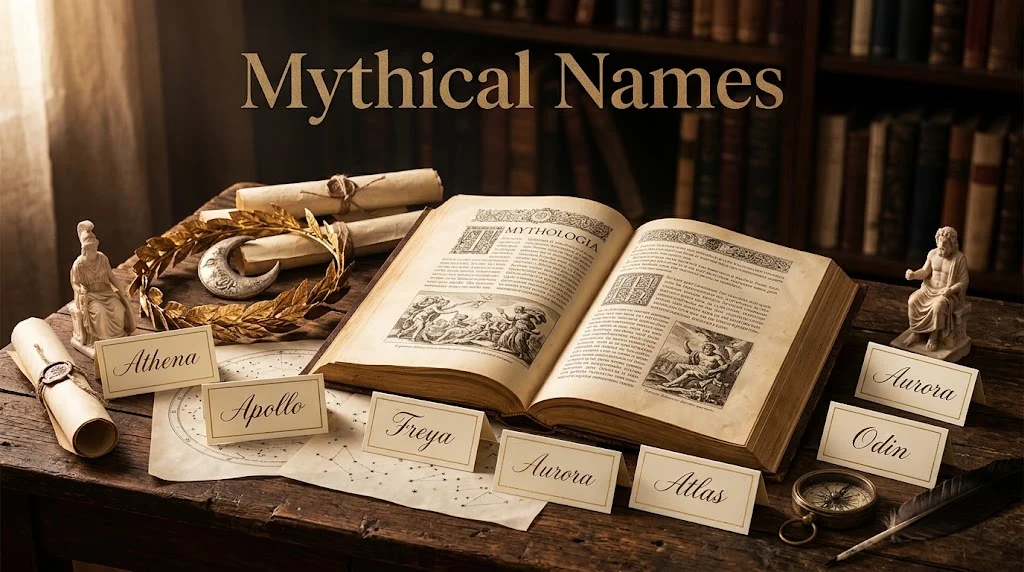
Mythical names are names inspired by ancient mythology, legends, gods, heroes, magical beings, and folklore. Popular examples include Athena, Apollo, Freya, Odin, Luna, Atlas, Aurora, and Persephone.
There is something special about a name that feels like it belongs to an ancient legend. Mythical names can carry an air of mystery, beauty, strength, and imagination that ordinary names sometimes cannot capture.
Across the world, mythology has given us unforgettable figures, from Greek gods and Roman deities to Norse heroes, Celtic legends, and magical creatures. Their names often have fascinating histories and meanings.
Some mythical names sound powerful and dramatic, while others feel soft, elegant, mysterious, or magical. That variety makes them useful for many purposes. You might be searching for a baby name with an unusual story, a fantasy character name, a gaming identity, or simply a name that feels extraordinary.
In this guide, we explore ten memorable mythical names and the qualities associated with them. We will look at their meanings, origins, personalities, styles, popularity, and why they continue to inspire people today.
⚡ Athena
Meaning: Associated with wisdom, courage, and strategic warfare
Origin: Greek
Personality: Athena feels intelligent, confident, disciplined, and powerful. The name suits a character or person imagined as thoughtful, capable, and courageous.
Style: Powerful, elegant, ancient, intellectual
Best For: Baby girl, fantasy character, mythology-inspired character, creative project
Popularity: Athena has become increasingly familiar as a modern given name while retaining its strong connection to Greek mythology.
Emotional Appeal: Athena combines feminine elegance with strength and intelligence. It feels sophisticated without losing its ancient character.
Pop Culture Reference: Athena appears throughout adaptations and retellings of Greek mythology and has inspired numerous fictional characters.
Similar Names: Artemis, Hera, Freya, Minerva, Selene
Why It Still Works Today: Wisdom and strength are qualities that never go out of style. Athena provides an ancient identity with a polished modern sound.
🌙 Luna
Meaning: Moon
Origin: Latin
Personality: Luna feels gentle, mysterious, dreamy, and imaginative. It has a peaceful quality that makes it especially appealing to people who love celestial themes.
Style: Magical, celestial, soft, modern
Best For: Baby girl, fantasy character, pet, username
Popularity: Luna has become widely recognized as a modern name, particularly among families drawn to nature and celestial-inspired naming.
Emotional Appeal: The moon has long been associated with mystery, beauty, nighttime, and imagination. That symbolism gives Luna an instantly magical atmosphere.
Pop Culture Reference: Luna is a familiar name in books, films, television, and fantasy storytelling.
Similar Names: Selene, Aurora, Nova, Celeste, Lyra
Why It Still Works Today: Short celestial names remain highly appealing because they are easy to pronounce while carrying a strong visual image.
🔥 Apollo
Meaning: Associated with prophecy, music, healing, poetry, and the arts
Origin: Greek
Personality: Apollo feels confident, creative, charismatic, and adventurous.
Style: Strong, artistic, ancient, heroic
Best For: Baby boy, fantasy character, mythology-inspired character
Popularity: Apollo has moved beyond mythology into modern naming, where it is recognized as a distinctive and powerful choice.
Emotional Appeal: Apollo represents a fascinating combination of artistic creativity and divine power.
Pop Culture Reference: Apollo appears in countless retellings of Greek mythology and is also referenced in modern literature and entertainment.
Similar Names: Atlas, Orion, Ares, Helios, Hermes
Why It Still Works Today: Apollo sounds bold and memorable while connecting a modern name with one of the best-known figures of classical mythology.
🌿 Freya
Meaning: Lady; traditionally associated with love, beauty, fertility, and magic
Origin: Old Norse
Personality: Freya feels independent, graceful, passionate, and confident.
Style: Feminine, powerful, Nordic, elegant
Best For: Baby girl, fantasy character, mythology-inspired character
Popularity: Freya has become increasingly familiar in modern naming, particularly in English-speaking countries.
Emotional Appeal: Freya combines softness with strength. Its mythology gives it a rich story, while its pronunciation keeps it accessible.
Pop Culture Reference: Freya appears in modern books, games, television, and other works inspired by Norse mythology.
Similar Names: Freyja, Frigg, Astrid, Sigrid, Saga
Why It Still Works Today: Freya fits the modern preference for short, elegant names while maintaining a strong connection to Norse tradition.
🏹 Artemis
Meaning: Ancient Greek goddess associated with the wilderness, hunting, and the moon
Origin: Greek
Personality: Artemis feels independent, brave, adventurous, and protective.
Style: Strong, ancient, feminine, wild
Best For: Baby girl, fantasy heroine, gaming character, literary character
Popularity: Artemis is less conventional than many mainstream names but remains recognizable because of its important place in Greek mythology.
Emotional Appeal: Artemis represents independence and a connection with the natural world.
Pop Culture Reference: Artemis frequently appears in modern fantasy, mythology-inspired stories, comics, games, and novels.
Similar Names: Athena, Diana, Selene, Phoebe, Andromeda
Why It Still Works Today: Parents and creators who want a name with strength and individuality may find Artemis especially appealing.
🪐 Atlas
Meaning: Bearer; associated with the Titan who was condemned to support the heavens
Origin: Greek
Personality: Atlas feels strong, resilient, adventurous, and dependable.
Style: Powerful, ancient, masculine, adventurous
Best For: Baby boy, fantasy character, hero name, gaming character
Popularity: Atlas has become a recognizable modern name while maintaining its mythological connection.
Emotional Appeal: The name suggests endurance and immense strength because of the famous Titan associated with carrying the heavens.
Pop Culture Reference: Atlas appears frequently in mythology-inspired literature, games, films, and fantasy worlds.
Similar Names: Orion, Apollo, Titan, Ajax, Hercules
Why It Still Works Today: Atlas is short, memorable, and powerful. It has an ancient story but fits comfortably into contemporary naming styles.
🌅 Aurora
Meaning: Dawn
Origin: Latin
Personality: Aurora feels graceful, hopeful, radiant, and romantic.
Style: Elegant, celestial, floral, magical
Best For: Baby girl, fantasy character, literary character
Popularity: Aurora has remained recognizable and has gained renewed interest among parents who love nature and celestial names.
Emotional Appeal: Dawn symbolizes a new beginning, making Aurora a name associated with hope and beauty.
Pop Culture Reference: Aurora is famously associated with Princess Aurora in Disney’s Sleeping Beauty, while the original mythological connection is to the Roman goddess of dawn.
Similar Names: Dawn, Celeste, Luna, Selene, Elara
Why It Still Works Today: Aurora feels elaborate yet familiar, making it an attractive choice for anyone seeking an elegant name with a magical quality.
🌊 Poseidon
Meaning: Traditionally interpreted through Greek linguistic elements; strongly associated with the sea
Origin: Greek
Personality: Poseidon feels commanding, powerful, dramatic, and adventurous.
Style: Mythological, bold, ancient, masculine
Best For: Fantasy character, mythology project, gaming character, fictional hero
Popularity: Poseidon is much more commonly used as a mythological or fictional name than as an everyday given name.
Emotional Appeal: Its strongest association is with the sea, storms, horses, and immense divine power.
Pop Culture Reference: Poseidon appears throughout modern adaptations of Greek mythology and fantasy entertainment.
Similar Names: Neptune, Triton, Oceanus, Zeus, Ares
Why It Still Works Today: For creative naming, Poseidon immediately establishes a powerful mythological identity.
🌹 Persephone
Meaning: The exact ancient meaning is uncertain; associated with the Greek queen of the underworld and seasonal mythology
Origin: Greek
Personality: Persephone feels mysterious, elegant, resilient, and transformative.
Style: Romantic, gothic, ancient, dramatic
Best For: Baby girl, fantasy character, literary character, mythology-inspired project
Popularity: Persephone has gained attention among parents and creators looking for elaborate names with strong mythological backgrounds.
Emotional Appeal: The story of Persephone connects the name with transformation, seasons, nature, and the cycle between the surface world and the underworld.
Pop Culture Reference: Persephone has inspired countless novels, poems, games, films, and modern reinterpretations of Greek mythology.
Similar Names: Penelope, Perseis, Phoebe, Demeter, Selene
Why It Still Works Today: Persephone offers an uncommon combination of beauty and mystery, making it memorable for both real-world and fictional naming.
🐺 Odin
Meaning: Traditionally associated with inspiration, frenzy, or poetic ecstasy
Origin: Old Norse
Personality: Odin feels wise, mysterious, commanding, and powerful.
Style: Nordic, ancient, masculine, intellectual
Best For: Fantasy character, gaming character, fictional hero, mythology-inspired project
Popularity: Odin remains strongly recognizable because of his central role in Norse mythology and modern popular culture.
Emotional Appeal: Odin is associated with wisdom, knowledge, poetry, magic, and leadership, giving the name a complex personality.
Pop Culture Reference: Odin has become especially recognizable through modern adaptations of Norse mythology in comics, films, television, and games.
Similar Names: Thor, Loki, Tyr, Balder, Vidar
Why It Still Works Today: Odin has a compact, memorable sound and an exceptionally rich mythological background.
📊 Quick Comparison Table
| Name | Meaning/Association | Style | Best For |
|---|---|---|---|
| Athena | Wisdom and courage | Elegant, powerful | Girl |
| Luna | Moon | Magical, celestial | Girl |
| Apollo | Arts, prophecy, healing | Heroic, artistic | Boy |
| Freya | Love, beauty, magic | Nordic, elegant | Girl |
| Artemis | Wilderness and hunting | Strong, adventurous | Girl |
| Atlas | Bearer of the heavens | Powerful, bold | Boy |
| Aurora | Dawn | Magical, graceful | Girl |
| Poseidon | Sea | Dramatic, ancient | Character |
| Persephone | Seasonal mythology | Mysterious, romantic | Girl |
| Odin | Wisdom and magic | Nordic, commanding | Boy |
🧭 How to Choose the Perfect Mythical Name
Choosing a mythical name becomes easier when you first decide what kind of feeling you want.
For strength, consider names such as Atlas, Athena, Odin, or Apollo.
For beauty and elegance, Aurora, Freya, Luna, and Persephone may be better choices.
Think about the original mythology, too. A name may sound beautiful, but its story could carry associations you do not expect. Learning the basic legend behind a name can help you make a more thoughtful choice.
Pronunciation is another practical consideration. If the name will be used every day, choose something that feels comfortable to say and spell.
Finally, trust your reaction. A name should create the feeling you want, whether that is courage, wonder, elegance, mystery, or adventure.
⭐ Most Popular Mythical Names Today
Some mythology-inspired names are especially recognizable in modern naming and popular culture:
- Athena
- Luna
- Freya
- Atlas
- Aurora
- Apollo
- Artemis
- Odin
- Persephone
- Diana
These names offer different styles, so there is something for fans of Greek, Roman, Norse, and celestial mythology.
🏛️ Ancient Mythical Names Making a Comeback
Many ancient names have found new audiences because modern parents increasingly appreciate names with history and strong stories.
Consider:
- Athena
- Freya
- Atlas
- Aurora
- Artemis
- Diana
- Apollo
- Persephone
- Cassandra
- Orion
These names feel connected to the past while still offering distinctive sounds for modern use.
✨ Modern Mythical Name Trends
Today’s interest in mythology goes beyond simply naming children after famous gods and goddesses.
Celestial names such as Luna, Aurora, Selene, and Orion appeal to people who love the night sky. Nature-inspired mythology is also popular, with names connected to forests, flowers, oceans, animals, and seasons.
Another trend is choosing names that feel powerful without being difficult to pronounce. Atlas and Freya are good examples of names with strong mythological roots and relatively simple modern forms.
Fantasy entertainment has also introduced mythology to new generations, helping ancient names remain recognizable and inspiring.
🧚 Mythical Names for Fantasy Characters
Mythical names can be especially effective for fictional characters because they immediately suggest personality and setting.
A wise queen might suit Athena. A mysterious heroine could be Persephone. A powerful warrior might fit Atlas or Odin.
For a magical character, Luna or Aurora can create a softer atmosphere.
When naming a fantasy character, consider the world first. A Greek-inspired world may call for Greek names, while a Nordic setting might feel more natural with Old Norse names.
🌍 Mythical Names From Different Traditions
Mythology exists across many cultures, and each tradition has its own naming patterns and stories.
Greek mythology offers names such as Athena, Apollo, Artemis, Persephone, and Poseidon.
Roman mythology includes names such as Diana, Venus, Mars, and Minerva.
Norse mythology provides names such as Odin, Freya, Thor, and Tyr.
Celtic traditions include legendary figures and deities such as Brigid and Rhiannon.
Exploring several traditions can help you find a name that feels distinctive while encouraging you to learn about the culture behind it.
❓ FAQs
What are mythical names?
Mythical names are names connected to mythology, folklore, ancient legends, gods, goddesses, heroes, magical beings, or traditional stories.
What is the most popular mythical name?
There is no single worldwide answer because popularity differs by country and naming tradition. However, names such as Luna, Athena, Freya, Atlas, Aurora, and Diana have strong modern recognition.
What is a powerful mythical name?
Atlas, Athena, Odin, Apollo, Artemis, and Poseidon can all create a powerful impression. Each has a different mythological background, so the best choice depends on whether you want strength, wisdom, adventure, leadership, or another quality.
What are good mythical names for girls?
Beautiful choices include Athena, Freya, Artemis, Aurora, Luna, and Persephone. These names range from strong and adventurous to soft, celestial, romantic, and mysterious.
What are good mythical names for boys?
Apollo, Atlas, Odin, Poseidon, Orion, and Ares are strong options. They come from different mythological traditions and offer styles ranging from artistic and adventurous to powerful and commanding.
Conclusion
Mythology gives us an extraordinary collection of names filled with stories, symbolism, and imagination. From the wisdom associated with Athena to the celestial beauty of Luna and Aurora, each choice can create a completely different impression.
The best mythical names are not simply unusual. They have a story behind them. When choosing one, explore its original tradition, understand its meaning or associations, and think about how well its sound fits your purpose.
Whether you need a baby name, fantasy character name, gaming identity, or creative inspiration, ancient legends offer endless possibilities.
Take your time exploring different cultures and traditions, and choose the name that feels right for your story. If you found a favorite, share this guide with someone else who loves mythology and imaginative names.
Discover More Related Articles: