Quick Answer:
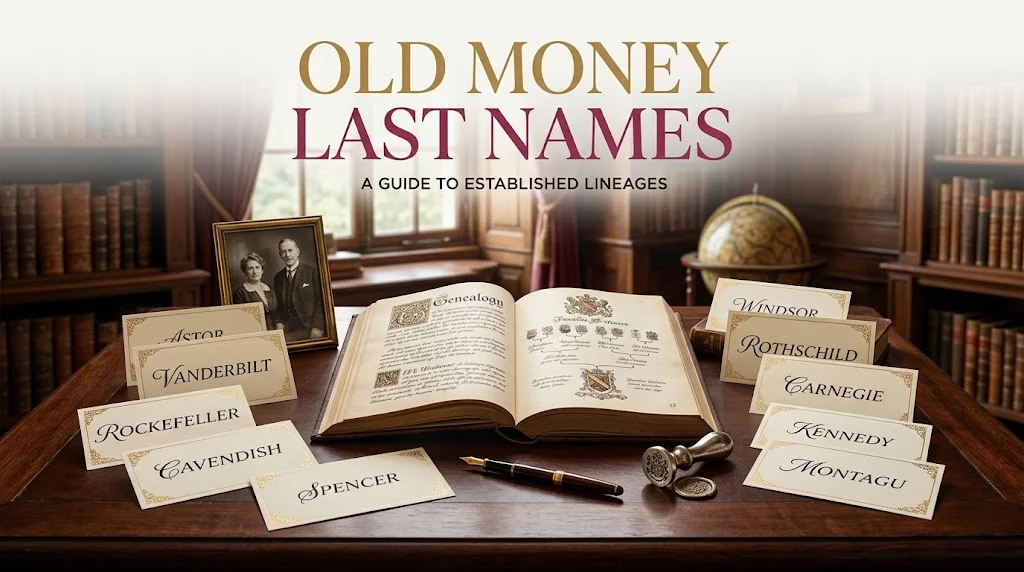
Old money last names are surnames traditionally associated with established families, heritage, wealth, and long-standing social influence. Names such as Astor, Vanderbilt, Rockefeller, Windsor, Kennedy, Rothschild, Carnegie, and Du Pont often evoke a classic, sophisticated, old-money aesthetic.
Some surnames seem to carry an entire story with them. They can bring to mind historic estates, grand houses, generations of family portraits, prestigious institutions, and carefully preserved traditions. That is part of the appeal of old money last names.
The phrase “old money” is generally used to describe wealth or social influence that has been established over multiple generations rather than recently acquired. However, not every famous wealthy surname represents inherited wealth today, and a prestigious-sounding surname does not automatically mean that every person with that surname is wealthy.
Still, certain family names have become strongly associated with historical wealth, aristocracy, business dynasties, or established social circles.
This guide explores some of the most recognizable surnames connected with those ideas. You will find American dynasty names, European aristocratic surnames, British noble family names, and historic surnames with fascinating associations.
Whether you need a sophisticated surname for a fictional character, want inspiration for a story, or simply enjoy genealogy and family history, these names offer plenty to explore.
🏛️ Astor
Meaning: The surname has Germanic roots and is associated with the Astor family of New York.
Origin: European; the Astor family became particularly prominent in the United States.
Personality: Astor sounds refined, established, confident, and quietly powerful.
Style: Old money, American, sophisticated, historic
Best For: Fictional characters, historical writing, family-name inspiration
Popularity: Astor is recognizable largely because of its association with the historic Astor family rather than because it is a common surname.
Emotional Appeal: The name immediately evokes grand hotels, historic New York society, philanthropy, and generations of family wealth.
Historical Reference: John Jacob Astor built a major fortune in the United States, and the Astor family became one of America’s best-known wealthy families.
Similar Last Names: Vanderbilt, Rockefeller, Morgan, Carnegie, Roosevelt
Why It Still Works Today: Astor is short, memorable, and strongly connected with American social history. It has a polished sound without being overly elaborate.
💎 Vanderbilt
Meaning: Vanderbilt is a Dutch-origin surname associated with the prominent Vanderbilt family.
Origin: Dutch
Personality: Vanderbilt feels ambitious, grand, confident, and highly established.
Style: American old money, industrial, grand, prestigious
Best For: Historical characters, fictional wealthy families, genealogy research
Popularity: The surname is uncommon but extremely recognizable because of the historical Vanderbilt family.
Emotional Appeal: Vanderbilt is associated with the Gilded Age, railroads, magnificent residences, philanthropy, and American industrial history.
Historical Reference: Cornelius Vanderbilt accumulated enormous wealth through transportation and railroad enterprises during the 19th century.
Similar Last Names: Astor, Rockefeller, Carnegie, Morgan, Harriman
Why It Still Works Today: Vanderbilt has one of the strongest associations with America’s Gilded Age. It sounds formal and distinctive, making it memorable in fiction and historical storytelling.
🏦 Rockefeller
Meaning: A surname of German origin, traditionally connected with the Rockefeller family.
Origin: German
Personality: Rockefeller sounds powerful, established, serious, and influential.
Style: American, wealthy, historic, powerful
Best For: Historical research, fictional dynasties, genealogy
Popularity: It is widely recognized as a surname because of the historic Rockefeller family.
Emotional Appeal: The name evokes business, philanthropy, institutions, architecture, and one of America’s most famous industrial fortunes.
Historical Reference: John D. Rockefeller became extraordinarily wealthy through Standard Oil and later became known for major philanthropic efforts.
Similar Last Names: Carnegie, Morgan, Vanderbilt, Astor, Ford
Why It Still Works Today: Rockefeller remains one of the most recognizable American surnames associated with historic wealth. Its strong sound also gives it considerable character appeal.
🎩 Cavendish
Meaning: A place-name surname associated with Cavendish in Suffolk, England.
Origin: English
Personality: Cavendish feels aristocratic, intellectual, traditional, and understated.
Style: British aristocratic, elegant, historic, refined
Best For: Fictional aristocratic characters, historical fiction, family-name inspiration
Popularity: Cavendish is relatively uncommon as an everyday surname but is well known in British aristocratic history.
Emotional Appeal: The surname has a distinctly English character and is associated with one of Britain’s historically prominent noble families.
Historical Reference: The Cavendish family has held significant British aristocratic titles, including the Dukedom of Devonshire.
Similar Last Names: Spencer, Montagu, Howard, Percy, Somerset
Why It Still Works Today: Cavendish sounds sophisticated without being flashy. It is especially suitable for stories involving country estates, heritage, or British high society.
👑 Spencer
Meaning: Traditionally an occupational surname related to a steward or dispenser of provisions.
Origin: English
Personality: Spencer feels polished, approachable, traditional, and distinguished.
Style: Classic, British, aristocratic, versatile
Best For: Baby names, fictional characters, genealogy, family-name inspiration
Popularity: Spencer is a familiar surname and has also become a popular given name.
Emotional Appeal: Its long history and connection with British aristocracy give Spencer an established quality while keeping it approachable.
Historical Reference: The Spencer family is a prominent British aristocratic family. Diana, Princess of Wales, was born Diana Spencer.
Similar Last Names: Cavendish, Windsor, Howard, Percy, Churchill
Why It Still Works Today: Spencer has an unusual ability to sound both traditional and contemporary. It works particularly well when a classic surname is desired without sounding overly formal.
🏰 Windsor
Meaning: A place-name surname associated with Windsor in England.
Origin: English
Personality: Windsor feels regal, dignified, historic, and authoritative.
Style: Royal, British, elegant, traditional
Best For: Fiction, historical writing, character surnames, genealogy research
Popularity: Windsor is strongly recognizable because of its royal association.
Emotional Appeal: The name immediately brings to mind British history, castles, royal traditions, and centuries of institutional heritage.
Historical Reference: Windsor has been the family name of the British royal family since 1917.
Similar Last Names: Spencer, Tudor, Lancaster, York, Cavendish
Why It Still Works Today: Windsor has an unmistakably historic sound. Its connection with British royalty makes it especially powerful for fictional or historical settings.
💰 Rothschild
Meaning: A German surname historically associated with the Rothschild family.
Origin: German
Personality: Rothschild sounds sophisticated, influential, formal, and historic.
Style: European, banking, historic, prestigious
Best For: Historical writing, genealogy research, fictional period characters
Popularity: The surname is globally recognizable because of the historic Rothschild banking family.
Emotional Appeal: The name has a strong connection with European financial history and international family networks.
Historical Reference: The Rothschild family developed a major European banking dynasty beginning in the late 18th century under Mayer Amschel Rothschild and his sons.
Similar Last Names: Baring, Morgan, Warburg, Carnegie, Astor
Why It Still Works Today: Rothschild has a distinctive sound and significant historical recognition. It is particularly useful in historical contexts where European finance and aristocratic society intersect.
📚 Carnegie
Meaning: A Scottish habitational surname associated with places named Carnegie in Angus, Scotland.
Origin: Scottish
Personality: Carnegie feels intellectual, philanthropic, historic, and ambitious.
Style: Scottish, American industrial, scholarly, classic
Best For: Historical characters, genealogy, academic-themed fiction
Popularity: Carnegie is strongly recognized because of Andrew Carnegie and the institutions associated with his philanthropy.
Emotional Appeal: The surname connects wealth with libraries, education, culture, and philanthropy.
Historical Reference: Andrew Carnegie became one of the leading industrialists of the American Gilded Age and later devoted much of his fortune to philanthropy.
Similar Last Names: Rockefeller, Vanderbilt, Morgan, Carnegie, Mellon
Why It Still Works Today: Carnegie is particularly interesting because its historical identity includes both enormous wealth and a major philanthropic legacy.
🦅 Kennedy
Meaning: A surname with Gaelic and Irish roots, with several historical interpretations.
Origin: Irish and Scottish Gaelic
Personality: Kennedy feels confident, political, charismatic, and established.
Style: Irish-American, classic, influential, historic
Best For: Fictional families, historical writing, genealogy
Popularity: Kennedy is a familiar surname internationally and is also used as a given name.
Emotional Appeal: The name is closely associated with one of America’s most recognizable political families.
Historical Reference: The Kennedy family became especially prominent in American political and public life during the 20th century.
Similar Last Names: Roosevelt, Morgan, Harriman, Rockefeller, Astor
Why It Still Works Today: Kennedy has a strong rhythm and recognizable history. Unlike some aristocratic surnames, it feels both distinguished and approachable.
🕯️ Montagu
Meaning: A habitational surname associated with places in France and England.
Origin: French and English
Personality: Montagu sounds cultured, aristocratic, literary, and refined.
Style: British aristocratic, vintage, elegant, rare
Best For: Historical fiction, aristocratic characters, genealogy research
Popularity: Montagu is uncommon in everyday use but has an established place in British history.
Emotional Appeal: The surname has a sophisticated European sound and a strong connection with historic British families.
Historical Reference: The Montagu family has held prominent positions in British aristocratic history, including the Dukes of Montagu.
Similar Last Names: Cavendish, Beaufort, Somerset, Howard, Percy
Why It Still Works Today: Montagu offers an understated form of elegance. It feels old-fashioned without sounding completely unfamiliar.
🌿 Beaufort
Meaning: A French-derived place-name surname generally associated with “beautiful fort.”
Origin: French
Personality: Beaufort feels elegant, romantic, powerful, and historic.
Style: Aristocratic, French, British, refined
Best For: Historical fiction, aristocratic characters, fictional families
Popularity: Beaufort is relatively uncommon as a modern surname but has substantial historical recognition.
Emotional Appeal: The combination of its French sound and association with historic noble families gives it a luxurious literary quality.
Historical Reference: The name Beaufort appears in several European historical contexts and is notably associated with the Beaufort family in English history.
Similar Last Names: Montagu, Somerset, Cavendish, Percy, Howard
Why It Still Works Today: Beaufort has a graceful sound and a strong historical atmosphere. It works especially well for fictional characters from established families.
📊 Quick Comparison Table
| Last Name | Origin | Style | Best Association |
|---|---|---|---|
| Astor | European/American | Sophisticated | Historic American wealth |
| Vanderbilt | Dutch/American | Grand | Gilded Age |
| Rockefeller | German/American | Powerful | Industry and philanthropy |
| Cavendish | English | Aristocratic | British nobility |
| Spencer | English | Classic | British aristocracy |
| Windsor | English | Regal | British royalty |
| Rothschild | German | European | Banking history |
| Carnegie | Scottish | Intellectual | Industry and philanthropy |
| Kennedy | Irish/Scottish Gaelic | Influential | American political history |
| Montagu | French/English | Refined | British aristocracy |
| Beaufort | French | Romantic | European nobility |
🏛️ More Old Money Last Names to Explore
If you want to expand beyond the main list, these surnames also have strong historical, aristocratic, political, or wealthy-family associations:
- Morgan
- Harriman
- Roosevelt
- Du Pont
- Mellon
- Getty
- Ford
- Hearst
- Whitney
- Vanderbilt
- Astor
- Rockefeller
- Carnegie
- Cabot
- Lowell
- Winthrop
- Cabot
- Saltonstall
- Peabody
- Baring
- Howard
- Percy
- Somerset
- Tudor
- Lancaster
- York
- Beaufort
- Fitzroy
- Plantagenet
- Grosvenor
- Montagu
- Cavendish
- Stanley
- Hamilton
- Fairfax
- Fairfax
- Churchill
- Cecil
- Berkeley
- Seymour
- Neville
- de Vere
- Fitzwilliam
- Sackville
- Wentworth
- Pembroke
- Bedford
- Devonshire
- Marlborough
- Norfolk
💎 What Makes a Last Name Sound “Old Money”?
There is no official list of “old money” surnames. The expression is more of a cultural description than a formal category.
A surname may develop an old-money association because of several factors:
Long family history: A name connected with several generations of a notable family may feel established.
Aristocratic titles: European surnames connected with historically noble families often carry an aristocratic impression.
Historic estates: Families associated with country houses, castles, or large estates may develop strong heritage associations.
Business dynasties: Some American surnames became famous through industrial, financial, railroad, or banking fortunes.
Institutional influence: Universities, museums, libraries, foundations, and philanthropic organizations can preserve a family’s name for generations.
Cultural recognition: Sometimes a surname becomes associated with wealth simply because it has appeared repeatedly in history, politics, literature, or popular culture.
It is important to remember that a surname itself does not prove someone’s wealth, social class, or family background.
🕰️ Old Money vs. New Money Last Names
The distinction between “old money” and “new money” is mostly cultural rather than official.
Old money traditionally refers to wealth that has been inherited and maintained across generations.
New money generally describes wealth that has been accumulated more recently, often through entrepreneurship, entertainment, technology, sports, finance, or other modern industries.
The terms can also be used stylistically. Someone may describe a surname, fashion style, interior design, or fictional character as “old money” because it feels traditional, understated, and heritage-focused.
In reality, family fortunes change over time, and the history of wealth is far more complicated than a simple old-versus-new division.
🇬🇧 Old Money British Last Names
British history provides many surnames associated with aristocratic families, historic estates, and noble titles.
Some names often encountered in British aristocratic history include:
- Cavendish
- Spencer
- Howard
- Percy
- Somerset
- Montagu
- Grosvenor
- Fitzwilliam
- Seymour
- Stanley
- Cecil
- Berkeley
- Neville
- Sackville
- Wentworth
- Churchill
- Beaufort
- Devonshire
- Marlborough
- Pembroke
These names should be understood in their historical context. A surname connected to an aristocratic family does not mean every modern person carrying that surname belongs to the aristocracy.
🇺🇸 Old Money American Last Names
American “old money” associations are often connected with families that accumulated fortunes during the 18th, 19th, and early 20th centuries.
Examples include:
- Astor
- Vanderbilt
- Rockefeller
- Carnegie
- Morgan
- Du Pont
- Mellon
- Whitney
- Cabot
- Lowell
- Winthrop
- Harriman
- Roosevelt
- Peabody
- Saltonstall
Many of these families were associated with commerce, banking, railroads, manufacturing, shipping, or other industries.
👑 Aristocratic Last Names for Fiction
If you are creating a fictional wealthy or aristocratic family, the surname should match the character’s setting.
For an English country-estate family, names such as Cavendish, Montagu, Somerset, or Beaufort can create a traditional atmosphere.
For a European-inspired fictional family, a surname with French, German, Italian, or other regional roots may create a stronger sense of place.
If your story is contemporary, consider creating an original surname rather than using a real famous family name. This gives you more creative freedom and avoids accidentally implying that your fictional characters belong to a real family.
✨ Elegant Last Names That Sound Wealthy
Some surnames sound sophisticated because of their rhythm, length, historical associations, or linguistic origins.
Elegant options include:
- Beaumont
- Beaufort
- Montagu
- Cavendish
- Sinclair
- Sterling
- Fairfax
- Kensington
- Windsor
- Harrington
- Whitmore
- Pembroke
- Ashford
- Montgomery
- Remington
- Prescott
- Hamilton
- Kensington
- Fitzwilliam
- Langley
These names can work especially well for fictional characters, fictional estates, historical settings, and creative writing.
🧬 How to Research an Old Family Name
If you are interested in the actual history behind a surname, do more than rely on lists found online.
Start with genealogy records and historical archives. Look for census records, birth and marriage records, wills, land documents, immigration records, military records, and newspaper archives.
You can also research the surname’s geographic distribution. A surname may have several unrelated origins, so it is important not to assume that everyone carrying the same surname descends from one family.
For British surnames, historical peerage and genealogical references can help establish connections with noble families. For American families, historical newspapers, census data, business archives, and institutional records can provide valuable context.
Most importantly, distinguish between a documented family connection and a general surname association.
💡 How to Choose an Old Money Last Name for a Character
If you are choosing a surname for a novel, screenplay, role-playing character, or fictional family, think about the character’s background first.
A Cavendish character may fit naturally into a British historical setting. A Vanderbilt character immediately evokes America’s Gilded Age, while a fictional surname inspired by that style can create a similar atmosphere without copying a real dynasty.
Consider the character’s country, era, profession, personality, and family history.
A quiet, traditional character might suit a surname such as Spencer or Montagu. A powerful industrial character might need something with a stronger sound.
The best fictional surname should support the story rather than simply announce that a character is wealthy.
🌟 Most Recognizable Old Money Surnames
If you want names that most readers are likely to recognize immediately, start with:
- Astor
- Vanderbilt
- Rockefeller
- Kennedy
- Carnegie
- Windsor
- Rothschild
- Spencer
- Cavendish
- Morgan
These names have strong historical or cultural associations, although their histories and types of prominence differ considerably.
🌿 Rare and Sophisticated Old Money Surnames
For something less familiar, consider:
- Montagu
- Beaufort
- Fitzwilliam
- Sackville
- Saltonstall
- Wentworth
- Grosvenor
- Pembroke
- Fairfax
- Ashford
- Langley
- Whitmore
- Somerset
- Cecil
- Seymour
These can work particularly well for fictional families because they have an established historical flavor without being everyday surnames.
❓ FAQs
What are the most famous old money last names?
Some of the most recognizable names associated with historic wealth or influential families include Astor, Vanderbilt, Rockefeller, Carnegie, Morgan, Rothschild, Kennedy, and Windsor.
What is an old money surname?
An old money surname is generally a family name culturally associated with wealth, influence, aristocracy, or social status maintained across multiple generations.
What are some old money British last names?
Examples associated with British aristocratic or historic families include Cavendish, Spencer, Howard, Percy, Montagu, Somerset, Grosvenor, Fitzwilliam, Seymour, and Beaufort.
What are some old money American last names?
Astor, Vanderbilt, Rockefeller, Carnegie, Morgan, Mellon, Du Pont, Whitney, Cabot, and Harriman are among the surnames frequently discussed in connection with historic American wealth and influence.
What is a classy last name?
A “classy” surname is subjective, but names such as Beaumont, Fairfax, Montagu, Cavendish, Spencer, Sinclair, Whitmore, and Pembroke can sound elegant because of their history, pronunciation, or literary associations.
Conclusion
The appeal of old money last names comes from more than the idea of wealth. These surnames can represent history, family traditions, social influence, entrepreneurship, aristocracy, philanthropy, and generations of changing circumstances.
Names such as Astor, Vanderbilt, Rockefeller, Cavendish, Spencer, Windsor, and Montagu each carry different historical associations. Some are linked with American industrial fortunes, while others connect to British aristocracy or European history.
If you are choosing a surname for a fictional character, focus on the atmosphere you want to create. If you are researching your own family history, look beyond the name itself and investigate actual records and documented relationships.
A memorable surname does not need to be famous. Sometimes a lesser-known historic name can create an even stronger sense of elegance, heritage, and individuality.
Discover More Related Articles:
- 78+ Common Jewish Last Names | Traditional, Modern & Unique In 2026
- 79+ Dominican Last Names | You’ll Love In 2026