Quick Answer:
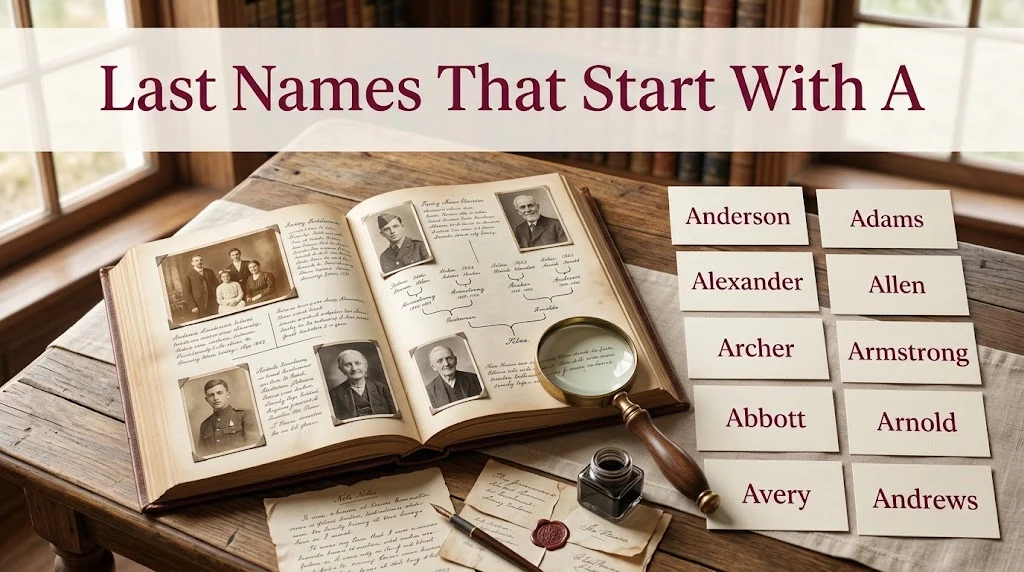
Last names that start with A include Anderson, Adams, Allen, Alexander, Armstrong, Abbott, Andrews, Arnold, Austin, Avery, Archer, Atkinson, Alvarez, and Ashton. These surnames range from classic and popular to rare, elegant, and culturally diverse options.
A surname can carry a surprising amount of history. It may point toward an ancestor’s occupation, describe a place, identify a family relationship, or preserve an old personal name. For anyone researching last names that start with A, there is a fascinating range of possibilities.
The letter A begins many familiar surnames, from classic family names such as Adams and Anderson to occupational names such as Archer and Abbott. Some have English or Scottish roots, while others developed from French, Germanic, Irish, or other European naming traditions.
Of course, surname meanings are not always exact. Historical spellings changed over time, and the same surname can sometimes have more than one origin. That is why it is helpful to treat a surname’s commonly cited meaning as a starting point rather than a complete family history.
Whether you need an A surname for genealogy, writing, character creation, naming inspiration, or curiosity, this guide explores some of the most recognizable and interesting choices.
🛡️ Anderson
Meaning: Son of Andrew
Origin: English, Scottish, and Scandinavian traditions
Personality: Anderson has a strong, established, and dependable sound. It often feels traditional without sounding old-fashioned.
Style: Classic, strong, traditional, international
Best For: Family history, fictional characters, baby-name combinations, genealogy research
Popularity: Anderson is a widely recognized surname in English-speaking countries and has remained familiar for generations.
Emotional Appeal: The surname has a sturdy rhythm and a clear family connection because its original formation refers to the son of someone named Andrew.
Pop Culture Reference: Anderson appears as a surname for many fictional and real-world figures across literature, entertainment, sports, and public life.
Similar Surnames: Andrews, Adamson, Harrison, Jackson, Johnson
Why It Still Works Today: Patronymic surnames remain common throughout the world. Anderson sounds both historical and contemporary, making it a versatile A surname.
📜 Adams
Meaning: Son of Adam
Origin: English and Welsh traditions
Personality: Adams feels familiar, respectable, and straightforward. It has a clean sound that works particularly well for realistic characters and family names.
Style: Classic, traditional, familiar
Best For: Genealogy, fictional families, historical characters, modern surnames
Popularity: Adams is a well-established surname in English-speaking countries.
Emotional Appeal: Its connection to the given name Adam gives the surname a sense of deep historical continuity.
Pop Culture Reference: Adams is widely recognized through historical figures, public figures, fictional families, and popular culture.
Similar Surnames: Adamson, Anderson, Allen, Andrews, Addison
Why It Still Works Today: Adams is short, easy to spell, and immediately recognizable. It has enough history to feel established while remaining perfectly natural in modern settings.
👑 Alexander
Meaning: Defender or protector of people
Origin: Greek, originally associated with the personal name Alexandros
Personality: Alexander has a distinguished, confident, and powerful feeling. As a surname, it can sound polished and historical.
Style: Regal, classic, strong, international
Best For: Historical characters, family names, literary characters, genealogy
Popularity: Alexander is used as both a given name and surname in many parts of the world.
Emotional Appeal: The traditional meaning connected with defending or protecting people gives Alexander a strong symbolic quality.
Pop Culture Reference: Alexander has been associated with numerous historical figures and fictional characters.
Similar Surnames: Alexandra, Anderson, Albert, Augustine, Armstrong
Why It Still Works Today: Alexander has survived for centuries because of its strong sound and international recognition. Its use as a surname gives it a particularly distinguished quality.
🌿 Allen
Meaning: Traditionally associated with the personal name Alan; exact meaning and origin can vary
Origin: English, Scottish, Irish, and Breton traditions
Personality: Allen feels approachable, familiar, and understated. It is a surname that works naturally in many settings.
Style: Classic, simple, familiar
Best For: Fictional characters, genealogy, family names, modern naming
Popularity: Allen is a long-established surname, particularly in English-speaking countries.
Emotional Appeal: Its short form makes it easy to pronounce and remember. It also has a gentle sound compared with some stronger A surnames.
Pop Culture Reference: Allen is widely represented among historical figures, entertainers, athletes, writers, and fictional characters.
Similar Surnames: Allan, Alan, Allenby, Anderson, Adams
Why It Still Works Today: Allen is uncomplicated and adaptable. It can sound equally natural in a historical story, contemporary novel, or real family setting.
🏹 Archer
Meaning: Archer; a person who shoots with a bow
Origin: English
Personality: Archer has an energetic, adventurous, and strong personality. It immediately suggests skill, movement, and independence.
Style: Occupational, bold, adventurous, modern
Best For: Fictional characters, fantasy settings, adventure stories, surname inspiration
Popularity: Archer is a recognizable English occupational surname and is also familiar as a modern given name.
Emotional Appeal: Unlike surnames with uncertain meanings, Archer creates an immediate visual association with the traditional occupation of archery.
Pop Culture Reference: Archer has been used extensively in fiction, including characters in television, literature, games, and fantasy stories.
Similar Surnames: Hunter, Fletcher, Carter, Chandler, Cooper
Why It Still Works Today: Occupational surnames have a timeless quality. Archer feels especially appealing to people who want a surname with a clear and memorable image.
⚔️ Armstrong
Meaning: Traditionally interpreted as a person with a strong arm
Origin: Scottish and English border regions
Personality: Armstrong sounds bold, resilient, and powerful. It has a surname style that immediately feels historic.
Style: Strong, Scottish, traditional, rugged
Best For: Historical characters, Scottish-inspired names, fictional families
Popularity: Armstrong is a well-established surname with strong historical associations in Britain.
Emotional Appeal: The literal imagery associated with strength makes Armstrong particularly memorable.
Pop Culture Reference: Armstrong is associated with various historical figures, athletes, artists, scientists, and fictional characters.
Similar Surnames: Strong, Fletcher, Hunter, Anderson, Graham
Why It Still Works Today: Armstrong has a powerful two-part structure and a recognizable history. It works well when a surname needs to communicate strength and character.
🏰 Abbott
Meaning: Abbot or person associated with an abbot
Origin: English, ultimately connected with the Latin abbas
Personality: Abbott feels traditional, scholarly, and dignified. It has a formal quality without being difficult to pronounce.
Style: Traditional, occupational, refined, historical
Best For: Historical characters, literary characters, genealogy, traditional surname inspiration
Popularity: Abbott is a long-established English surname and remains recognizable today.
Emotional Appeal: Its connection to an abbot gives it a strong historical and religious-era association without requiring the surname itself to imply a particular modern identity.
Pop Culture Reference: Abbott appears in the names of various public figures and fictional characters.
Similar Surnames: Abbot, Adams, Albert, Andrews, Arnold
Why It Still Works Today: Abbott has a polished sound and a clear historical foundation. It is especially useful for writers searching for a believable traditional surname.
🦅 Arnold
Meaning: Commonly interpreted from Germanic elements associated with an eagle and power
Origin: Germanic, later established in English and other European naming traditions
Personality: Arnold feels strong, established, and serious. It can also have a warm vintage quality.
Style: Vintage, Germanic, classic, strong
Best For: Historical characters, family names, genealogy, vintage naming
Popularity: Arnold has a long history as both a personal name and surname.
Emotional Appeal: Its traditional Germanic elements create an association with strength and authority.
Pop Culture Reference: Arnold has been used by many notable people and fictional characters.
Similar Surnames: Albert, Arthur, Anderson, Archer, Armstrong
Why It Still Works Today: Arnold has an unmistakably classic sound. For parents or writers who enjoy vintage names, it offers history without being overly complicated.
🌟 Avery
Meaning: Historically developed from personal names such as Alfred or Alberic; interpretations vary by linguistic history
Origin: English and French-influenced naming traditions
Personality: Avery feels modern, polished, gentle, and versatile.
Style: Modern, unisex, elegant, refined
Best For: Contemporary characters, family names, modern naming inspiration
Popularity: Avery is widely recognized today and is also commonly used as a given name.
Emotional Appeal: The surname has a soft but confident sound, making it appealing to people who want something contemporary.
Pop Culture Reference: Avery appears frequently as a surname in modern television, literature, and entertainment.
Similar Surnames: Avery, Auden, Archer, Austin, Ashley
Why It Still Works Today: Avery demonstrates how a traditional surname can transition successfully into modern naming culture. Its flexibility is one of its strongest qualities.
🌲 Andrews
Meaning: Son of Andrew
Origin: English and Scottish
Personality: Andrews sounds dependable, traditional, and friendly. It carries a familiar family-name structure.
Style: Classic, patronymic, traditional, approachable
Best For: Genealogy, fictional characters, family names, historical settings
Popularity: Andrews has been established as a surname for centuries and remains recognizable.
Emotional Appeal: Its meaning gives it a direct connection to family ancestry and the personal name Andrew.
Pop Culture Reference: Andrews is found among many public figures and fictional characters.
Similar Surnames: Anderson, Adamson, Adams, Harrison, Johnson
Why It Still Works Today: Andrews is easy to recognize and has a strong traditional foundation. It is especially useful for people looking for a surname that sounds realistic and established.
📊 Quick Comparison Table
| Surname | Meaning | Style | Best For |
|---|---|---|---|
| Anderson | Son of Andrew | Classic, strong | Family history |
| Adams | Son of Adam | Traditional | Genealogy |
| Alexander | Defender/protector | Regal, classic | Historical characters |
| Allen | Related to Alan | Simple, familiar | Modern characters |
| Archer | Archer | Bold, occupational | Adventure characters |
| Armstrong | Strong arm | Rugged, Scottish | Historical settings |
| Abbott | Abbot | Traditional, refined | Historical characters |
| Arnold | Eagle/power elements | Vintage, strong | Family names |
| Avery | Varies by historical origin | Modern, elegant | Contemporary characters |
| Andrews | Son of Andrew | Classic, traditional | Genealogy |
🔎 How to Choose the Right A Surname
Choosing a surname depends on what you want it to communicate.
For a classic and familiar feeling, Anderson, Adams, Allen, and Andrews are excellent choices. They sound natural and established.
If you want something strong and memorable, consider Armstrong or Archer. These names have a more distinctive personality.
For a historical or traditional atmosphere, Abbott and Arnold can work beautifully.
If you want something modern and flexible, Avery is an appealing option.
You should also consider pronunciation. A surname that is easy to say may work better for a character, story, or naming project where readers encounter it frequently.
For genealogy research, however, sound should not be the only consideration. Historical records, geographical location, spelling variations, and family documents are much more useful for determining whether a particular surname belongs to your ancestry.
⭐ Most Popular Last Names That Start With A
Some familiar A surnames include:
- Anderson
- Adams
- Allen
- Alexander
- Andrews
- Armstrong
- Arnold
- Abbott
- Avery
- Archer
- Austin
- Anderson
- Atkinson
- Adams
- Ashton
Popularity varies considerably by country and population, so a surname that is common in one region may be relatively uncommon somewhere else.
🕰️ Vintage Last Names That Start With A
If you love surnames with an old-fashioned or historical feeling, consider:
- Abbott
- Arnold
- Archer
- Andrews
- Armstrong
- Atkinson
- Avery
- Ashton
- Aldridge
- Ashford
These names can work particularly well for historical fiction, period characters, family-history projects, and people who enjoy traditional surname styles.
🌍 English Last Names That Start With A
Many recognizable A surnames have English origins or long histories of use in England.
Examples include:
- Adams
- Anderson
- Archer
- Abbott
- Allen
- Andrews
- Arnold
- Armstrong
- Avery
- Atkinson
- Ashton
- Austin
- Ashford
- Aldridge
- Archer
English surnames can come from occupations, locations, personal names, nicknames, and other sources. The history of a specific surname should therefore be researched individually rather than assumed from spelling alone.
☘️ Irish and Scottish Last Names Starting With A
Some A surnames are strongly associated with Irish or Scottish naming traditions, while others have multiple origins.
Examples worth researching include:
- Anderson
- Armstrong
- Allen
- Andrews
- Alexander
- Arthur
- Aiken
- Allan
- Anderson
- Atkinson
Surname history can cross modern national boundaries. Migration, regional spelling differences, and historical relationships between Britain and Ireland mean that a surname’s presence in a country does not always prove that it originated there.
🧬 What Can an A Surname Tell You About Family History?
A surname can sometimes provide clues about ancestry, but it rarely tells the complete story by itself.
For example, a surname such as Anderson or Andrews can indicate a patronymic naming pattern, meaning it developed from a father’s or ancestor’s given name.
Archer is an occupational surname, while names such as Armstrong can reflect a descriptive nickname or physical characteristic.
Historical surnames may also have spelling variants. Records created centuries ago could spell the same family name in different ways.
If you are researching your own ancestry, combine surname information with birth records, marriage records, census information, immigration documents, and other reliable historical sources.
💭 Are A Surnames Good for Fictional Characters?
Absolutely. A surnames offer a wide range of personalities for fictional characters.
Archer can suit an adventurous character. Armstrong can work for someone strong or commanding. Dignified surnames such as Abbott can fit historical or scholarly characters.
For a realistic contemporary character, Anderson, Adams, Allen, or Avery can sound natural.
When creating fictional names, consider the character’s age, setting, cultural background, occupation, and the time period of the story. A surname should feel believable within that world.
🧠 What Is the Meaning of a Last Name?
A last name is a family name passed through generations or otherwise associated with a family or lineage. Surnames developed in many ways, including from occupations, locations, personal names, nicknames, and relationships.
The meaning of a surname can therefore tell you something about how the name originally developed, but it does not necessarily describe the personality or identity of everyone who carries it today.
❓ FAQs
What are some common last names that start with A?
Commonly recognized A surnames include Anderson, Adams, Allen, Alexander, Andrews, Armstrong, Arnold, and Avery.
What is a strong last name that starts with A?
Armstrong and Archer have particularly strong sounds. Armstrong has historical associations with strength, while Archer is an occupational surname connected with archery.
What is a unique last name beginning with A?
Archer, Abbott, Aldridge, Ashford, and Avery can feel distinctive depending on the region. A surname is genuinely rare should be checked against records from the specific country or population being studied.
What is the meaning of Anderson?
Anderson is traditionally a patronymic surname meaning “son of Andrew.” It developed independently in several naming traditions and is especially established in English-, Scottish-, and Scandinavian-influenced regions.
What does the last name Adams mean?
Adams is traditionally a patronymic surname meaning “son of Adam.” It developed from the personal name Adam and became established as a family name in English-speaking regions.
Conclusion
There is no shortage of fascinating last names that start with A. From the familiar Anderson and Adams to the bold Archer and Armstrong, these surnames represent a wide range of histories, meanings, cultures, and naming traditions.
Some A surnames developed from personal names, while others came from occupations, nicknames, or descriptive terms. Names such as Avery also show how surnames can change roles and become popular as first names.
If you are choosing a surname for a fictional character, researching your family history, or simply exploring interesting family names, start with the sound and style you like most. Then look deeper into the historical evidence behind the name.
Remember that surname meanings can vary, so treat etymology as a fascinating clue rather than a complete family story. Choose your favorite A surname, explore its history, and share this guide with anyone who loves discovering the stories hidden inside family names.
Discover More Related Articles:
- 78+ Common Jewish Last Names | Traditional, Modern & Unique In 2026
- 79+ Dominican Last Names | You’ll Love In 2026