Quick Answer:
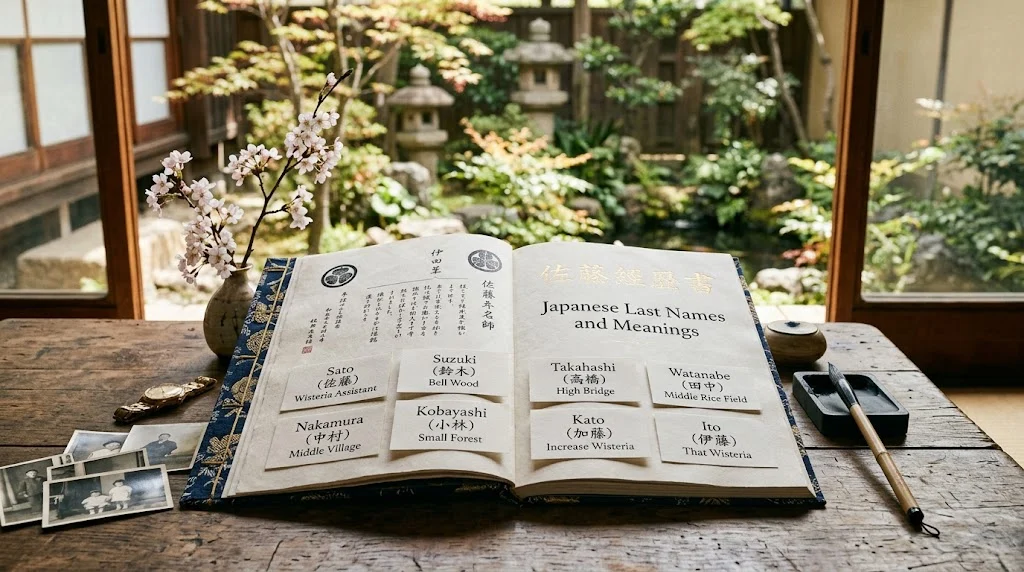
Japanese last names often come from nature, geography, occupations, or ancestral places. Many surnames combine kanji characters with meaningful elements such as yama (mountain), kawa (river), mori (forest), and shima (island).
Japanese surnames are fascinating because many connect people with landscapes, villages, geographical features, plants, and places associated with their ancestors. Looking at Japanese last names and meanings can therefore reveal more than the literal translation of a surname it can offer a small window into Japanese history and naming traditions.
Many Japanese family names are written using kanji, and a single pronunciation can sometimes be represented by different kanji with different meanings. This is one reason surname research should consider the actual characters rather than relying only on pronunciation.
Names such as Sato, Suzuki, Takahashi, Tanaka, and Yamamoto are widely recognized, while other surnames are much less common and may have fascinating regional histories.
In this guide, we explore ten representative Japanese surnames, followed by additional surname ideas, naming patterns, FAQs, and practical tips for understanding Japanese family names.
🌸 Sato | 佐藤
Meaning
Often interpreted from the kanji as “assistant” and “wisteria.”
Origin
Sato is commonly written 佐藤. The characters are sa (佐), meaning assistance or helper, and to (藤), associated with wisteria.
Personality
As a surname, Sato does not determine personality. However, its wisteria association can give it a graceful and traditional impression.
Style
Classic, traditional, familiar, and elegant.
Best For
- Japanese family characters
- Historical settings
- Genealogy research
- Fictional surnames
- Cultural naming projects
Popularity
Sato is one of the most widely recognized Japanese surnames.
Emotional Appeal
The combination of the characters creates a surname that feels distinctly Japanese while remaining concise and memorable.
Pop Culture Reference
Sato appears frequently as a surname in Japanese literature, television, manga, anime, and other media.
Similar Surnames
- Kato
- Ito
- Saito
- Kondo
- Fujita
Why It Still Works Today
Its familiarity, simple pronunciation, and traditional kanji make Sato a strong example of a classic Japanese family name.
🌿 Suzuki | 鈴木
Meaning
The kanji can be read as “bell tree.”
Origin
Suzuki is commonly written 鈴木, combining 鈴 (suzu, bell) and 木 (ki, tree).
Personality
A surname does not establish personality, but Suzuki has a gentle natural image because its written form combines an object associated with sound and a tree.
Style
Traditional, natural, familiar, and simple.
Best For
- Family names
- Fictional characters
- Japanese heritage research
- Traditional naming themes
Popularity
Suzuki is among the most common Japanese surnames.
Emotional Appeal
The literal imagery of a “bell tree” is memorable and visually appealing to people interested in kanji meanings.
Pop Culture Reference
Suzuki is widely encountered in Japanese popular culture and is also internationally recognizable.
Similar Surnames
- Takagi
- Matsuki
- Kimura
- Fujiki
- Morita
Why It Still Works Today
Suzuki is short, recognizable, and deeply established as a Japanese family name.
🌉 Takahashi | 高橋
Meaning
“High bridge.”
Origin
Takahashi combines 高 (taka, high or tall) and 橋 (hashi, bridge).
Personality
The literal image of a high bridge can suggest connection, elevation, and movement, although these are symbolic associations rather than personality traits.
Style
Strong, classic, geographical, and traditional.
Best For
- Fictional families
- Genealogy
- Japanese-inspired stories
- Traditional surname collections
Popularity
Takahashi is one of the best-known Japanese surnames.
Emotional Appeal
Its meaning is easy to understand and creates a vivid mental picture. Bridges also have a natural association with connection and crossing from one place to another.
Pop Culture Reference
Takahashi is frequently encountered among Japanese public figures and fictional characters.
Similar Surnames
- Hashimoto
- Takagi
- Takeda
- Takahata
- Hashizume
Why It Still Works Today
Takahashi demonstrates how Japanese surnames can describe recognizable physical features or landmarks.
🌾 Tanaka | 田中
Meaning
“Middle of the rice field.”
Origin
Tanaka combines 田 (ta, rice field) and 中 (naka, middle or center).
Personality
Its agricultural imagery can evoke rural landscapes and traditional farming communities, but it should not be interpreted as a fixed personality description.
Style
Traditional, rural, simple, and familiar.
Best For
- Family histories
- Historical fiction
- Japanese genealogy
- Character naming
Popularity
Tanaka is a very familiar Japanese surname.
Emotional Appeal
The name provides a direct glimpse into the importance of rice cultivation and agricultural landscapes in Japanese history.
Pop Culture Reference
Tanaka is commonly found in Japanese fiction, sports, entertainment, and everyday life.
Similar Surnames
- Nakata
- Taniguchi
- Tamura
- Nakagawa
- Tanigawa
Why It Still Works Today
Tanaka is an excellent example of a surname derived from a geographical or agricultural setting.
🌊 Watanabe | 渡辺
Meaning
Often interpreted as “crossing” or “ferry” + “area/side.”
Origin
Watanabe is commonly written 渡辺 or 渡邊. 渡 relates to crossing, while 辺 means area, vicinity, or side.
Personality
The written meaning creates imagery connected with crossing water or moving between places.
Style
Traditional, geographical, historical, and distinctive.
Best For
- Historical characters
- Family-name research
- Japanese genealogy
- Cultural writing
Popularity
Watanabe is a well-established Japanese surname.
Emotional Appeal
Its connection to crossing places gives it a sense of movement and geography.
Pop Culture Reference
Watanabe is a recognizable surname in Japanese entertainment and fiction.
Similar Surnames
- Watari
- Hashimoto
- Kawabe
- Nakagawa
- Watanabe-style regional surnames
Why It Still Works Today
Watanabe demonstrates how surnames can preserve clues about the physical environment in which families lived.
⛰️ Yamamoto | 山本
Meaning
“Base of the mountain.”
Origin
Yamamoto combines 山 (yama, mountain) and 本 (moto, origin, base, or source).
Personality
The mountain imagery can suggest strength and stability symbolically, although a surname itself does not determine someone’s character.
Style
Strong, natural, traditional, and geographical.
Best For
- Nature-inspired naming
- Historical fiction
- Genealogy
- Japanese character names
Popularity
Yamamoto is a common and widely recognized Japanese family name.
Emotional Appeal
Mountains have an important visual and cultural presence in Japan, making this surname especially evocative.
Pop Culture Reference
Yamamoto appears frequently in Japanese media, literature, anime, manga, and public life.
Similar Surnames
- Yamaguchi
- Yamada
- Yamashita
- Yamaguchi
- Mori
Why It Still Works Today
Its simple kanji and powerful landscape imagery give Yamamoto lasting appeal.
🌳 Nakamura | 中村
Meaning
“Middle village” or “central village.”
Origin
Nakamura combines 中 (naka, middle or center) and 村 (mura, village).
Personality
The meaning evokes community and settlement rather than a specific personal quality.
Style
Classic, community-oriented, traditional, and familiar.
Best For
- Historical families
- Fictional characters
- Genealogy
- Traditional surname lists
Popularity
Nakamura is a widely recognized Japanese surname.
Emotional Appeal
The idea of a central village creates an image of community, neighbors, and a shared settlement.
Pop Culture Reference
Nakamura is frequently used in Japanese popular culture and is recognizable internationally.
Similar Surnames
- Murakami
- Nakamoto
- Nakagawa
- Nakajima
- Murata
Why It Still Works Today
Nakamura clearly demonstrates how settlement names became family names.
🏡 Kobayashi | 小林
Meaning
“Small forest.”
Origin
Kobayashi combines 小 (ko, small) and 林 (hayashi, grove or forest).
Personality
The literal meaning has a peaceful, natural quality. It may symbolically evoke a quiet woodland setting.
Style
Natural, gentle, traditional, and familiar.
Best For
- Nature-inspired characters
- Family names
- Japanese genealogy
- Literary settings
Popularity
Kobayashi is a common Japanese surname.
Emotional Appeal
The image of a small forest feels calm and picturesque, making the surname appealing to people interested in nature-related meanings.
Pop Culture Reference
Kobayashi appears frequently in Japanese media and fictional naming.
Similar Surnames
- Hayashi
- Mori
- Morita
- Matsubayashi
- Fujibayashi
Why It Still Works Today
Kobayashi combines simple kanji with a vivid natural image.
🍃 Kato | 加藤
Meaning
The kanji can be understood as “add/increase” + “wisteria.”
Origin
Kato is commonly written 加藤. 加 means add or increase, while 藤 refers to wisteria.
Personality
The surname has an elegant visual association through its wisteria character.
Style
Classic, concise, traditional, and elegant.
Best For
- Fictional characters
- Genealogy
- Japanese surname collections
- Historical settings
Popularity
Kato is a familiar Japanese surname.
Emotional Appeal
The wisteria connection gives the surname a graceful natural element.
Pop Culture Reference
Kato is a recognizable surname in Japanese media and international popular culture.
Similar Surnames
- Sato
- Ito
- Saito
- Fujita
- Fujimoto
Why It Still Works Today
Kato is concise and traditional, making it easy to remember while retaining meaningful kanji.
🌲 Ito | 伊藤
Meaning
Ito is commonly written 伊藤, with 藤 again referring to wisteria. The first character, 伊, is historically used in names and does not always have a simple modern standalone translation in this surname.
Origin
Ito is a Japanese surname with several possible historical lineages and kanji representations.
Personality
The surname has a polished, concise quality, while the wisteria character adds a traditional botanical association.
Style
Short, classic, elegant, and traditional.
Best For
- Baby-name research
- Fictional characters
- Genealogy
- Japanese surname collections
Popularity
Ito is a widely recognized Japanese family name.
Emotional Appeal
Its short pronunciation makes it easy to remember, while its kanji connect it with Japanese naming traditions.
Pop Culture Reference
Ito is commonly found among Japanese fictional characters and public figures.
Similar Surnames
- Sato
- Kato
- Saito
- Kito
- Inoue
Why It Still Works Today
Ito is simple, established, and versatile, making it a strong traditional surname choice.
📋 Quick Comparison Table
| Last Name | Kanji | General Meaning | Style |
|---|---|---|---|
| Sato | 佐藤 | Assistant + wisteria | Classic |
| Suzuki | 鈴木 | Bell tree | Natural |
| Takahashi | 高橋 | High bridge | Strong |
| Tanaka | 田中 | Middle of rice field | Rural |
| Watanabe | 渡辺 | Crossing + area/side | Geographic |
| Yamamoto | 山本 | Base of mountain | Natural |
| Nakamura | 中村 | Central village | Traditional |
| Kobayashi | 小林 | Small forest | Nature-inspired |
| Kato | 加藤 | Add/increase + wisteria | Elegant |
| Ito | 伊藤 | Ito + wisteria | Classic |
🌏 More Japanese Last Names and Their Meanings
Here are additional Japanese surnames that may interest readers researching family names:
- Yamada (山田) | mountain + rice field
- Yamaguchi (山口) | mountain entrance
- Matsumoto (松本) | base of the pine tree
- Inoue (井上) | above the well
- Kimura (木村) | tree village
- Hayashi (林) | grove or woods
- Shimizu (清水) | pure or clear water
- Yamashita (山下) | below the mountain
- Mori (森) | forest
- Abe (阿部) | historical surname with several theories regarding its origin
- Ikeda (池田) | pond + rice field
- Hashimoto (橋本) | base of the bridge
- Ishikawa (石川) | stone + river
- Maeda (前田) | front rice field
- Fujita (藤田) | wisteria + rice field
- Ogawa (小川) | small river
- Goto (後藤) | after/behind + wisteria
- Okada (岡田) | hill + rice field
- Hasegawa (長谷川) | long valley + river
- Kondo (近藤) | near + wisteria
Exact interpretations can vary according to historical lineage and kanji, so a literal character-by-character translation should not always be treated as the complete historical origin of a surname.
🌿 Japanese Last Names Inspired by Nature
Japanese surnames frequently contain kanji connected with landscapes and the natural world. Examples include:
- Mori (森) | forest
- Hayashi (林) |grove or woods
- Yamamoto (山本) | mountain base
- Yamada (山田) | mountain rice field
- Ishikawa (石川) | stone river
- Ogawa (小川) | small river
- Shimizu (清水) | clear water
- Matsumoto (松本) | pine tree base
- Kobayashi (小林) | small forest
- Kawasaki (川崎) | river + promontory/peninsula
These names show how strongly geography and the natural environment can appear in Japanese family-name traditions.
🏯 Traditional Japanese Last Names
If you want surnames with a strongly traditional feel, consider:
- Sato
- Suzuki
- Takahashi
- Tanaka
- Watanabe
- Yamamoto
- Nakamura
- Kobayashi
- Kato
- Ito
- Yamada
- Matsumoto
- Inoue
- Shimizu
- Mori
These names are familiar and have long-standing usage in Japan.
💎 Unique Japanese Last Names
“Unique” can mean rare, unusual outside Japan, or simply distinctive in sound. Some less familiar surnames include:
- Amemiya
- Aoyama
- Kurosawa
- Tachibana
- Kaneko
- Mizuno
- Sakurai
- Moriyama
- Fujisawa
- Nishikawa
- Akizuki
- Tsukino
- Hoshino
- Kawamura
- Asakura
Before using an uncommon surname for a real person, character, or genealogical purpose, check the exact kanji and regional history because pronunciation alone may not reveal its full meaning.
🧭 How to Understand Japanese Surname Meanings
Understanding Japanese family names is easier when you look at the kanji.
Look at the Kanji
The same romanized pronunciation can sometimes correspond to different kanji. Those characters may carry different meanings.
Separate the Characters
For example, 山本 can be broken down into 山, meaning mountain, and 本, meaning base or origin.
Consider Historical Context
A modern dictionary meaning does not necessarily explain why a particular family adopted a surname. Historical records, regional traditions, and family genealogy can provide additional context.
Pay Attention to Geography
Many Japanese surnames refer to mountains, rivers, rice fields, forests, villages, bridges, and other landscape features.
Do Not Assume the Meaning Predicts Personality
A surname’s meaning is linguistic or historical. It does not determine the personality, abilities, or character of someone who carries it.
FAQs
What Are Japanese Last Names Based On?
Many Japanese surnames are associated with geographical locations, landscapes, settlements, plants, occupations, or other features connected with ancestral communities.
What Is the Most Common Japanese Last Name?
Sato is widely recognized as one of the most common Japanese surnames. However, rankings can vary depending on the source, year, methodology, and treatment of different kanji spellings.
What Does Yamamoto Mean in Japanese?
Yamamoto is commonly written 山本. 山 means “mountain,” while 本 can mean “base,” “origin,” or “source.” The surname is therefore commonly interpreted as “base of the mountain.”
What Does Tanaka Mean?
Tanaka is commonly written 田中. 田 means “rice field,” while 中 means “middle” or “center.” It is commonly interpreted as “middle of the rice field.”
What Does Suzuki Mean?
Suzuki is commonly written 鈴木. 鈴 means “bell,” while 木 means “tree,” giving the literal character-based interpretation “bell tree.”
Conclusion
Japanese surnames can tell fascinating stories through just a few kanji. Names connected with mountains, rivers, forests, rice fields, villages, bridges, and plants show how closely family naming traditions can relate to geography and everyday life.
When exploring Japanese last names and meanings, remember that a literal translation is only part of the story. The exact kanji, regional history, and individual family lineage can all affect a surname’s interpretation.
You are researching your family history, creating a fictional Japanese character, exploring Japanese culture, or simply looking for a meaningful surname, names such as Sato, Suzuki, Takahashi, Tanaka, Yamamoto, and Kobayashi offer fascinating starting points.
Save your favorite surnames, explore their kanji carefully, and share this guide with anyone interested in Japanese names and family history.
Discover More Related Articles:
- 78+ Common Jewish Last Names | Traditional, Modern & Unique In 2026
- 79+ Dominican Last Names | You’ll Love In 2026