Quick Answer:
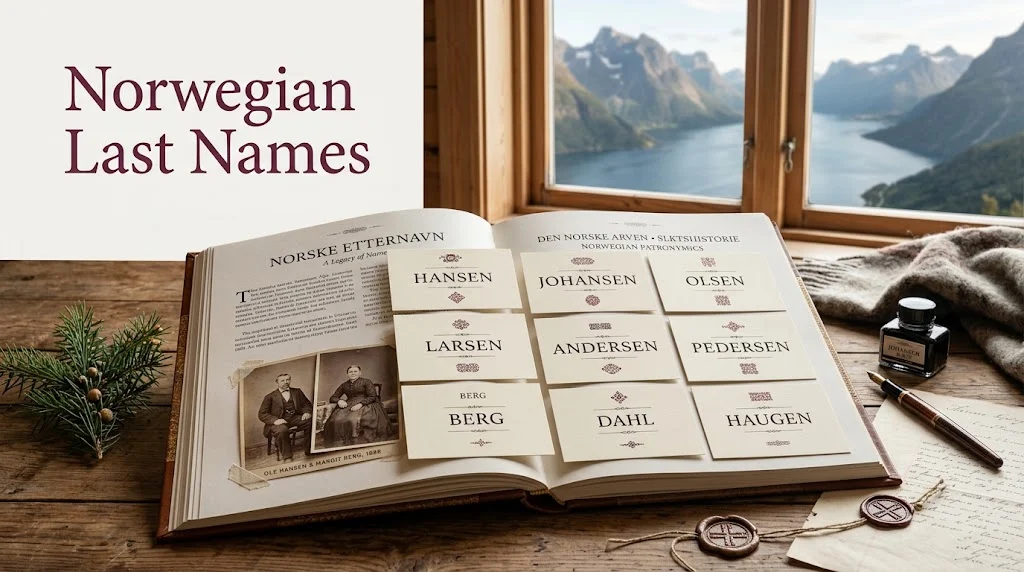
Norwegian last names often reflect nature, geography, family heritage, and traditional Scandinavian naming customs. Popular examples include Hansen, Johansen, Olsen, Larsen, Andersen, Berg, Dahl, and Haugen. Many Norwegian surnames have fascinating meanings connected to places, landscapes, or ancestors.
A surname can tell a fascinating story about family, geography, occupation, or ancestry. When you explore Norwegian last names, you quickly discover that many are closely connected to the country’s landscapes, farms, and historical naming traditions.
Norwegian surnames do not all follow one pattern. Some developed from a father’s first name, while others came from the farm where a family lived. Others describe natural features such as mountains, valleys, hills, rivers, and forests.
Names such as Hansen and Johansen are familiar examples of patronymic surnames, while Berg, Dahl, and Haugen connect more directly with places and landscapes.
Understanding these patterns makes Norwegian surnames especially interesting for genealogy and family-history research. It also explains why several Norwegian surnames appear across many unrelated families.
In this guide, you’ll discover traditional Norwegian surnames, their general meanings, naming patterns, popular examples, and practical tips for understanding Norwegian family names.
🏔️ Hansen
Meaning: Son of Hans
Origin: Norwegian patronymic tradition
Personality: Hansen has a traditional, dependable, and strongly Scandinavian character.
Style: Classic, traditional, Scandinavian
Best For: Family-history research, Norwegian characters, heritage-inspired naming
Popularity: Hansen is one of the widely recognized Norwegian patronymic surnames.
Emotional Appeal: Its straightforward construction connects the surname directly to an earlier family member.
Historical Reference: The name developed from the given name Hans, which is related to Johannes.
Similar Surnames: Johansen, Nilsen, Olsen, Larsen, Andersen
Why It Still Works Today: Hansen is instantly recognizable as a Scandinavian surname and remains useful when researching Norwegian ancestry.
🌲 Johansen
Meaning: Son of Johan
Origin: Scandinavian patronymic tradition
Personality: Johansen feels traditional, familiar, and firmly rooted in Scandinavian culture.
Style: Classic, Nordic, traditional
Best For: Norwegian heritage, genealogy, historical characters
Popularity: Johansen is a well-established surname in Norway and neighboring Scandinavian countries.
Emotional Appeal: Its structure gives the name a clear connection to family lineage.
Historical Reference: Johansen developed from Johan, a form related to Johannes.
Similar Surnames: Hansen, Johannesen, Olsen, Kristiansen, Nilsen
Why It Still Works Today: Its familiar sound and strong Scandinavian identity make it one of the recognizable Norwegian surnames.
🌿 Olsen
Meaning: Son of Ole
Origin: Norwegian patronymic naming tradition
Personality: Olsen feels simple, approachable, traditional, and distinctly Nordic.
Style: Classic, Scandinavian, familiar
Best For: Genealogy, heritage projects, Norwegian characters
Popularity: Olsen is a longstanding Norwegian surname.
Emotional Appeal: The name reflects the traditional practice of identifying a person through their father’s given name.
Historical Reference: Ole is a traditional Scandinavian given name related to Olaf.
Similar Surnames: Hansen, Larsen, Pedersen, Nilsen, Andersen
Why It Still Works Today: Olsen remains immediately recognizable and carries a strong connection with Norwegian and Scandinavian heritage.
⛰️ Larsen
Meaning: Son of Lars
Origin: Norwegian and Scandinavian patronymic tradition
Personality: Larsen sounds confident, traditional, and understated.
Style: Classic, Nordic, strong
Best For: Norwegian family history, characters, heritage naming
Popularity: Larsen is a common Scandinavian surname and is especially associated with Norway and Denmark.
Emotional Appeal: Its simple construction reflects an older family naming system.
Historical Reference: Lars is a Scandinavian form of Laurentius.
Similar Surnames: Hansen, Olsen, Andersen, Nilsen, Pedersen
Why It Still Works Today: Larsen has a clean, recognizable sound and remains strongly associated with Scandinavian identity.
🌾 Andersen
Meaning: Son of Anders
Origin: Scandinavian patronymic tradition
Personality: Andersen feels dependable, classic, and traditional.
Style: Traditional, Scandinavian, familiar
Best For: Family history, Norwegian characters, Nordic heritage
Popularity: Andersen is a widespread Scandinavian surname.
Emotional Appeal: It provides a direct link to the traditional use of a father’s first name in family identification.
Historical Reference: Anders is a Scandinavian form related to Andreas.
Similar Surnames: Hansen, Pedersen, Nilsen, Kristiansen, Johansen
Why It Still Works Today: Its recognizable structure makes Andersen a natural example of traditional Scandinavian surname formation.
🌊 Pedersen
Meaning: Son of Peder
Origin: Norwegian and Danish patronymic tradition
Personality: Pedersen has a steady, traditional, and familiar character.
Style: Classic, Nordic, historical
Best For: Genealogy, Norwegian heritage, historical fiction
Popularity: Pedersen is an established surname in Norway and Denmark.
Emotional Appeal: Like many patronymic names, it reflects a direct family connection.
Historical Reference: Peder is a Scandinavian form of Peter.
Similar Surnames: Petersen, Hansen, Olsen, Larsen, Nilsen
Why It Still Works Today: Pedersen retains a distinctly Scandinavian sound and is useful when exploring Nordic family histories.
🌲 Nilsen
Meaning: Son of Nils
Origin: Norwegian patronymic tradition
Personality: Nilsen feels strong, familiar, and traditional.
Style: Classic, Scandinavian, straightforward
Best For: Norwegian genealogy, heritage-inspired characters
Popularity: Nilsen is a well-established Norwegian surname.
Emotional Appeal: Its meaning reflects an older tradition where children were identified through their father’s given name.
Historical Reference: Nils is a Scandinavian form of Nicholas.
Similar Surnames: Nielsen, Hansen, Olsen, Johansen, Larsen
Why It Still Works Today: Nilsen has a recognizable Norwegian appearance and continues to represent traditional Scandinavian naming.
🌄 Berg
Meaning: Mountain or rocky hill
Origin: Norwegian, Swedish, and other Germanic languages
Personality: Berg feels strong, natural, simple, and rugged.
Style: Nature-inspired, short, strong, Nordic
Best For: Norwegian heritage, characters, genealogy
Popularity: Berg is a well-established surname across Scandinavia.
Emotional Appeal: The connection to mountains gives the name a powerful association with Norway’s dramatic landscapes.
Historical Reference: Berg is related to words for mountain or hill in several Germanic languages.
Similar Surnames: Bakke, Haugen, Dahl, Strand, Fjell
Why It Still Works Today: Its short form and natural meaning make Berg one of the most appealing Scandinavian landscape surnames.
🌳 Dahl
Meaning: Valley
Origin: Scandinavian and Germanic
Personality: Dahl feels elegant, peaceful, and nature-inspired.
Style: Short, refined, natural, Nordic
Best For: Family-history research, Scandinavian characters, heritage naming
Popularity: Dahl is found in Norway and other Scandinavian countries.
Emotional Appeal: Its association with a valley gives it a calm geographic quality.
Historical Reference: The surname is connected with words meaning valley or dale.
Similar Surnames: Dal, Berg, Bakke, Haugen, Strand
Why It Still Works Today: Dahl is short, easy to remember, and strongly connected to Scandinavian landscapes.
🌾 Haugen
Meaning: The hill or mound
Origin: Norwegian
Personality: Haugen feels earthy, traditional, and connected to rural landscapes.
Style: Rustic, traditional, nature-inspired
Best For: Norwegian ancestry, genealogy, historical characters
Popularity: Haugen is an established Norwegian surname.
Emotional Appeal: It reflects the importance of local geography in Norwegian family identification.
Historical Reference: The surname is associated with the Norwegian word haug, referring to a mound or hill.
Similar Surnames: Berg, Bakke, Dahl, Fjell, Strand
Why It Still Works Today: Haugen provides a strong connection to Norway’s countryside and traditional farm communities.
📊 Quick Comparison Table
| Surname | General Meaning | Style | Common Association |
|---|---|---|---|
| Hansen | Son of Hans | Traditional | Patronymic |
| Johansen | Son of Johan | Classic | Patronymic |
| Olsen | Son of Ole | Nordic | Patronymic |
| Larsen | Son of Lars | Classic | Patronymic |
| Andersen | Son of Anders | Traditional | Patronymic |
| Pedersen | Son of Peder | Historical | Patronymic |
| Nilsen | Son of Nils | Classic | Patronymic |
| Berg | Mountain or hill | Natural | Landscape |
| Dahl | Valley | Elegant | Landscape |
| Haugen | Hill or mound | Rustic | Landscape |
🧭 How Norwegian Last Names Developed
Norwegian surnames developed through several naming practices rather than one single system.
Historically, patronymic naming was particularly important. A child might receive a surname indicating the father’s first name. For example, a son of someone named Hans could be called Hansen, while a daughter could historically have used a feminine form in some naming systems.
Another major source was the farm name. Norway’s rural population often identified people by the farm or property where they lived. When a person moved, their identifying farm name could change.
Nature also influenced surnames. Norway’s mountains, valleys, rivers, forests, and coastal areas provided many geographic words that eventually became family names.
This history explains why Norwegian surnames can look very different even when they come from the same country.
🧬 What Are Patronymic Norwegian Surnames?
A patronymic surname identifies someone through a parent’s given name.
The traditional pattern is often expressed as:
Father’s given name + -sen = son of
Examples include:
- Hansen = son of Hans
- Olsen = son of Ole
- Larsen = son of Lars
- Nilsen = son of Nils
- Pedersen = son of Peder
Historically, these names were not always permanent family surnames. Their use could change from one generation to another.
That is important for genealogy because someone with the surname Hansen may not necessarily belong to one single Hansen family line.
🏡 What Are Norwegian Farm Names?
Farm names are another important part of Norwegian naming history.
A person might be identified by the farm or property associated with their family. These names could reflect the landscape, location, or property itself.
This tradition created surnames and identifying names connected with geographic features.
Examples of landscape-related Norwegian surnames include:
- Berg
- Dahl
- Haugen
- Bakke
- Strand
- Fjell
For family-history research, understanding farm names can be just as important as understanding patronymic surnames.
🌲 Norwegian Last Names Inspired by Nature
Norway’s landscape has had a major influence on its naming traditions.
Some surname elements relate to:
- Mountains
- Hills
- Valleys
- Farms
- Forests
- Rivers
- Lakes
- Coastal areas
- Beaches
- Islands
Examples include Berg, associated with a mountain or hill, Dahl, associated with a valley, and Strand, associated with a shore or beach.
These names can make wonderful choices for fictional characters because they immediately evoke Scandinavian landscapes.
⭐ Most Popular Norwegian Last Names
Some widely recognized Norwegian surnames include:
- Hansen
- Johansen
- Olsen
- Larsen
- Andersen
- Pedersen
- Nilsen
- Kristiansen
- Jensen
- Karlsen
- Berg
- Haugen
- Dahl
- Bakke
- Strand
Popularity can vary depending on the source, year, spelling, and whether related Scandinavian forms are counted separately.
🕰️ Old Norwegian Last Names
If you are searching for a surname with an older Scandinavian atmosphere, consider:
- Berg
- Dahl
- Haugen
- Bakke
- Strand
- Fjell
- Lund
- Moen
- Aasen
- Lie
Some of these are associated with places or landscape features rather than being straightforward patronymic surnames.
✨ Unique Norwegian Last Names
For a less familiar sound, these surnames may be interesting:
- Fjell
- Aasen
- Moen
- Solberg
- Nordahl
- Skogen
- Strand
- Viken
- Hovland
- Eide
“Unique” is relative, especially across Norway’s different regions, so a surname that feels unusual internationally may be familiar within Norway.
🌍 Are Norwegian Last Names Different From Swedish and Danish Names?
Norwegian, Swedish, and Danish surnames share many historical features because the countries have closely connected Scandinavian linguistic and cultural histories.
Patronymic endings such as -sen are particularly recognizable across Denmark and Norway, while Sweden historically developed many surnames using -son.
However, spelling and pronunciation can vary by language and region.
This means a surname can have related Norwegian, Danish, and Swedish forms without being exactly the same name.
🔎 How to Choose a Norwegian Last Name
If you are choosing a Norwegian surname for a character, genealogy project, family-history article, or creative project, start with its origin.
A patronymic surname gives a strong historical Scandinavian feeling. A nature-based surname can emphasize Norway’s landscape. A farm-related surname can create a rural or historical atmosphere.
Pay attention to pronunciation, too. Some Norwegian names may be pronounced differently from the way English speakers expect.
Most importantly, avoid assuming that every Norwegian surname has one simple meaning. Historical spellings and regional naming practices can make surname origins more complicated.
🧠 What Do Norwegian Last Names Mean?
Norwegian surnames can have several broad types of meanings.
Patronymic: Indicates a relationship to a father or male ancestor, such as Hansen or Olsen.
Geographic: Describes a landscape or location, such as Berg or Dahl.
Farm-based: Identifies a farm or property connected to the family.
Nature-based: Refers to mountains, valleys, forests, shores, and other natural features.
Because surnames developed differently over time, the exact historical meaning of a particular surname may require genealogical research.
❓ FAQs
What are the most common Norwegian last names?
Commonly encountered Norwegian surnames include Hansen, Johansen, Olsen, Larsen, Andersen, Pedersen, Nilsen, and Kristiansen.
Why do so many Norwegian last names end in -sen?
The ending -sen traditionally means “son of” in Scandinavian patronymic naming. Names such as Hansen, Olsen, Larsen, and Nilsen .
What is a Norwegian nature surname?
Norwegian nature surnames are connected with geographic features or landscapes. Examples include Berg, associated with a mountain or hill, Dahl, associated with a valley, and Strand, associated with a shore or beach.
Are Norwegian surnames inherited?
Modern Norwegian surnames are generally inherited family names. Historically, however, many people used patronymic and farm-based naming systems .
What does Hansen mean in Norwegian?
It developed from the Norwegian and broader Scandinavian patronymic naming tradition, although modern Hansen families do not necessarily share one common ancestor.
Conclusion
Norwegian surnames offer a fascinating glimpse into family history, language, geography, and Scandinavian culture. Some, such as Hansen and Olsen, preserve the memory of traditional patronymic naming. Others, such as Berg, Dahl, and Haugen, reflect Norway’s distinctive landscapes.
If you are researching your ancestry, remember that an old Norwegian surname may not have functioned as a permanent family name in every historical period. Farm names, patronymics, spelling changes, and migration can all affect how a surname appears in historical records.
Discover More Related Articles: